Embracing Cycles & Seasons to Deconstruct from Capitalism (& Live Fully)
🎙️ This is an episode of the Nervous System Care & Healing Podcast with Liz Zhou, a therapist specializing in neurodiversity, complex trauma, & psychedelic integration.
If you prefer to listen & watch, press play on the video above.
If you prefer to read, keep scrolling to the transcript below.
-
If you’ve ever criticized yourself for being “lazy,” “unproductive,” or “not trying hard enough”, you may be struggling to conform to capitalistic standards of productivity. But that doesn’t mean there’s anything wrong with YOU - it means you’re navigating a system that wasn’t built to account for your full humanity (like your body’s need for rest).
Under capitalism, we’re taught to base our worth on our productivity. Any hour spent resting, playing, or otherwise not working, is considered an hour “wasted.” This is an exhausting way to live - especially if you’re also navigating disabilities, neurodivergence, chronic illness, or anything that makes it harder for you to keep up with the (unsustainable) pace of capitalism.
In this episode, I share how embracing cycles, seasons, and a nonlinear relationship to time can help us deconstruct from capitalism & live more fully.
We’ll explore:
how capitalism runs on linear time, while nature runs on cyclical time
why it’s not realistic to expect ourselves to be constantly productive - we are humans, not machines
why it’s important to honor cycles in nature & in our bodies
examples of cycles that appear in nature & in cultural traditions: the 4 seasons (fall, winter, spring, summer); the phases of the lunar cycle; and the 12 animals of the Chinese zodiac
Let this episode remind you: your life is not a productivity project. You deserve to live fully and freely, and in collaboration with your true nature - not against it.
-
What is your relationship to time?
Do you often lose track of time?
Do you feel short on time, like you’re always busy?
Do you wish time would slow down so you could savor this moment or life phase you’re in right now?
Do you wish time would move faster, so you can get to the future already?
Do you worry about wasting time, or not using your time well?
Do you feel like you have too much time on your hands?
Do you often feel like you’re late or behind on things?
Do you not know what to do with your time?
Do you look forward to a certain time of day or year?
Do you dread a certain time of day or year?
Time is a very abstract concept - we can’t hold it or feel it or touch it with our hands; we can’t see it or hear it. But our lives are shaped and structured by time. We set alarms to wake up at a certain hour; you might go to classes that start & end at a certain time; you might go to a job that requires you to work at certain hours; we fit errands and appointments and social events into our calendars.
So much of daily life is organized around the ticking clock.
There is a link between the way that we experience time and the capitalistic systems that we live within.
Under the economic system of capitalism, time is treated as a finite resource & a means toward the ultimate goal of profit. In our capitalistic systems, workers are typically paid by the hour, so time becomes commodified - a monetary value is assigned to each minute of one’s day.
Time is perceived as something that is either spent well, or saved, or wasted. Just as we might spend, save or waste money, we might spend, save, or waste time.
From a capitalistic POV, the goal is to make as much profit in as little time as possible and for as long as possible. In many cases, as we’re seeing in this age of corporate greed, that profit can come at the cost of workers’ health & wellbeing, or the health & wellbeing of the planet - and that is not okay.
There are subtle ways that navigating capitalism changes the way we experience time, and therefore the way we experience our lives.
For example:
We might internalize capitalistic thinking. We start to believe the myth that humans should be constantly productive, working every day with consistent energy & consistent output.
We start to believe that our worth is defined by our productivity - and as a result of this belief, we might criticize or judge ourselves for being “lazy” or not “trying hard enough” if we can’t keep up with the pace that capitalism requires.
Capitalism teaches us to base our worth on how quickly we can accomplish things & how much we can work - which can lead to the feeling that you’re always racing against the clock; that you’re always behind on something; or that there’s always some deadline you need to meet. It can feel like being haunted by a ticking clock. That is an exhausting way to live - especially if you’re also navigating disabilities, neurodivergence, or chronic illness, or anything that makes it harder for you to conform to capitalistic standards of productivity.
It is important to remember that humans didn’t always live in this way. The story of humanity is older than capitalism, and there was a time when we didn’t live so tethered to linear time, clocks, and the modern 40 hr work week.
Many of us are used to a capitalistic relationship with time. We might not even notice it, because it’s so normalized as the status quo.
It’s important to explore what an anti-capitalist relationship with time would look like.
If capitalism leads to the extraction of resources, often from marginalized communities; the exploitation of human and animal labor; as well as the destruction of the natural world - it’s worth questioning: Is this really the only way? What other options do we have?
What if we could experience time in a way that isn’t so tied to expectations around productivity; what if time wasn’t something that we worried about “wasting” or “spending”? What if time is simply something to be experienced?
This is where I like to embrace seasons and cycles, because they’re a beautiful representation of what a non-capitalistic relationship with time looks like.
Wherever you are in the world, you experience some changing of the seasons as time goes by - whether from rainy to dry season, or from hot to cold temperatures, or from more daylight to less daylight. These seasonal changes occur independently of what the calendar says.
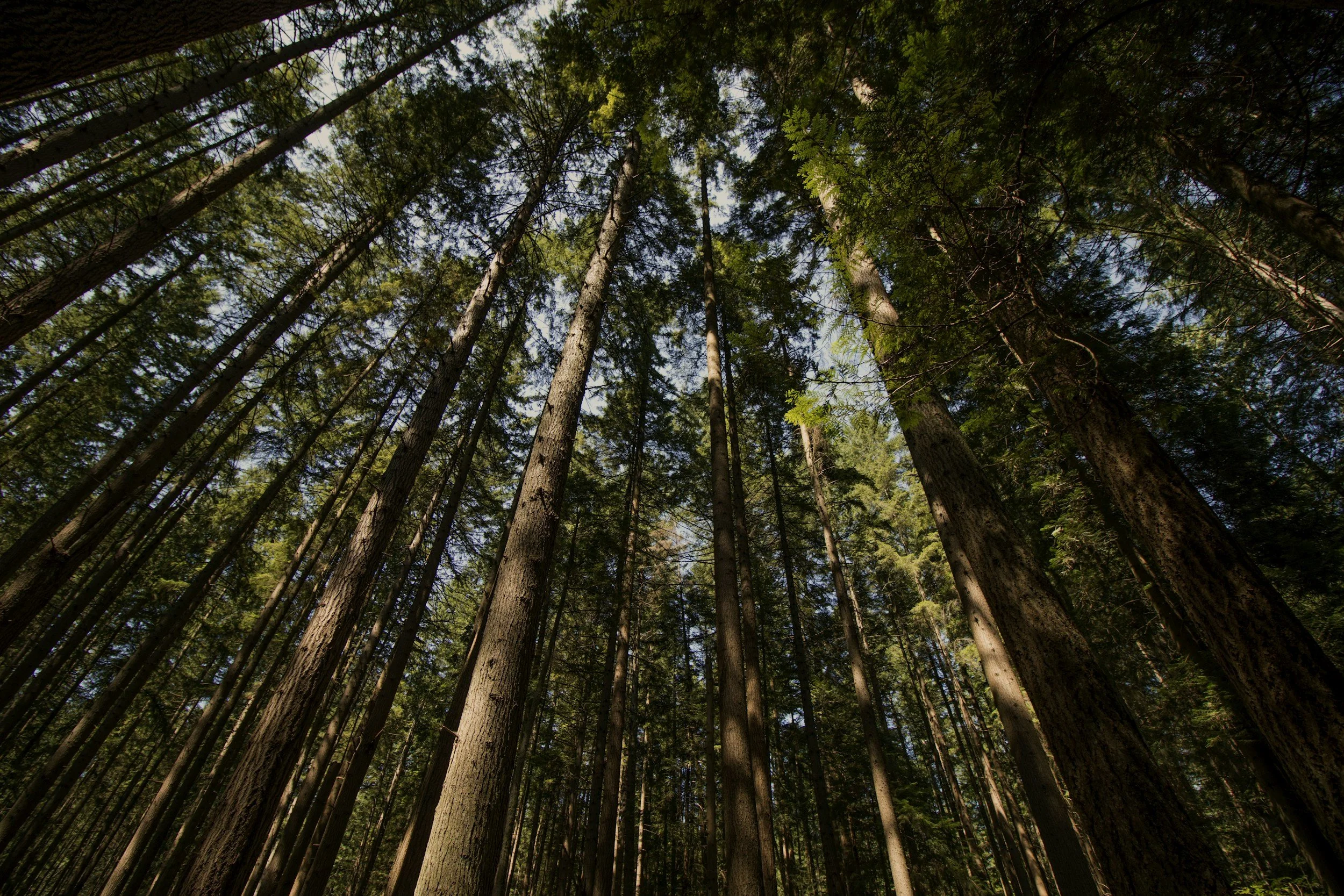
The leaves fall from the trees during autumn. They don’t wait for some human to announce, “Okay, now it’s quarter 4 of the fiscal year, so you can let go of your leaves now.” No, the leaves fall because they’re ready to fall.
Nature cycles through seasons on its own timeline, at its own rhythm.
Each season brings its own unique energy. Let’s look at the four seasons, for example - fall, winter, spring, summer:
Fall is a time of release, letting go, transition. The leaves change color & fall to the ground. The air gets cooler, the days get shorter. Animals start to prepare for hibernation.
Winter is a time of rest, hibernation, slowing down. We spend more time in darkness. The world outside gets quieter, the pace slows down. If it snows where you live, you know the feeling of stepping outside on a snowy day and feeling just how quiet & peaceful everything is as the snow absorbs the sound in the air, and people stay inside their homes to stay warm.
Winter can be a time of reflection and rest, as well as a time for grief - sitting in the shadows and in the darkness.
After winter, there’s spring - a time of renewal, new beginnings, awakening. The land starts coming back to life. The days are longer and sunnier. Buds start sprouting out of the ground, flowers bloom, the trees re-grow their leaves. Things feel more energized & vibrant - you might literally feel a spring in your step.
And then, the seasons cycle again - to summer. Summer is a time of vitality, abundance, and liveliness. People tend to feel more alive in the summer; these are the longest days of the year.
Whether you live in a place where you experience all 4 seasons or not, we all experience some version of an inner winter, an inner autumn, an inner spring, and an inner summer.
We all cycle through these seasons, energetically and emotionally speaking, at our own rhythm.
We all go through periods of life where we need to go more inward, we need more time & space to rest and to hibernate - & we all go through periods where we’re letting go of something, shedding old beliefs, shedding old patterns that don’t serve us anymore, releasing old emotions.
Witnessing the seasons in nature - and in our own bodies - is a reminder that time can be cyclical; and these cycles are as natural and inevitable as the turning of a wheel.
Meanwhile, capitalism treats time as linear - where you go to work at 9 and clock out at 5 and every hour that you work represents another hour of productivity; and any hour spent resting, NOT being productive, is an hour “wasted”.
In a cyclical relationship with time, though, we don’t measure time in terms of units of economic output. Instead, we live life through the perspective of seasons.
The question is not, How productive can I be?
The question is: What season of life am I in? Which part of the cycle am I moving through right now?
There is so much more space for gentleness, flow, and self-compassion when we embrace the seasons. If you’re going through a grieving period - like an inner winter - where your brain & body need a lot of rest, the voice of capitalism might tell you: “you shouldn’t rest; if you rest, you’re lazy; you should be working right now.”
But that voice doesn’t have to be the voice that you listen to. Because that voice comes from a lifetime of conditioning from a capitalistic system that flattens our humanity & treats humans like machines, rather than as the multifaceted, inconsistent, imperfect beings that we are.
Some things that are inconvenient for capitalism - like the fact that humans need time to rest - are the things that make us human in the first place.
When we follow the energy of the seasons, we are opening up a conversation with the parts of ourselves that may have been overridden by capitalistic conditioning.
When we live in alignment with the natural cycles within us & around us, we remember that we’re part of something bigger than just this 1 individual life. We are part of the Earth, the nature world, and the universe. We are part of a collective human experience, and the stars in the sky are our ancestors.
There are a couple natural cycles that I really connect with.
One is the lunar cycle - so, tracking where the moon is in the sky, which phase the moon is in, & noticing patterns in how I feel on a full moon vs on a new moon.
Another cycle that I connect with is the Chinese Zodiac - this comes from my culture, as a Chinese-American second-generation immigrant - and this is a cycle that recurs every 12 years, where each year is associated with a certain animal. The 12 animals are: rat, ox, tiger, rabbit, dragon, snake, horse, goat, monkey, rooster, dog, and pig.
Depending on the year you were born, you are assigned a certain animal, which may reflect certain aspects of your personality or your life path. On every 12th birthday - 12, 24, 36, 48, 60, and so on - you cycle back to the animal of your birth year. There’s something significant and meaningful about this turning of the wheel, this way of marking time.
Every time I come back to my Zodiac animal, which is the rat, I love to reflect on: what was happening in my life 12 years ago, what has changed since then, & what has stayed the same?
During the other 11 years where it’s not my animal - like the year of the horse or the tiger - I also get to reflect on how that animal’s qualities are showing up in my life or in the collective human experience right now.
Those are examples of how cycles can exist in nature, in our cultural traditions & lineages - and how cycles can span across different lengths of time, from the 29 days or so of a lunar cycle, to the 12 years of the Chinese Zodiac. There are so many other examples in addition to these two.
It’s always up to you which cycles & seasons you resonate with and how you choose to integrate them into your life.
When we embrace that time is a cycle, not a line, it’s easier to give ourselves permission to expand and contract; to move when we have energy, to rest when we’re tired, and to come back again when we’re ready.
Instead of expecting linear progress and consistent productivity, we can accept that our energy moves in waves and bursts and crests and valleys, not in a straight line or an endless upward trajectory.
Of course, this is all easier said than done - it takes time to deconstruct from capitalism, and there are still ways in which we have to continue to navigate it.
My intention is to share ideas, plant seeds, and let you decide which seeds you want to grow into something that’ll serve you & that makes sense for your life, when the timing is right.
As a closing question, I want you ask yourself:
If you look around at the landscape around you, what do you notice about the season you’re in, right now? What does the energy feel like around you? Does it feel lively & abundant, or quiet & peaceful, or dark & shadow-y?
Then, bring attention to your inner experience, & reflect on how you’re experiencing this season internally. How might the abundance around you reflect an inner abundance within you? How might the shadows around you reflect the shadow parts within you?
Whatever you’re noticing, notice it without judgment. Based on the season you’re in, consider what your needs are right now & how you want to take care of yourself - and give yourself permission to listen to that.
Remember: your life is not a productivity project.
It is your one precious life (in this human lifetime, at least), and you deserve to live fully and freely, and in collaboration with your true nature, not against it.
If you are feeling overwhelmed & burnt out, and need help taking care of your nervous system, I’d love to support you.
Online Therapy in Colorado | Coaching Worldwide
Helping highly sensitive, neurodivergent adults heal their nervous systems & connect with their authentic selves.
About the Author
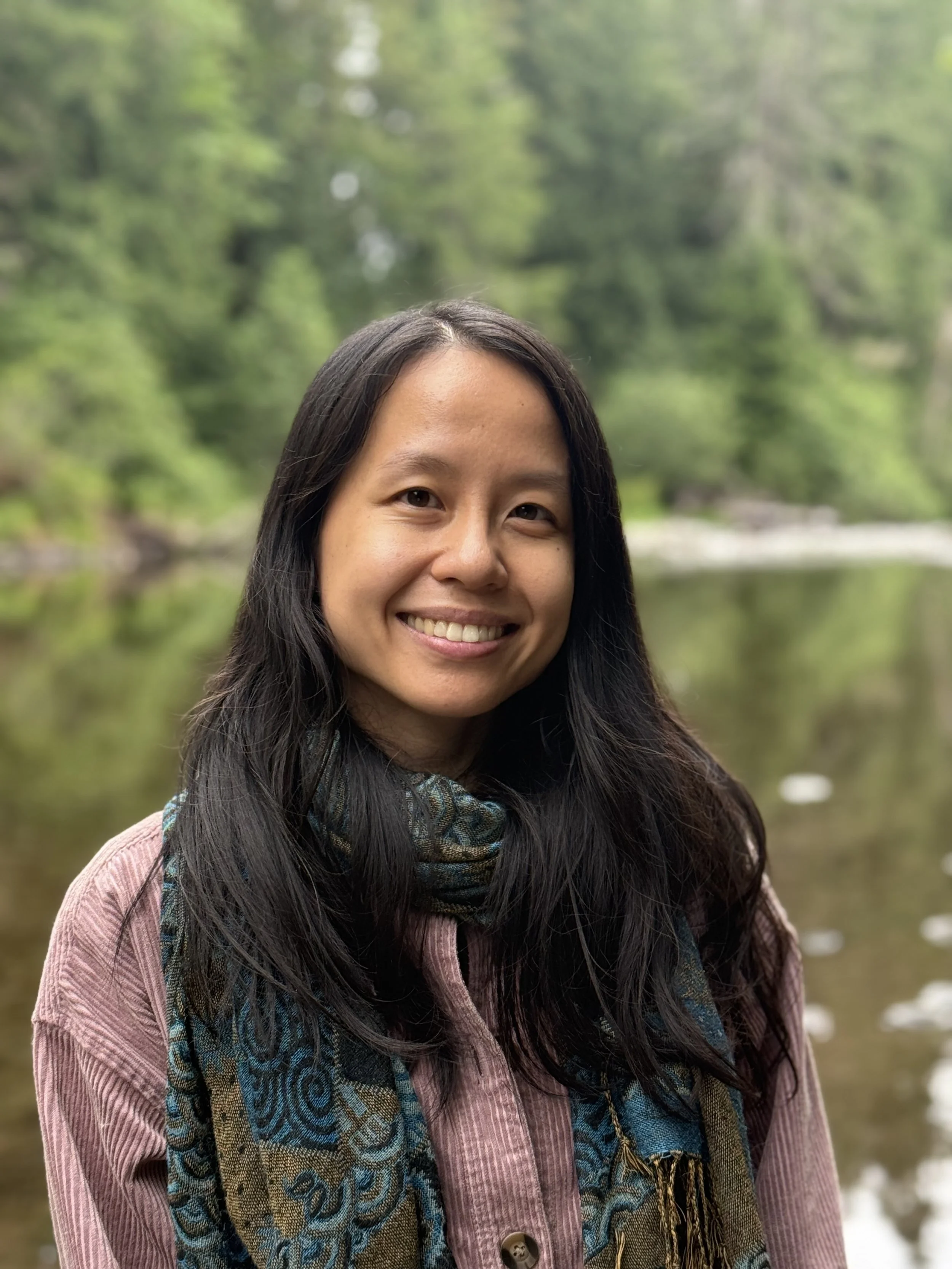
Liz Zhou (she/her) is a neurodivergent therapist, coach, and speaker. She helps highly sensitive, neurodivergent adults & couples heal their nervous systems and connect with their authentic selves, using brain-body modalities (Brainspotting, EMDR, IFS, psychedelic integration) that are quicker & more effective than traditional talk therapy. Liz offers Nervous System Healing Intensives online in Colorado & worldwide.