What Does it Mean to be Neurodivergent? | Identity, Neurotype, Diagnosis, & Disability
🎙️ This is a transcript of Episode 2 of the Nervous System Care & Healing Podcast with Liz Zhou, a neurodivergent therapist of color. Subscribe on Apple, Spotify, or YouTube to receive notice when future episodes come out.
Who is this for?
This episode might be helpful for you if:
you wonder if you’re neurodivergent
you’re a practitioner who works with neurodivergent people
your loved one is neurodivergent & you want to understand how to support them
Who am I?
I’m a highly sensitive, autistic person. I am a woman of color & 2nd generation immigrant. I’m also a therapist & coach for highly sensitive & neurodivergent people. So I share this from both my personal experiences & my professional experiences.
Disclaimers & Key Terms
Terms change, language shifts. This is what’s true in 2026. I want to acknowledge that as a neurodivergent & neurodiversity-affirming practitioner, I am periodically updating or refining my language as the community evolves, as new information becomes available.
I do want to define a few key terms that are used quite often:
Neurodiversity refers to the natural variation in human brains & bodies.
Just as the Earth has biodiversity, humanity has neurodiversity (as well as racial diversity, cultural diversity, gender diversity, all of it).
Neurotype refers to a type of brain.
My neurotype is autistic and highly sensitive — that’s my brain, and those are the words I use to describe it. Your neurotype might be autistic & ADHD, or neurotypical, or highly sensitive, or something else. You get to choose how to describe yourself.
What does neurodivergent mean?
“Neurodivergent” describes individuals whose brains differ from what’s considered “normal.” There is no one way to be neurodivergent — but when I say that I’m neurodivergent, I’m saying that I process information, express myself, & experience the world in ways that differ from the “normal” standard. Another neurodivergent person might experience the world in a totally different way than I do — but they’re also neurodivergent because they are different from the norm.
The counterpart to “neurodivergent” is “neurotypical.” This term describes individuals whose brains align with social definitions of “normal.” A neurotypical person is someone who matches the expectation of how a “normal” person should be.
It’s very important to remember that “typical” is not some fixed, objective standard. “Normal” is SUBJECTIVE.
Because what’s considered “normal” behavior in one part of the world, or one era of history, might be considered abnormal in another culture or another era.
In some cultures, direct eye contact is expected & typical; in other cultures, it’s not.
In some cultures, left-handedness is considered taboo. In other cultures, it’s not a big deal.
My point is: what we consider “typical” reflects the expectations, values, & rules of the current culture that we find ourselves in. And the definition of “normal” is often weaponized by systems in power — so it’s not a neutral term.
In the current Western culture, definitions of “normal” are shaped by capitalism & by colonial systems that prioritize certain kinds of productivity & certain kinds of behavior.
If you are able to conform to these systems, then you are considered “typical” or “normal,” & even a valued member of society.
Someone who can hold a 9-5 job, communicate verbally in a linear fashion, make small talk, & function at a high level within an individualistic & fast-paced society — these are just some of the traits associated with being neurotypical. See how these traits go hand in hand with capitalism. Systems like capitalism want us to be productive, efficient, and “high-functioning”.
If you are unable or unwilling to conform to these systems, then you are considered different, or “neurodivergent.”
To give one example, people with highly sensitive nervous systems (including some autistic folks) might really struggle to navigate the overstimulation of a traditional office — like fluorescent lights, being required to attend in-person meetings at all hours, the expectation of small talk at the water cooler, & sensory triggers like random sounds & smells in the office.
Here’s another example: a person with ADHD may have a brain with a vast attention span that moves quickly from one stimulus to another. This might impact their ability to stay “on task” within a traditional work environment; they might be punished or criticized for not being able to “focus” or “be productive.”
These are just a few ways that neurodivergent folks may struggle to navigate the systems of our Western culture.
Or, maybe they’ve figured out ways to navigate the system, by masking, by learning to suppress their neurodivergent traits — but it comes at a high cost to their own mental & physical health.
Sadly, neurodivergence is often associated with deficits & pathology; it’s considered taboo or bad to be different. And I’m here to say that neurodivergence is a way of being; it is a way of experiencing the world that is just as valid as any other way.
To be clear, there is no such thing as a 100% neurotypical person.
Even people who consider themselves to be neurotypical may see aspects of themselves reflected in descriptions of neurodivergent traits. That doesn’t mean everybody is autistic, or everybody has ADHD, or insert other generalized statement here — but it does mean that we all exist somewhere along that spectrum of neurodivergence and neurotypicality.
Let’s dive into what neurodivergence can actually look like.
It’s an umbrella term for many experiences & identities.
The neurodivergent community is diverse. It overlaps significantly with the disability community & the queer community. The term “neuroqueer”, in fact, refers to folks who identify as neurodivergent and queer.
Neurodivergence can include: variations in attention, learning, processing styles, emotional expression, communication styles, social interaction, and sensory experiences.
Specific types of neurodivergence include: autism, ADHD, high sensitivity, sensory processing differences, giftedness, developmental disabilities, and much more.
There is innate neurodivergence — which refers to neurological differences that are present from birth or from very early in life, innate to your nervous system wiring.
There is also acquired neurodivergence, which refers to differences that develop later in life. Some examples include: complex trauma or CPTSD; traumatic brain injury; long COVID; or other neurological changes in response to a specific event or series of events.
Some people experience multiple types of neurodivergence, innate & acquired — like being autistic & living with complex trauma; or having ADHD & a TBI; or being dyslexic & having a sensory processing disorder. This is where the term “neurocomplex” might resonate — it acknowledges the complexity of experiencing neurodivergence in multi-layered, interconnected ways.
Ultimately, the label of “neurodivergent” is a personal choice.
For some, neurodivergence is an identity — an important part of who they are.
For some, it’s a neurotype — a description of how their brain works.
For some, neurodivergence is a diagnosis — a label provided through the mental health & medical system.
For some, it’s a disability. Because as neurodivergent folks, we experience ableism in micro & macro ways — through social stigma, discrimination in employment & education spaces, or systemic lack of access to accommodations.
You may experience your neurodivergence as an identity, a neurotype, a diagnosis, a disability, all of the above, or none of the above.
Your relationship to your brain & nervous system might change across time. You might discover your neurodivergence later in life, and realize that there’s more to who you are than you previously thought — which is a whole journey in & of itself.
I want to end by reading a post that I shared on Instagram a while ago, that seemed to resonate with a lot of people & that captures a lot of thoughts about neurodivergent in a concise way. So I’m gonna read it out loud here. It’s called: What I Mean When I Say I’m Neurodivergent.
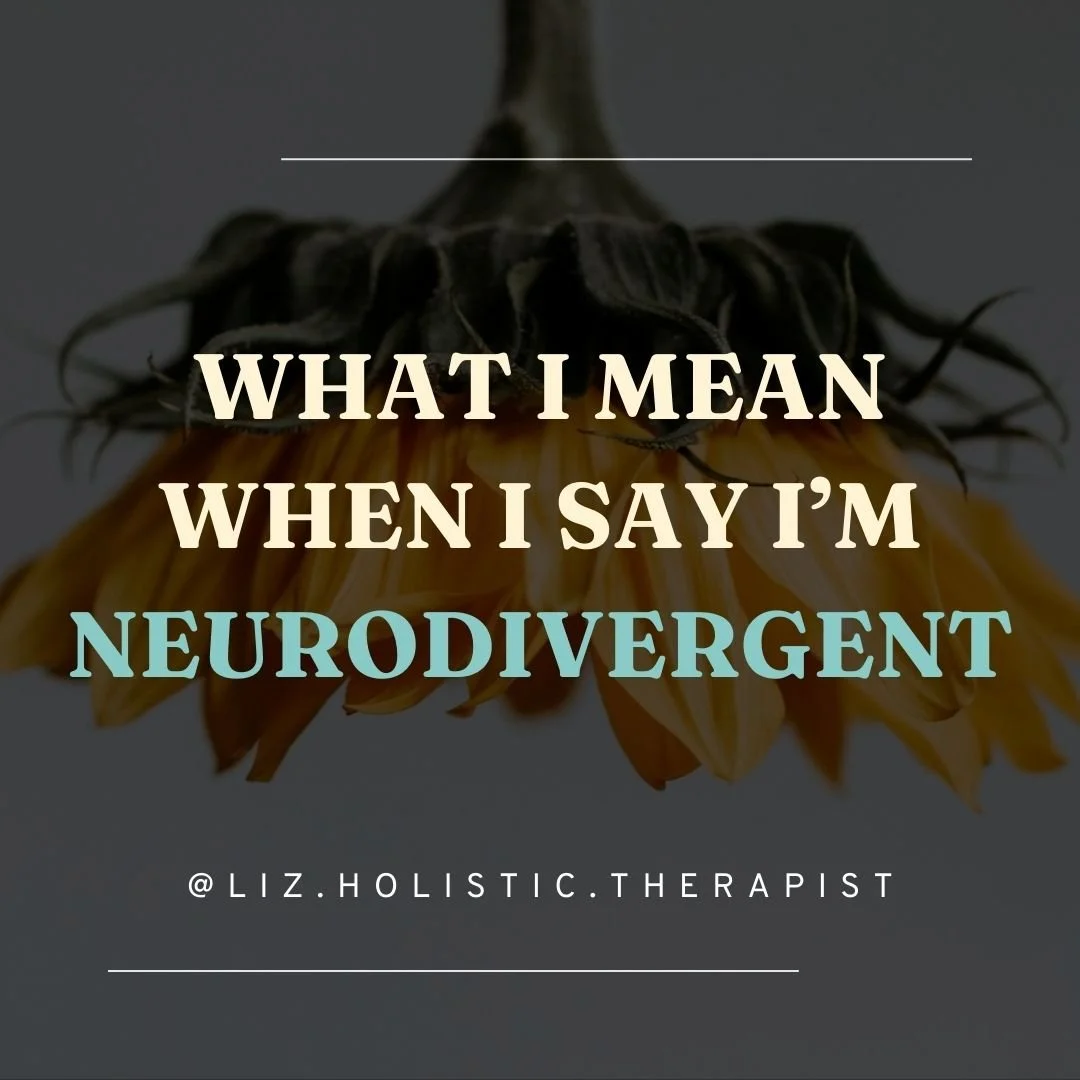
These are reflections-in-progress from ONE neurodivergent person. Which cannot possibly capture the breadth, depth, and diversity of the entire neurodivergent community.
This is an invitation to reflect on what neurodivergence means to YOU.
When I say I’m neurodivergent, I mean…
My brain thinks & feels in colors.
I might not feel “sad.” But I might notice a purple sensation in my chest.
When I say I’m neurodivergent, I mean…
I live in a highly sensitive nervous system & get easily overwhelmed.
My brain stops processing sounds when the lights are too bright.
When I say I’m neurodivergent, I mean…
My processing style, sensory sensitivities, and social differences fit the neurotype known in Western society as high-masking, low-support-need AUTISM.
This is my INNATE neurodivergence.
When I say I’m neurodivergent, I mean…
I experience my autism as both a valuable expression of neurodiversity AND a disabling condition in our ableist society.
When I say I’m neurodivergent, I mean…
My attention flows in many directions. A sparkly object can derail my entire to-do list.
From the outside, this can look like impulsivity & distractibility.
When I say I’m neurodivergent, I mean…
My energy levels fluctuate wildly from day to day. My body needs more rest than a typical 9-5 work schedule would allow. From the outside, some might call this “lazy.”
I call it working with the patterns of my nervous system.
When I say I’m neurodivergent, I mean…
My brain loves analyzing systems, tracking patterns, and getting lost in hyperfocus rabbit holes.
My nervous system is motivated by interests more so than by priorities. That’s why I might spend an afternoon color-coding my wardrobe, and forget to eat till midnight.
When I say I’m neurodivergent, I mean…
My brain has been shaped by ongoing experiences of complex & collective trauma.
My brain has also experienced profound shifts in consciousness through plant medicines, meditation, breathwork, and psychedelic experiences.
This is my ACQUIRED neurodivergence.
When I say I’m neurodivergent, I mean…
I intentionally choose to diverge from the norms of neurotypical society — and its capitalist, colonial foundations.
I’m open to un-learning & re-learning all that I have been taught (about what “normal” means, what makes a human life “worthy” or “valuable”).
When I say I’m neurodivergent, I mean…
My neurodivergence — the innate parts, the acquired parts, the intentional socially-deviant parts — is integral to how I navigate the world. It connects me to my queerness, my sense of self, and ALL my identities.
It is my joy to be neurodivergent.
These are just some of the ways that neurodivergence shows up in my nervous system, my life, and my world.
What does being neurodivergent mean to YOU?
If you need help taking care of your nervous system, I’d love to support you.
Online Therapy in Colorado | Coaching Worldwide
Helping highly sensitive, neurodivergent adults heal their nervous systems & connect with their authentic selves.
About the Author
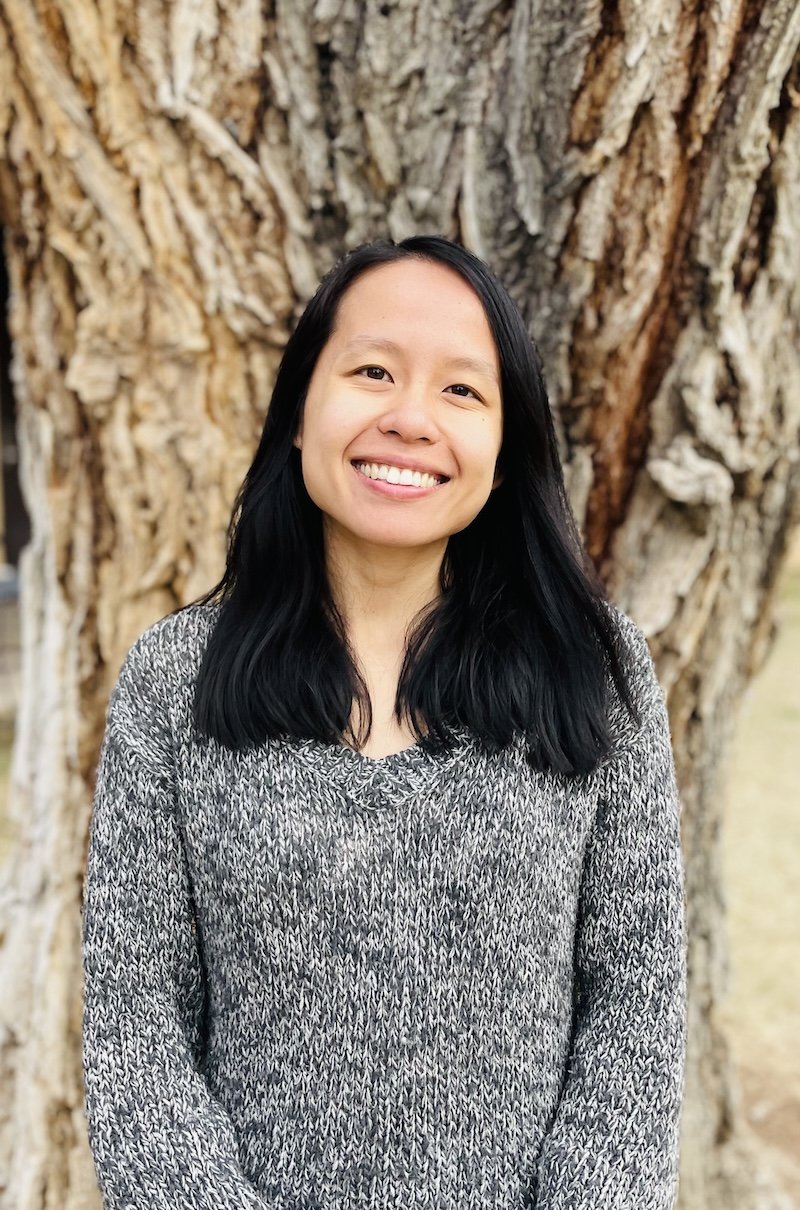
Liz Zhou (she/her) is a neurodivergent therapist, coach, and speaker. She helps highly sensitive, neurodivergent adults & couples heal their nervous systems and connect with their authentic selves, using brain-body modalities (Brainspotting, EMDR, IFS, psychedelic integration) that are quicker & more effective than traditional talk therapy. Liz offers Nervous System Healing Intensives online worldwide.