The Brain on Psychedelic Medicines: Myths & Facts
🎙️ This is a transcript of Episode 13 of the Nervous System Care & Healing Podcast with Liz Zhou, a neurodivergent therapist of color. Subscribe on Apple, Spotify, or YouTube to receive notice when future episodes come out.
-
We’ve all heard the claim that psychedelic drugs will “fry your brain.” We’ve also heard the opposite story: that psychedelics (like psilocybin, MDMA, and ketamine) are a “magic pill” that’ll cure depression, anxiety, & PTSD — overnight, and forever!
With such polarizing narratives, it can be hard to discern what’s myth & what’s truth.
Whether you’re curious about psychedelic-assisted therapy, or skeptical about all the hype, this episode is here to inform you.
As a therapist specializing in psychedelic integration, I’ll discuss:
the definition of psychedelic medicine (& why I’m intentionally using this term, instead of “drug”)
why psychedelics are not a passive experience that we just consume; they’re a relationship that we create with ourselves, with the medicine, & with the surrounding community, culture, & context
the balance between enjoying the neuroplastic (mind-opening, heart-opening) effects of psychedelic medicines vs. expecting the medicine to do all the healing work for us
the importance of thoughtful preparation & integration, and why the real work happens after the journey
studies that compare the efficacy of psychedelic-assisted psychotherapy vs. psychotherapy with a placebo
why concerns about safety are absolutely valid, and why it’s important to consider medical contraindications, as well as the social, emotional, & sensory context in which the experience unfolds
how War on Drugs propaganda impacts our public understanding of psychedelic medicines, and misrepresents the relative danger of “drugs” like cannabis & psilocybin (which are shown to be physiologically less dangerous & less addictive than alcohol)
why any conversation on psychedelics must also acknowledge the War on Drugs as a vehicle of structural racism & oppression
the different contexts of psychedelic healing, from ketamine-assisted psychotherapy to plant medicine ceremonies to microdosing
the nuanced truth: psychedelics can be helpful for some & unhelpful for others
the importance of centering the voices of Indigenous communities that have stewarded these medicines for generations
-
06:02 Let's define "psychedelic medicine"
11:34 Myth #1: psychedelics are a magical pill
21:45 Myth #2: psychedelics will fry your brain
36:28 The nuanced truth
-
Intro
Hey everyone, today we're going to be talking about one of my favorite topics, is psychedelic medicines and the healing potential of psychedelic medicines. And there's actually been some news going around lately this year, the past few years on new psychedelic legislation.
More recently, might have seen that Trump signed an executive order directing the FDA to issue priority vouchers to psychedelic drugs and basically shortening the review timelines for psychedelic drugs to one to two months, whereas before it would have taken longer.
In another headline, the DEA raised the legal psilocybin production quota to 50,000 grams in 2026, which is up from 30,000 grams in 2025. The agency explained that they were doing this in order to meet the demand for research into potential treatments for PTSD and depression. So those were a couple of headlines that caught my attention and that's what prompted me to want to record this podcast because headlines are one thing
Things we have heard from different sources of media are another thing. And I think it's important to have spaces where we can discern what are the myths, what are the truths, where we can really clarify what is fact. And so I'm recording this episode because I want you to have access to information to make an informed decision about how you want to relate to psychedelic medicines, and have an understanding of this topic that maybe isn't represented in mainstream media.
And to be clear, I'm not here to convince you to take any specific action. I am simply here to share information and perspectives. And my hope is that you'll also gather information and perspectives from people outside of this one source. That this can be a starting point, but not the whole story. And I feel like I always have to add lot of disclaimers when I talk about this topic because it's controversial, because it's loaded.
Disclaimer
So my short disclaimer is that this episode is not a substitute for medical or legal advice. It is not meant to be fear-mongering, nor is it meant to be sugarcoating and looking at everything through rose-colored
Who is this episode for?
And who this episode is for is anyone who may be interested in exploring psychedelic medicines for their personal or collective healing. Anyone who has someone in their life who is exploring psychedelic medicines and you want to understand their experience better or support them in their experience. Or maybe you have hesitations and skepticism and concerns. And this episode is also for you because we address some of that here. And this episode is also for you if you are a practitioner, a therapist, coach, guide, doula, etc. who supports people who may be considering a psychedelic medicine experience.
Meet your host: Liz Zhou, psychedelic integration therapist
And real quick too, I want to address who am I to be talking about this? What makes me qualified to speak on this topic?
The brief answer is that I have a variety of personal experiences within the world of psychedelic assisted therapy, personal experiences working with different medicines, as well as professional experiences in supporting folks through the preparation and integration of their psychedelic experiences as well as the journey itself. And prior to becoming a therapist, worked as a translator an English to Spanish translator at various ayahuasca and plant medicine centers across South America, mostly in Peru, as well as in Ecuador and Colombia.
Those are also experiences that are important to me that inform my perspective. And of course, I'm not the only source of info and I hope that you continue to learn from all people, all types of teachers on this topic and particularly centering the voices and the wisdom of the people who steward these medicines, who come from communities, often indigenous communities, who have long worked with plant medicines, healing traditions that we here in the West might be just now stumbling upon or having a psychedelic renaissance around, that doesn't mean that a lot of these healing technologies haven't been around for millennia and generations.
And I hope you'll also make sure to prioritize listening to the voices of people of the global majority, as we see the field of psychedelic therapy becoming colonized and whitewashed to remember again the communities who have steward these medicines for ages.
Let’s define psychedelic medicine
Now for this next part, I'm going to explain what I mean when I say the word psychedelic medicine and why I am intentionally using that term because some people might call them drugs, but I'm choosing to call them medicines. And my definition for that is any psychoactive substance, often derived from nature and sometimes derived in a lab, that induce altered states of in thought patterns, shifts in emotional state, in somatic and sensory experiences, the surfacing of memories or insights, connection to something greater than oneself.
These medicines might be used for healing purposes, alleviating the effects of depression or anxiety or PTSD in safe and intentional contexts. And the context in which a medicine is used is really important.
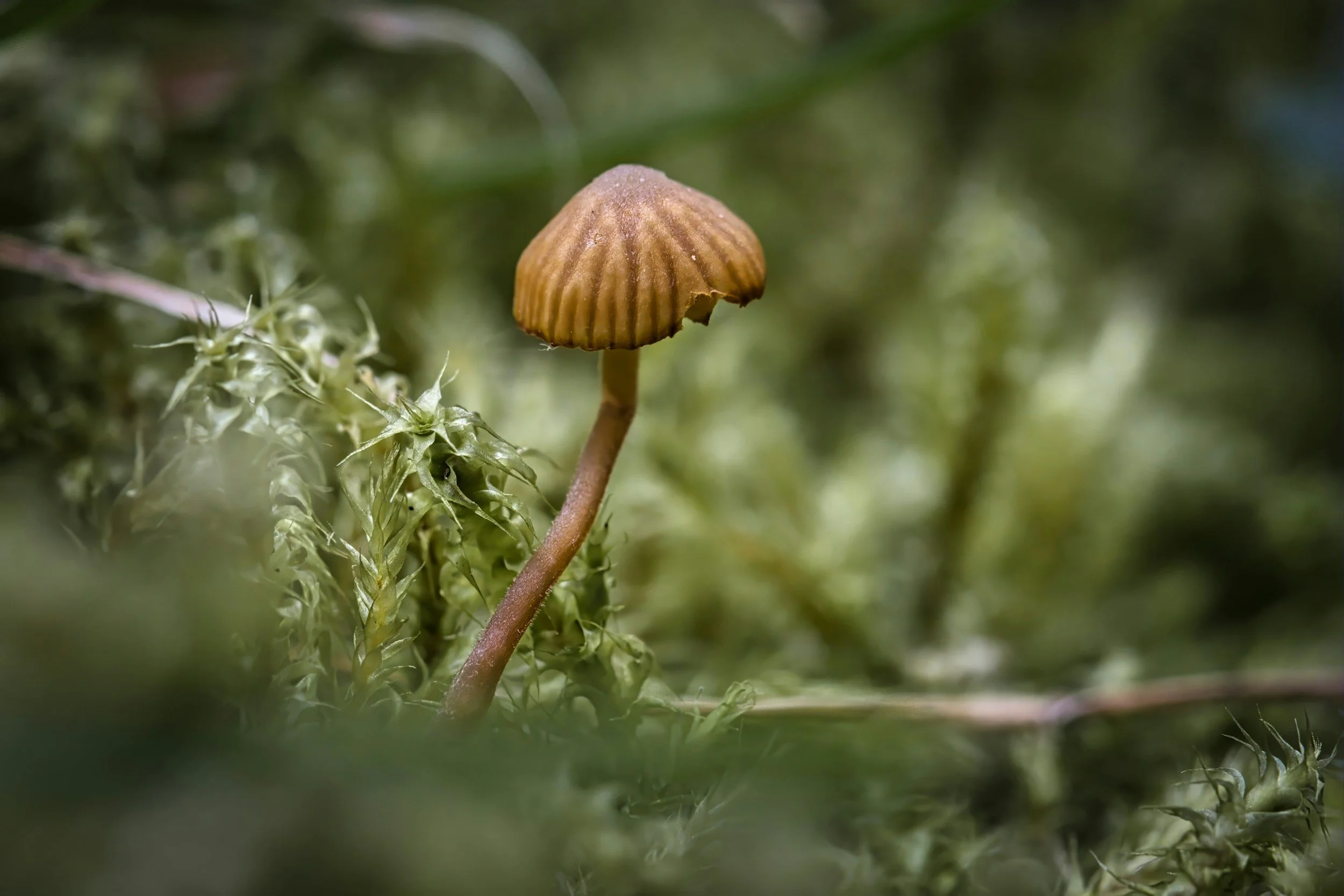
Now these medicines I'm talking about, they can range from ketamine, LSD, MDMA, which are more synthetic, derived in a lab, as well as nature-based medicines like psilocybin, also known as magic mushrooms. They grow in the ground quite abundantly. There's also cannabis, a plant medicine that has a very complicated reputation. and whose healing benefits are fairly underrated in my opinion. Also ayahuasca, an Amazonian plant medicine. There's Wachuma, also known as San Pedro. This is a mescaline-containing cactus. There's also peyote, another mescaline-containing cactus. There's also the iboga root, which is a sacred plant medicine used within the Bwiti culture in central West Africa.
And with this list of medicines, I will say these are not interchangeable medicines. There are specific circumstances in which you might work with ketamine, like ketamine assisted psychotherapy in the US, as well as a very specific context in which you might explore working with sacred medicines that are stewarded by indigenous across the world and across cultures.
And so again, these medicines are not interchangeable. Each medicine has its own personality. For the more nature-based plant medicines, a lot of folks, myself included, will experience them as having a spirit and a distinct voice or energy that comes with it. And it's important to build one's own relationship with each medicine that we might engage with. It really is a relationship. It's not just a pill that we pop in our mouths or something that we passively consume.
It's truly a connection that we form with the medicine and the context that surrounds the medicine, the people, the communities, the culture, or in the context of psychedelic assisted therapy, the relational context between the practitioner and the person receiving the services.
I will mention here that if you do want more of a deep dive into terms that are commonly used in the psychedelic medicine space, as well as basic info on how to prepare and integrate a psychedelic experience, or even just discern if it is right for you, I do share more written info on this in a free digital guide that I created. It's called How to Prepare and Integrate Your Psychedelic Experience. And I share some of my insights as a therapist and as a coach who works with psychedelic prep and integration currently in my practice. So if you do want to download that free guide and have it on hand, I'm going to include a link in the show notes and so that might supplement any answers I'm providing here or just give more context if a lot of this sounds new or unfamiliar to you.
Alright, for the rest of this episode, I'm basically going to address two common myths that we hear a lot about psychedelic medicines, going to unpack these myths. So you might have noticed there is a really polarizing narrative on psychedelics in mainstream Western culture, where in some corners, we might hear, this is all good. This is great. if you go on a trip with magic mushrooms, it's going to cure everything. That is one side of the conversation. And then the other side, totally polar opposite to that, is this is all bad. This is evil. You should be punished for using these medicines or drugs. And obviously these are two very extreme points of view. So we're going to start with the first one, the this is all good, we're going to talk about why that's not totally true.
Myth #1: Psychedelic medicines are a magic pill
So this language of, psychedelics are a magical pill, they're a quick fix… I've heard the saying, you know, one psilocybin journey is equivalent to five years of therapy. One ayahuasca ceremony is like 20 years of therapy.
And I don't disagree that a psychedelic experience, especially when held in an intentional, safe, and even sacred context, can be deeply healing and life-changing. There can definitely be that before and after sense of, well, before ever being introduced to psychedelics, life felt this way. And then afterward, including if it was a recreational trip with LSD or someone's first time engaging with cannabis, example, even that can be life altering in a positive way that it leaves someone changed for the better. I'm not denying that.
But what I do want to add nuance around is that nothing can fix everything and nothing can heal any of us overnight or just be a quick fix and that's it. That's not really how our healing works. So even though the psychedelic medicine might be assisting us or accelerating our process of healing, it's not going to do all the work for us.
And what worries me sometimes about the language of this is a magic pill or, you know, just pop this in your mouth and you'll feel better, is that it implies that the healing is a passive experience that we just consume when in fact, psychedelic healing is more of an active experience that we need to participate in and show up for in some way.
And participating in that experience starts with thoughtful preparation and planning. Typically, a psychedelic experience is not something that we just randomly decide to do one day without any prior thought. There is usually an intentional process of planning the experience or setting up logistics or finding a practitioner or a healing context in which to have the experience.
And so you might say that the psychedelic journey kind of begins the moment you decide you're going to go on this journey. It doesn't literally begin the moment we decide, but if I were to say to you in three months, you're going to have this healing experience and it might be really impactful, you know, that really changes how maybe you think about things or the actions you take across the next three months because there's an awareness in your mind that you're approaching a potentially very impactful journey.
So in that sense, that's not a magical pill. That's a mindful experience that we prepare for.
And then when we're actually in the journey itself, in that altered state of consciousness, psychedelic medicines are really inviting us to be with ourselves in a deeper way, in a more connected way, or to allow ourselves to receive care and support, especially if the experience is being facilitated by someone that we feel safe around. So, none of that is totally passive. There is an active intentionality in this.
And in terms of the scientific side of psychedelic medicines, the reason why they have this reputation of five years of therapy in five hours is because some psychedelics truly do accelerate our processing.
And I'll read out loud here a quote from a 2022 study that was published in the Journal of Neuropsychopharmacology.
The quote says that classic psychedelics such as LSD, psilocybin, and the DMT-containing beverage ayahuasca show some potential to treat depression, and addiction. Importantly, clinical improvements can last for months or years after treatment, and it has been theorized that these long-term improvements arise because psychedelics rapidly and lastingly stimulate neuroplasticity.
So there is a neurobiological mechanism happening that makes psychedelics certainly a new experience, a new and different experience, but also a potentially helpful experience for some people and some brains. And neuroplasticity is the brain's capacity to form new neural connections.
So if psychedelics increase or stimulate neuroplasticity, it means that when we engage with psychedelics, it becomes easier to shift out of fixed negative beliefs that we may have about ourselves or about the world.
It can make it easier to try on a new thought pattern or to access emotional states that may have been harder to access before. States like joy or hope or peace and relaxation. If that has been elusive to you for a variety of reasons, like traumas or nervous system dysregulation, then psychedelic medicines can really induce the neuroplasticity necessary to unlock those experiences.
I think of this as, you know, maybe before a psychedelic experience, the brain can be likened to a really hard chunk of clay where you can't really shape it. Whereas maybe after a psychedelic experience, that chunk of clay becomes more malleable. You can actually shape it a bit more. There is a window of opportunity where in that increased neuroplasticity, it's easier to maybe implement new habits.
And we actually all experience neuroplasticity. There are lots of other activities that can increase neuroplasticity like meditation or exercise or sleep. So with psychedelics, we're simply amplifying the processes that are already happening in our brains.
And we're accelerating the outcomes that we would experience through these other practices. So if I meditated every day for 10 years, then I would probably become a more mindful and peaceful person. That's the hope. And the idea is that with psychedelics, maybe you don't need to meditate 10 years, maybe you can work with psilocybin across, you know, one really significant journey or across multiple journeys, across several months or years, and that can change your brain in the same way that 10 years of meditation might change your brain.
So, the catch to this is just as easily as a psychedelic can take us to that high, right? To that sense of bliss or peace or to a sense of connection with something bigger than ourselves and that's a beautiful feeling, that feeling can fade after the journey just as quickly as it came in. Sometimes it doesn't fade, sometimes it lingers, but the point is:
We can't depend on psychedelics like it's some hack to enlightenment. And the real work, all the real work really happens after the journey and after the most direct effects of the medicine have faded off.
And so that's why in the psychedelic space, we really emphasize the integration phase. There's the prep phase, everything you do before you consume the medicine, days, weeks, months, years before.
Then there's the actual journey, the time you spend in that altered state of consciousness, which might be as short as 30 minutes and as long as 12 or more hours, depending on the medicine, depending on your nervous system, and depending on the context as well.
And there's also the integration phase, everything that happens afterward.
Maybe the medicine shows us a glimpse of what is possible to experience in ourselves, that ease, that peace, connection. But then afterwards, it is up to us that to really bring that experience into the everyday, to not be dependent on the medicine to bring us there, but to actually build those pathways in our own brains and bodies.
We might easily feel peaceful and connected to the divine while working with psilocybin mushrooms, but can we also access that sense of peace and connection in ourselves on a random Tuesday? Can we bring the medicine into our lives and really embody it? That is the integration. And that is why contrary to the myth, that this is a magical pill, psychedelics are simply a door that opens our awareness to what is the actual homework for us on the other side. I know that's maybe disappointing or less exciting to hear, but I think it also feels more realistic because if there really were a magic button we could press or a pill that could fix everything then
We miss out on so much of the human component of being messy humans and getting to know ourselves across time and learning from our mistakes and relating to other humans and learning how to rupture and then repair. These are all things that we humans learn through the experiential process of living it. And that's the type of healing work that does take time and new life experiences, not just a really trippy six hours.
Myth #2: Psychedelic drugs will fry your brain
So moving on to the second myth, the other end of this very polarizing spectrum. And that myth sounds like this psychedelic is going to fry your brain. This is an evil drug and no one, absolutely no one should take it. In fact, people should be punished or locked up for consuming these drugs.
This is very much the rhetoric of the war on drugs. So I don't know if you were someone who went through the D.A.R.E. program, but I was one of the kids who went through D.A.R.E. and D.A.R.E. stands for Drug Abuse Resistance Education Program. It was intended to give elementary school kids the skills to resist peer pressure to use tobacco, drugs, and alcohol, and the program would use uniformed police officers to teach a formal curriculum to students in the school classroom.
All I remember was this sense of surveillance and fear-mongering and wanting us kids to feel scared. And the D.A.R.E., as well as a lot of messaging on drugs, paints all these substances under the same brush. So it'll group together alcohol and cigarettes and cannabis and heroin and cocaine and then LSD as if these were all super comparable substances. And as if we could have the same conversation about every single one.
The truth is each of these are their own substance with their own chemical profile, their own sociocultural history within our society, their own origins. And all or nothing messaging that all drugs are bad, don't do them, end of conversation, really limits the conversation we can have.
So here's what I'll say about this myth, where some of the concerns and fears come from because there are absolutely reasons for people to not engage with psychedelic medicines or any mind-altering, consciousness-altering substance, whether it's a psychedelic or not. And there are absolutely contraindications medically, as well as biopsychosocial considerations to take into account when we're discerning if a psychedelic is appropriate for someone. And I'm not in a role to discern that for anyone.
In the context of psychedelic assisted therapy, as it's developing here in the States, there is a medical screening process with a qualified medical professional. And so some of the medical contraindications to psychedelics would be, you know, if you're in an active state of psychosis right now, that might not be a good fit for psychedelic use. If you are navigating an active mental health crisis and emergency, this might not be the time to engage in psychedelics. Active physical emergency, specific medical conditions, certain medications that people take that might have interactions with these psychedelic substances. These are all very important considerations and I think any safe and intentional usage of medicines involves a thorough assessment of this. So I agree with that piece.
I'll say too that there are also negative experiences that people have had with these medicines, not because of a medical contraindication or adverse physical reaction, but because the setting in which the experience was happening was not emotionally safe, maybe wasn't physically safe or physically comfortable. And basically that the context around the medicine consumption was not supportive in the way that that person needed.
Whether that was because of a guide who was not attuned to their needs or because of the music being really distressing or causing sensory overload, right? Or if there were relational ruptures happening in a group psychedelic medicine All of that can impact how negative or positive or helpful or harmful experience is for someone. And so I do want to acknowledge that as well.
Folks who become wary of psychedelic medicines, you know, it's often because they haven't had an experience of it in a truly safe container or they've heard of someone else who had an absolutely terrible experience, right? That classic bad trip.
And so I agree, a lot of the concerns make sense. And I think it's important to also let the facts and the data and the science have a voice in the conversation. So one thing to know is that psychedelic medicines are not as destructive to the human body as a lot of the war on drugs propaganda would have us believe. Right? That image of your brain on this drug and an egg frying in a pan, that's really not an accurate way to describe what's happening in the brain
So here's a scientific term for us: therapeutic index. This refers to the quantitative measurement of the relative safety of a drug. And therapeutic index actually places alcohol among the most dangerous commonly used substances, whereas psilocybin and cannabis rank among the safest.
And if that fact surprises you, I that might be a reflection of how the war on drugs messaging and the war on drugs propaganda has really impacted the way we all collectively perceive these substances.
So there was a pharmacological safety analysis done across many different studies that found that alcohol has a safety ratio of 10, which means that the lethal dose of alcohol that would end your life is only 10 times the amount of a dose of alcohol that would get you drunk. Whereas psilocybin and LSD both have safety ratios of 1000, meaning the lethal dose of psilocybin and LSD is 1000 times the dose at which you would just feel the effects of these substances.
And cannabis has a safety ratio that exceeds 1,000. So basically it would take a lot, a massive amount of psilocybin LSD or cannabis to reach a lethal dose in the average human body. Whereas it takes much less amount of alcohol to cause potentially devastating effects on the human body. So that's one example of how potential of danger or harm with psychedelic medicines can be blown out of proportion or misrepresented in mainstream media.
And one article cites that no human has ever died from a cannabis overdose alone because the receptors that cannabis binds to are not located in the brain regions that control breathing and heart rate. And I'm not saying that it wouldn't be perhaps uncomfortable or mentally distressing to consume way more cannabis than one's body is really designed to handle, but the point here is that it would be less likely to cause adverse effects on your health compared to drinking too much alcohol.
Similarly, psilocybin, our magic mushrooms, are considered to have a very low physiological toxicity and both animal and human studies have shown that psilocybin has low abuse potential and no physical dependence potential. And in fact, psilocybin has actually been shown to be associated with reducing the odds of current nicotine dependence.
This pattern was found in a sample of over 200,000 adult participants in the National Survey on Drug Use and Health. And so this suggests that the psilocybin mushroom medicine can actually help alleviate addiction to other substances instead of getting addicted to psilocybin, which is not a thing that's been recorded in the scientific literature.
My point here is that, you know, whereas substances like alcohol and nicotine are more normalized in our Western society, even romanticized, they're more embedded in our everyday life, and just the fact that alcohol is not considered or classified as a drug is really interesting and notable. Substances like cannabis, psilocybin, LSD are criminalized, they're stigmatized, they're viewed with so much suspicion and judgment. And so we typically don't get to see all of the facts up front unless we actively look for them because the dominant narrative is so, so limiting.
The impact of the War on Drugs
So you might be wondering, well, why do we not get all the facts up front? Why isn't this information more widely known and available? And why do psychedelics have such a negative reputation in our mainstream Western society?
This is where we need to touch on the impact of the war on drugs because any conversation on psychedelic medicines in 2026 needs to include an acknowledgement of how the war on drugs has wreaked havoc globally with a particularly harmful impact on communities of color. The war on drugs is a global anti-narcotics campaign that is led by the US federal government. And a notable date here is that in 1971, the then president Nixon officially declared a war on drugs and stated that drug abuse is public enemy number one. So super strong language here of going to war against drugs. And it seemed to have this noble intent of protecting the public from the harms of drug abuse.
But the war on drugs was not exactly about public health. Maybe that was a part of it, but it was also used as a strategic political tool. And we know that because in audio recordings that came out later, post his presidency, Nixon admitted privately that he knew that marijuana was quote not particularly dangerous unquote and yet he chose to make announcements and pass legislation that classified marijuana as well as other substances psychedelics as, you know, very dangerous
What's more, even more telling here is that one of Nixon's top advisors later said that the war on drugs was intentionally created as a political tool to oppress Black folks and hippies. The advisor, was quoted as saying, we knew we couldn't make it illegal to be either against the war or to be Black.But by getting the public to associate the hippies with marijuana and to associate Black people with heroin and then criminalizing both heavily, we could disrupt those communities. We could arrest their leaders, raid their homes, break up their meetings and vilify them night after night on the evening news. Did we know that we were lying about the drugs? Of course we did.
Does this sound familiar? How a narrative is created about a group of people in society, typically marginalized folks, and that narrative is used to advance certain political goals that are often dehumanizing and community destroying.
And the war on drugs became a means of enacting structural racism, structural violence, and oppression.
Other impacts of the war on drugs included know, decades in which research on psychedelic medicines was paused and prohibited, because federal policies classified LSD, cannabis, psilocybin, MDMA, and even peyote as schedule one drugs. These are defined as drugs with no currently accepted medical use and a high potential for abuse. And so the public understanding of these substances were based on a political lie.
And today, to nobody's surprise, BIPOC folks are still disproportionately arrested and incarcerated for possession of drug substances compared to their white counterparts.
And now we're in a moment in history where, you know, the script is starting to flip, where instead of all psychedelics, evil and bad, capitalistic corporations have realized that the potential benefits of these medicines are undeniable, that more and more people are learning about how life-changing some of these medicines can be in the right circumstances and that there's money to be made from this, right?
From that capitalistic point of view. so corporations are coming in and trying to patent and monopolize medicines and gain as much capital as they can. We just need to follow the money to understand why the script has shifted.
The truth is nuanced: psychedelics can be helpful for some people & unhelpful for others
That's what I want to say about the two myths on psychedelic medicines that I hear most often. And where do we go from here? Right? If psychedelics are neither a completely evil substance nor are they a magical pill, what is the in-between? What is the actual truth?
And the truth is that, as with most things, psychedelic medicines can be helpful for some people and they might be unhelpful for others. And nothing is really meant to be for everyone, except the most basic things like water and food and air and shelter. Right? Beyond that, beyond our basic human needs that we all have, there is so much nuance that it wouldn't make sense to make a blanket generalized recommendation for everyone.
So context is everything and healing through psychedelic medicines can take so many different forms. It can look like having ketamine assisted psychotherapy sessions or psilocybin assisted psychotherapy sessions in places where this care is legal and accessible. Psychedelic healing can also look like sitting in ceremony with a plant medicine like ayahuasca or San Pedro.
It can mean also recreational medicinal usage of cannabis. can look like microdosing because we don't always have to take a full dose of something. Microdosing is one way to titrate into the experience and kind of dip your toe in the water and experience the impacts of the medicine without going on a full blown journey.
You know, one thing that really stays with me from my work in the Peruvian Amazon, translating for a Shipibo shaman at a plant medicine center there, is that sometimes we would hold ayahuasca ceremonies and these happened at night in the dark under the moon and the stars. Sometimes we'd hold these ceremonies and sometimes people wouldn't drink the medicine directly during the ceremonies.
They would sit in the ceremony and other people would drink the medicine but some people would choose to simply sit there in the darkness meditating listening to the healing songs which are referred to as Ikaros and simply being in the energy of the healing space which was called a Maloka and they would have profound experiences. They would report even visions and insights and somatic experiences releasing in the body simply because they were in that space.
So that really tells us that, you know, yes, of course there are the neurobiological effects of the medicine as it's moving through the body. And there's also the entire context around the healing, which creates the experience as well. It's 90 % of the experience.
What does the research say about psychedelic-assisted therapy?
I want to end here with a couple of cool facts, once again highlighting that no, isn't for everyone. No, nothing is as simple as this is 100 % good and effective and positive or 100% bad, but rather that we can let science and data be a part of the conversation while also honoring that science and data are not the only ways of knowing.
But because in our Western colonial culture, science and facts are highly valued, I will share a couple facts from studies that recently came out. This one was a 2024 systematic review of MDMA versus psychotherapy alone for PTSD.
In simple terms, this systematic review of the scientific literature found that MDMA-assisted psychotherapy is consistently more effective than psychotherapy with a placebo.
In another study in 2024, it was found that when psilocybin is paired with psychological support, that it has demonstrated rapid and sustained improvements in major depressive disorder, with 60-80% of patients showing clinically significant reductions in depression at 6-12 months after treatment, a durability that traditional talk therapy and antidepressants rarely achieve in treatment resistant populations.
So that's pretty cool to know as well, that these scientific articles are really starting to document, you know, what we could have known decades ago, generations ago, but it's really great that it is being documented more and more.
And in my personal experience, as a person who has received lots of therapy in my life, working with plant medicines has helped me and supported my body and my nervous system in a whole different way than Western psychotherapy has. I don't think either is meant to replace the other. I think they can sit side by side and complement each other.
And I've also met people and worked with folks who found that their plant medicine experiences felt disjointing or difficult to integrate or just really challenging. And so there's a lot to be said about the variation of experiences and the context of support surrounding experience that may really shape the quality of the experience and it may determine whether a psychedelic journey feels helpful or harmful or somewhere in between.
Invitation to stay curious
And the note I'll end on here is that if you are interested in this topic for personal reasons, for professional reasons, that I invite you to learn from all different types of teachers. And this is an invitation as much for me as it is for all of us, to learn from nature as a teacher, which so many of these medicines come from and grow abundantly within.
We can also learn from our other fellow humans as teachers. So I hope this episode does leave you with a more nuanced understanding of what is myth, what is fact, and why the whole truth is way more complex than the headlines that we see in the news.
I wish you well on this journey of life and any other journeys that you may be exploring.
Curious about healing through psychedelic medicines, but not sure where to start?
Interested in working with me 1:1?
Online Therapy in Colorado | Coaching Worldwide
Helping you prepare & integrate your experiences with psychedelics, plant medicines, and non-ordinary states of consciousness.
About the Author
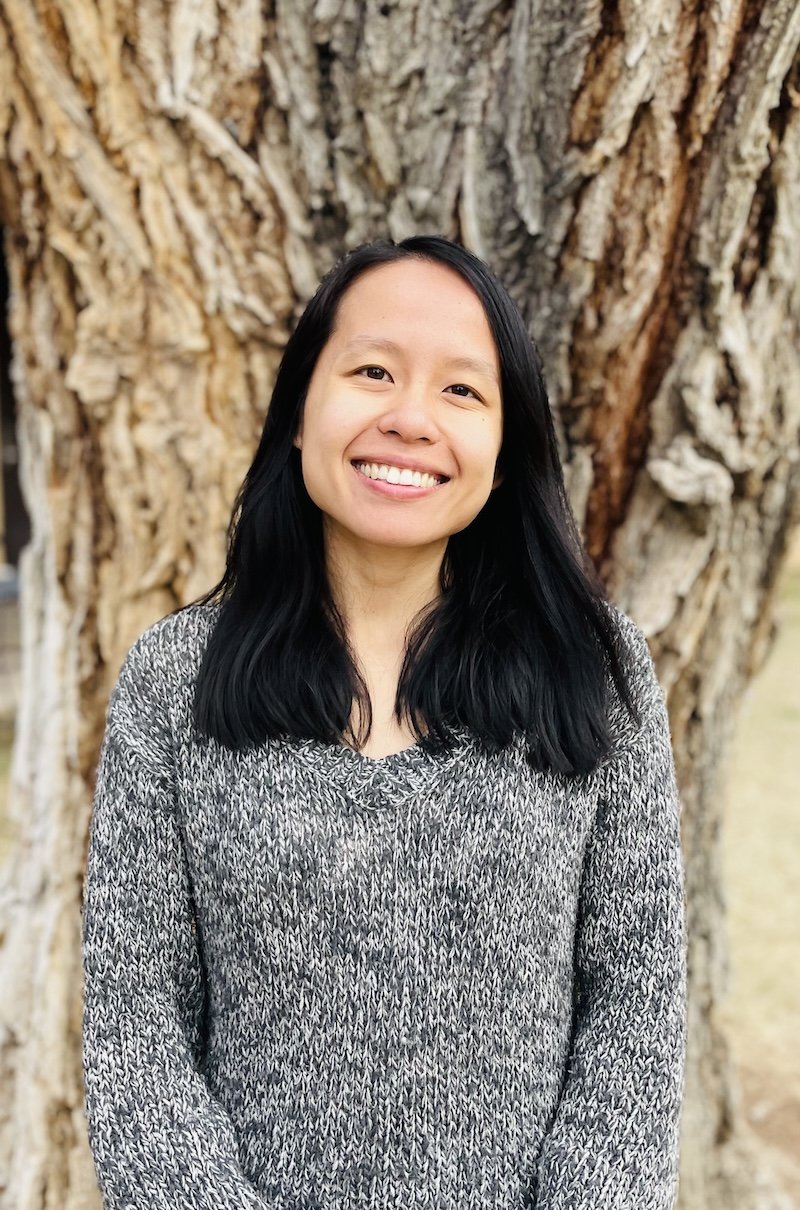
Liz Zhou (she/her) is a neurodivergent therapist, coach, and speaker. She helps highly sensitive, neurodivergent adults & couples heal their nervous systems and connect with their authentic selves, using brain-body modalities (Brainspotting, EMDR, IFS, psychedelic integration) that are quicker & more effective than traditional talk therapy. Liz offers Nervous System Healing Intensives online worldwide.