Decolonial & Ancestral Healing through Psychedelic Medicines
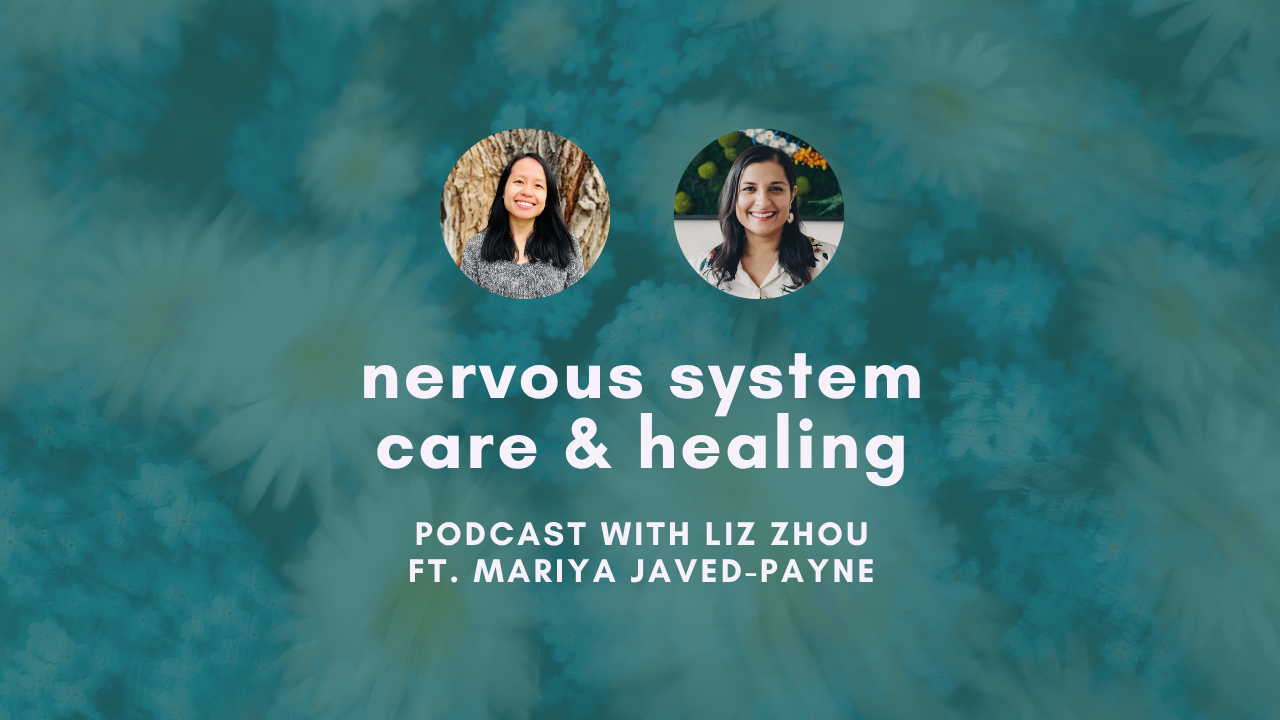
🎙️ This is a transcript of Episode 12 of the Nervous System Care & Healing Podcast with Liz Zhou, a neurodivergent therapist of color. Subscribe on Apple, Spotify, or YouTube to receive notice when future episodes come out.
-
Though psychedelic medicines are often presented as a “quick fix” or “magic pill” in mainstream Western culture, the truth is far more complex than that.
In this episode, Mariya Javed-Payne (she/her) & I explore what a decolonial approach to psychedelic medicines would look like — an approach that divests from capitalism, honors Indigenous wisdom & sovereignty, and centers relationship, reciprocity, & community.
We explore why psychedelic medicines are not for everyone, but there ARE many different ways to heal, including through ancestral & spiritual practices that we can weave into the everyday.
-
03:40 Mari’s journey from addiction recovery to becoming a psychedelic-assisted therapist
5:30 Honest thoughts on the psychedelic medicine field
12:57 Decolonizing psychedelic medicines & centering Indigenous wisdom
16:55 Why all trauma healing IS ancestral healing, & what ancestral & spiritual work can look like (even if you don’t know your ancestors)
23:54 Navigating psychedelic experiences w/ discernment & intention: ketamine, cannabis, psilocybin, ayahuasca, & plant allies
31:13 Envisioning our future as empire falls: community, care networks, & connection w/ land
-
Mariya Javed-Payne (she/her) is a Licensed Independent Clinical Social Worker, Licensed Alcohol & Drug Counselor, and International Brainspotting Trainer and Consultant. She is a somatic psychotherapist & the owner of Awaken Consulting Services, a private practice & consultancy where she utilizes Brainspotting therapy and offers training & consultation on treating trauma, somatic psychotherapies, psychedelic assisted therapy, and ancestral healing. The foundation of her work is decolonial and liberation-based. She is also the co-founder of Awakened Roots, a sanctuary & healing space where she offers breathwork, shamanic healing, and other earth-based wisdom offerings. She serves as a bridge between the mystical and the mainstream and has courageously supported thousands of therapists, healers, and individuals to embody their aliveness and potential.
>> Brainspotting trainings: www.awakenconsultingservices.com
>> Breathwork workshops: www.awakened-roots.com
>> Instagram: www.instagram.com/awakenconsultingservices
Mariya Javed-Payne (Mari): Thanks for having me Liz. It's always good to sit with you.
Liz Zhou: So wonderful. So as we're starting out here, I'm wondering if you could share with our listeners, you know, your bio is just such a depth of work that you do. I'm wondering what drew you to this work and why do you do this?
Mari: I think like a lot of healers, my own journey in receiving healing led me to pursuing caring for other people, tending to other people. And it's something I think that
I was raised with coming from India, this communal collective culture. My family really emphasized giving and caring. And then when I went through a very long dark night of the soul, if you want to call it that, that spanned actually like 16 years including addiction. I was on the receiving end of rehab, treatment, psychotherapy.
And then moving also into more holistic healing methods. And this was all, you know, before, before age 20, 21. So those like eight years of really heavy duty, opiate addiction and addiction to crack cocaine had, had me in the system. You know, I learned about the system. I learned it from the inside, what it was like to be a recipient.
And then when it was time to go to school and kind of figure out what I wanted to do with my life, being a therapist was really the pull and the draw was to be able to connect with other people, help, also because I could relate so much.
That's what sparked it, you know, the...ancestral, familial, those origins where culturally we're taught to be collective and caring and communal. And then my own history, I found myself in those spaces where I needed care. I needed help. And I got to see what worked and what wasn't working. know, I had to feel it and be in the belly of the beast, so to speak.
Liz: That offers such a unique perspective, to be a recipient of the system's services or care and to see maybe where some cracks in the system exist.
Mari: Yeah, big, big ones. You know, I slipped through, I actually didn't stay sober after eight rehabs. So if I total out how much time I was locked away, it was like two and a half years of my life in a center or different centers.
When I eventually did get sober in 2010, it was actually through more of a psychological break and was the beginning of becoming spiritually aware, or becoming aware of other realms.
So I got to see what it was like, not working in the system. And then my own experience grappling with my mental health led me to seek out other ways to help explain what was happening.
Liz: Yeah. I know that, you know, so much has happened since going through the treatment programs to where you are now and the work that you do of actually being a psychedelic assistant therapist, trauma therapist. Could you share what are your thoughts right now on the psychedelic medicine field?
Mari: Fast forwarding, you know, a lot of years, it's kind of interesting. I never would have thought of myself back then that I would be working with medicines.
Because, you know, I think in the recovery culture, you don't do psychedelics. But what do I think of it now? You know, 16 years into sobriety, 16 years into healing work, and then formally doing psychedelic assisted therapy for the last four to five years, I have a lot of pause, to be honest with you.
I am gonna share some unpopular opinions.
Liz: Go for it. Yeah, that's what we're here for.
Mari: Yeah, I'm really resistant actually towards this big wave, what we're calling the second wave of psychedelics in the US and in America, this really limited view, very stripped of context. And this is what we see happening in colonialism and capitalistic structures, is that context always gets stripped. It's always about instant gratification, consume culture.
So while I've been beneficiary of plant medicines and entheogens and psychedelic medicines, and I have received so much healing, I really have received so much and it's a huge part of my life. I'm also really disgusted by the proliferation of psychedelic assisted therapy and the way that it's being kind of rolled out.
And I knew that that was gonna happen and it was why I was so hesitant to enter it from the mainstream realm. It was through some of my own sitting with medicine and asking the medicines themselves about like, what is my role in all of this? - that I was told, well, it's gonna happen anyway. So your voice of dissent may actually be useful here.
What I'm dissenting about is not - I’m not saying don't go use medicines.
What I'm saying is that the culture that we live in and we come from does not know how to be in relationship with really anything. We don't know how to be in relationship with each other, with nature, with other forms of life or non-life.
And so then when you start to relate to medicines, or you ingest medicine, these are spirits.
They require relationship. And if we come at it from consume culture, I think it's very, very damaging, and not honoring of the ecosystem in the context that it comes from. And what I think happens then is that a couple of things. One, people keep going back for more and more and more and more. And that's our consumer culture, we need something outside of us to heal what's in us. And we need more of it constantly.
And the second thing is that we can struggle to integrate what we experience if we don't have that rooted context - the history, the historical, the contextual, the origins, the rooted beginnings following that thread all the way to this particular timeline that we're in.
So I see people going back, and it's like going back for more and more and more, but not really knowing how to truly be in the life that they're living.
Liz: And it creates another addictive-like cycle of always going back for more to fill a void that cannot be filled if we come at it from an extractive point of view.
Mari: Yeah, and the thing about it is that most of us, if you ask, you know, you, me, or the next person, if they're an extractive person, they're going to say, no, no, of course I'm not. So that's the thing here: it's very hidden. It's like a hungry ghost that lives inside all of us that are in this culture.
It takes active inquiry to look at, how are my thoughts extractive? How are my emotions, behaviors oriented towards extraction? And to do that from a place of non-judgment also.
I'm not saying any of this to be shaming or blaming. It is really about accepting the nature of reality as we find it right now. And then working with, where do we wanna go and how do we wanna get there?
Liz: Yeah, and this idea that we are all exposed to the mass conditioning and that it does take active effort to decondition and unlearn and to relearn or remember a different way of relationship and reciprocity.
Mari: Yeah, the remembering is more than 10,000 years ago, you know, and it lives in us and it's lifetimes of work. This is going to be lifetimes. It's never going to end in our lifetime.
Liz: So I'm thinking about our. Western context and being based here in the US, where we see talk of ketamine-assisted psychotherapy as well as ketamine treatment. We see psilocybin-assisted therapy, and then there are also folks who are engaging with plant medicines like ayahuasca, whether that is traveling abroad or having a context here in the States to experience it.
Could you speak to what would a decolonial approach to psychedelic medicines look like?
Mari: First and foremost, thepeople that we would be actively centering would be the original stewards of these medicines. They would have the reins. They would have the leading guidance to offer in how to shape this proliferation from more underground or indigenous or ceremonial contexts and how to bridge it with the Western world. And it is so sad to me to see how that always an afterthought.
Liz: If it's even included.
Mari: If it's even included. Yeah, I think we're seeing a lot more like, maybe performative attempts. I'm seeing more of that.
What I don't see is a willingness to surrender the consuming culture, the profiteering, to say: I’m going to let you lead. I'm gonna let you show us the way. And I think that's what could really change the ground of all of it. That would be true reciprocity and true repair work if we did it like that.
Liz: I can just hear the capitalists’ voices of, but then where would the profits be? Or would we make as much money? Right? Because that's the lens that our Western systems are coming from. Yeah, it's really sad.
Mari: Yeah, totally agree.
Liz: I also want to ask about ancestral and spiritual work, because I know that is such a foundation of not just how you work, but how you live. And I'm wondering if you could share how you see ancestral or spiritual work interacting with psychedelic medicine work or just share more about that.
Mari: Sure. Spiritual and ancestral work are probably the core orientations to how I see the world and meet people in the healing context - from a place of frequencies and energies.
Trauma work is ancestral. Trauma is passed down.
So again, with the Western context, that has been narrowed into individual therapy. So when someone comes in and you see somebody for a psychotherapy session and they share a problem with you and then you have a diagnosis and all of that.
What we're doing is looking at it from a microscope versus the fuller picture.
What we're not usually taught or trained is to see is the biopsychosocial. I mean, we talk about that, like we're trained biopsychosocial, right? You do those assessments and you look at how everything is connected.
And that's great, but in actual application, because we have this narrow individualistic model, people aren't coming into therapy as families or as larger constellations. So we're missing the boat there.
And when we really start to look at people suffering, we can see how that came from generations past. Most of my suffering comes from things that affected my ancestors, that affected my parents, that affects me. It's like all trickling down. So I think it's helpful to widen the lens to know that all the work that we're doing is actually ancestral work.
And when you make that conscious, you are inviting in not only the gravity that this is more than one person you're working with, but you're also inviting profound level of resources that come from the lineages that we were born from.
So, psychedelic work and how that relates to medicines and our human historical wounding: there's absolutely connections to ancestors that can show up in medicine work, especially if you're keen to it, or you invite it, or you can have that awareness to bring that in.
And in this way, it is quantum healing. It's going backwards and forwards and it's having access in a way that we might not if we are not in a non-ordinary state of consciousness.
So there's a lot of potential there to do high-potency healing work, but again, you know, in a container that can support that.
Liz: Yeah. It's reminding me how with psychedelic medicines, when I've experienced them in my body, how in such a non-ordinary state of consciousness, the veil between this reality and other, it gets thinner or leaves entirely. And also sense of time can really shift. So it really highlights how like, yes, the past is the past and this is the present, but it's actually all connected and kind of a wheel or a circle.
And to your point, how that does open up access or gives us a doorway to step through. And how if we really zoom out and see the big, big context that it's not just like, here's an individual in distress, there is a family system, there's generations that go way back. And not only do we and our bodies hold the impacts of the intergenerational trauma, if there is that in our history, which most of us do, but also the intergenerational resources and some of the resilience that we can inherit as we..
I want to ask this for anyone who's listening who's like, yeah, ancestral and spiritual work, that resonates with me - but maybe they haven't seen many examples of what that can look like. So I'm curious if you were just introducing someone to this idea (or helping them remember, really), are there any practices or any ways that you really tap into this.
Mari: Yeah, it's an ongoing process and learning. I'm learning and adding, like most of us probably are. We may have lost contact with who our ancestors were.
We may not have even knowing of what were their names and where did we come from. So it starts with an opening there - just being curious about it and that can look like starting to research, asking family members about information. So that's one of the ways that my journey started, and sadly my family really wasn't able to tell me that much.
I've relied heavily on the more intuitive, psychic ritual work to also connect with my people.
It is sort of like, if you haven't called somebody in a really long time, they might not pick up the phone right away. They're like, oh, what's that rusty, dusty phone in a corner with the dial, you know, like, whoa, that phone's ringing.
Liz: Right, like I didn't know that was plugged in.
Mari: Right. So they might not answer right away, but it starts with asking. Asking for that connection. Creating an ancestral altar is a really sweet way. And this does not need to be anything elaborate. This is simple. It can be a few mementos or things that represent your family lines, your lineages.
So some of the work that I'm coming from is I've learned from ancestralmedicine.org - Daniel Foor's work & Amber McZeal's organization give really good baseline information for people wanting to reconnect with their ancestors.
We have an altar at our home and every day we say hello to our ancestral altar and the people that it is representing. We make offerings, we'll put a cup of tea or honey or cardamom, or other things that remind me of my home.
And it's simple. It's simple as saying, I wish you well. It doesn't need to be this elaborate thing. I wish you well and I want to connect with you. I want to connect with the wise and the well of my lineage.
So simple things like that would be what I do with clients that are interested in reconnecting. And then there's the more psychic, intuitive, ritual work that we might do specifically if there's unwell ancestors that are lingering or hanging around where there's unfinished business. So I do a lot of psychopomp work. I can speak to the dead and help them cross over.
When there are are family illnesses or emotional patterns that have been passed down, we can work on a somatic and psycho-spiritual level to unpack and undo and unwind that - and liberate not just what's happening for the individual but also the non-human, not in a physical body.
The family members might still be impacted by these intergenerational threads - so it's a mix of psychotherapy, shamanic work, intuitive work, communication between realms.
My way of doing the work is actually to teach you how to do it. Because I think that that is the most empowering thing is when we can learn how to do it ourselves. It doesn't mean that we don't need help. But I don't want to be anyone's guru.
I don't want to take people's sovereignty and be put on a pedestal. I want to really be in relationship with folks so that they can learn how to access those states themselves and to do so in a way that feels grounded and protected.
Liz: Yeah. And that's something that I feel is a green flag about you, that you are very firmly not about being someone's guru or the be all, know all expert; that you really honor your teachers, honor every person's wisdom, and also really own your knowledge and expertise.
That's one of the things I see happening in the psychedelic therapy field - it happens in every field, in meditation, in mindfulness - of: I know everything, and I'm going to impart this on you.
To really decolonize is to say we all have something to learn from each other. No one here is better or superior than anyone.
Mari: Absolutely. There's a real risk to losing our sovereignty. And I've given mine away many times, which is how I've learned that hard lesson of don't be anyone's guru.
Liz: Yep.
So I'm noticing that as you were describing the ancestral spiritual work, how you integrate that into your work with people, that it is describing a psychedelic-like experience - though medicines may or may not be involved. I'm wondering if you could share more, if you did have a client who was considering exploring psychedelic medicines like ketamine-assisted psychotherapy, what would you want them to consider? Because it's not right for everyone. How would you really hold someone through that process of deciding and discerning?
Mari: Absolutely. Well, a lot of the conversations I have with people are about sovereignty and about surrender.
If you're gonna have a more impactful experience with medicines, you need to know how to surrender. And our society sucks at that.
Liz: Yeah, we grab and we hold and squeeze and grasp.
Mari: Yeah, we cling, right? We pry our fingers off of whatever it is we're holding on to. So I also want to inquire about where's the interest coming from? Is it coming from this is a hot topic and it's the newest trend? Or is it coming from being called? Being called from a deeper place inside of you that's saying, I wanna explore my inner terrain. I wanna know myself in a deeper way. I want to know what's been in the shadows for me or the places that I feel really stuck.
And often, it's both. It's like, oh, this is a hot topic right now, and people are suffering and they are struggling and they're not getting the solutions in the current systems that we have. The medical and mental health industrial complexes don't offer true long-term, solutions. A lot of it is a quick fix.
So it's talking to them about, where's this it coming from?
And right away I'll say to folks, this is not a magic bullet. Any inclinations about that, you want to put that aside. Because real work actually happens after the psychedelic journey.
That's just the door, it's just the door getting opened. Doing psychedelics is basically saying, I'm gonna go out of my window of tolerance. It's basically like, yeah, I am choosing to move into a state that highly likely I will be out of my window of tolerance. We need to be okay with that and have the right support in place.
So those are usually the things that I'll talk with clients about. Then it might be figuring out what medicine might be supportive to you. Is it ketamine? Is it another plant ally?
And also there are many other ways to access non-ordinary states. You mentioned it. You're like, you know, it sounds like what you're doing is psychedelic work without medicine. Absolutely. I feel like I'm on a journey every single day. When I do the work, I don't need the medicine to do that. When you learn how to travel into different domains and dimensions, it's quite similar to that terrain.
Liz: Mmhmm!
Mari: That's the other thing that people, I hope people will understand is that breath work, meditation, journeying - lately I've been working a lot with flower essences and that's vibrational medicine - and I can go into altered states with working with flower essences. They're so subtle, but they're so potent. So there's many, many ways. It doesn't have to be ayahuasca. It can be cannabis, mushrooms, and I just want to say this is a personal opinion - some of these master teacher plants, because they're limited resources - it takes 15 years to cultivate a mature ayahuasca plant, it takes hundreds of pounds of plant material to to make a small batch of ayahuasca - there is real risk for ecological demise. It's happening as we speak. And so my thought is: if you're new and you're interested, why not work with cannabis? Why not work with mushrooms to help clear out the layers of crust that are on all of us?
Eventually, you might be ready to do something more with a master teacher plant, and the master teacher plant won't have to get in and work out the crust; it can work really deeply with the deeper material.
Otherwise, it's having to move through all of the gunk that we might be carrying around.
And cannabis is very underrated. You know, she's really been demonized. It's a whole other podcast we could do on that.
I've had journeys with cannabis and experienced almost equal results and support and healing as like an ayahuasca experience. So it all just depends.
Liz: Yep. Exactly.
There's so much that I'm appreciating in what you're saying - first, that discernment of what is your why of wanting to do this and just checking that it's coming from a place where it would make sense to continue with the path and the ecological climate considerations. I know that when I've engaged with the world of ayahuasca and the Indigenous people who steward it, there really is this sense of like, our goal is not to have everyone in the world drink ayahuasca. That doesn't need to happen. There is still a ripple effect if one person experiences this medicine and carries those teachings back to their home and their community.
And then your point about… it's not even like, this is the least intense and this is the most intense. Everything is what it is in the way it interacts with your nervous system in that moment. Someone could have the most deep journey with cannabis and also not feel anything at all with ayahuasca. Right, so exploring what would make most sense based on what you need and don't think we just have to jump to the most intense-seeming thing right away.
Mari: That is the real risk of our society, is to go big or go home. It's to do the thing that is, you know, the coolest or most in.
We go back to the very beginning of our conversation when we were talking about relationship - we want to meet these medicines in relationship. And so if you're going to go into the inner temple, it's wise to wash your feet.
Some of these medicines grow in great profundity. Cannabis is such a gift to our world. There's so much healing that she can offer that's accessible, right? And so if we work with that, we're also then holding the context of that ecology of respect, of how to work with something that's rare.
And again, it's not gatekeeping. If your heart calls you to grandmother Ayahuasca or grandfather Iboga, go. But listen in your heart first and also tune into where's the hungry ghost in you, because we all have it. We all have the hungry ghost. And so you ask, is this the hungry ghost talking? And usually it's some kind of blend. So how do you unpack that? It is useful to not move with urgency.
Liz: Yeah, one of the most important reminders and teachings and prep work of: okay, am I being urgent and rushing this, or am I approaching this process with intention and letting myself slow down and just be - and even that is a way the medicine can teach us before we've ever consumed it on our lips.
We've really touched on ancestral past, how do we navigate the present and all of the toxicity in the systems we live - what kind of future do you envision or are you building toward as we see systems collapse around us and the empire falling? We are recording this in April of 2026 for everyone's context.
Mari: Yeah, what a time to exist.
My prayer and deepest wish is - and this is not passive, it's a very active prayer, active through my hands, active through my feet, active through spoken word and action each day - is living in community with people, different races, different backgrounds, different abilities.
I see it being small governance.
I see us taking care of each other, like the villages and care networks.
I pray every day for the dissolving of greed from all humans. And that we're not just taking care of each other, but we are taking care of our living earth and that there's a reconnection with that cycle of life, cycle of nature, cycle of life and death, returning to that remembrance. That's what I dream about.
And that's what we're doing here on the land that we've been given this opportunity to steward. Building a space where healing can happen, and we grow our own food and we live in this loop that's honoring every stage of what it means to be alive, the spiritual, the physical, the emotional, the relational, communal.
Liz: Beautiful. Yeah, it really feels like the wheel of time - how the future is also returning to our roots and the way that we most of humanity lived for quite a while before we got capitalized and started outsourcing the village.
Thank you so much, Mari. This has been such a pleasure, just dipping the toe in the water of this conversation. For our audience, I hope it's a thought-provoking and heart-opening kind of glimpse a different way of remembering and being.
IF YOU ENJOYED THIS CONVERSATION…
Subscribe to the Nervous System Care & Healing podcast on Apple Podcasts, YouTube, or Spotify, so you don’t miss future episodes.
🎧 This is a podcast about how to take care of our nervous systems while we navigate systems of oppression that were designed to keep us dysregulated.
Vibe: grounding, soothing, educational, community-centered, neurodivergent-friendly.
Hosted by Liz Zhou, a neurodivergent therapist of color.
About the Author
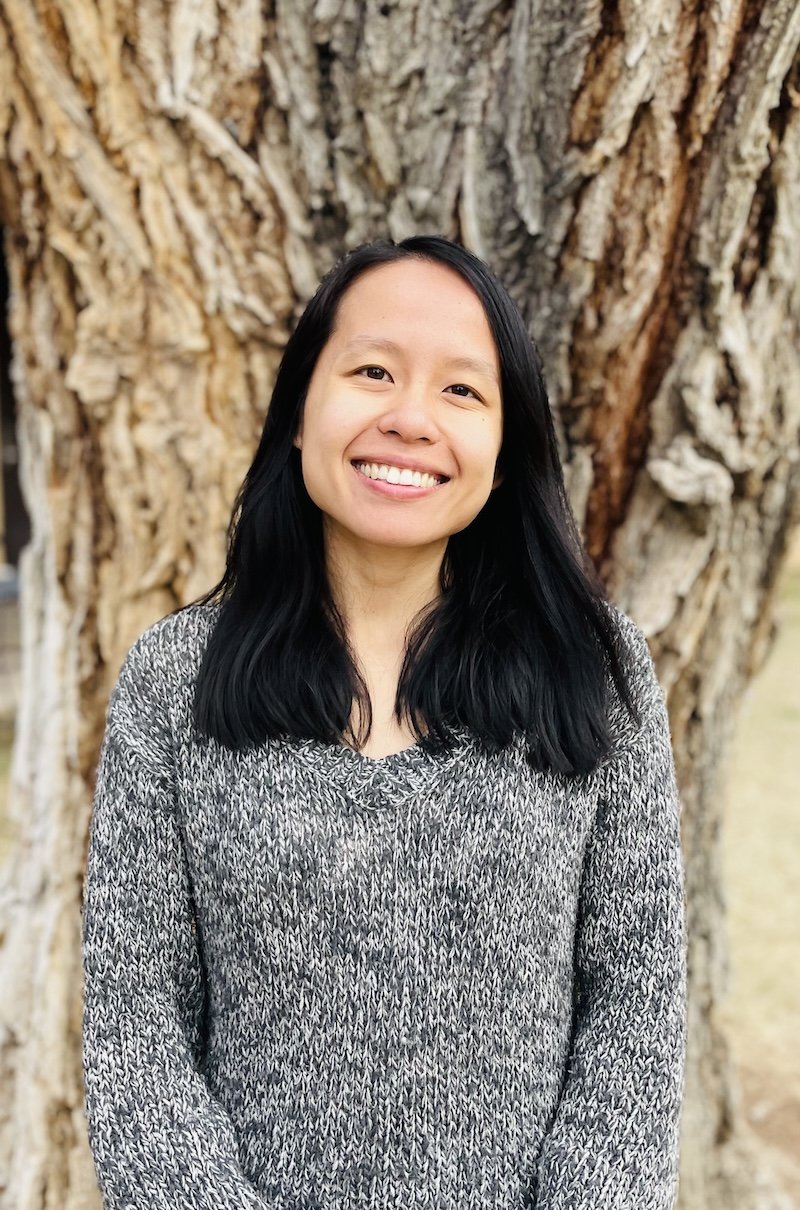
Liz Zhou (she/her) is a neurodivergent therapist, coach, and speaker. She helps highly sensitive, neurodivergent adults & couples heal their nervous systems and connect with their authentic selves, using brain-body modalities (Brainspotting, EMDR, IFS, psychedelic integration) that are quicker & more effective than traditional talk therapy. Liz offers Nervous System Healing Intensives online worldwide.