3 Questions to Ponder if You Discovered Your Neurodivergence (Autism & ADHD) Later in Life
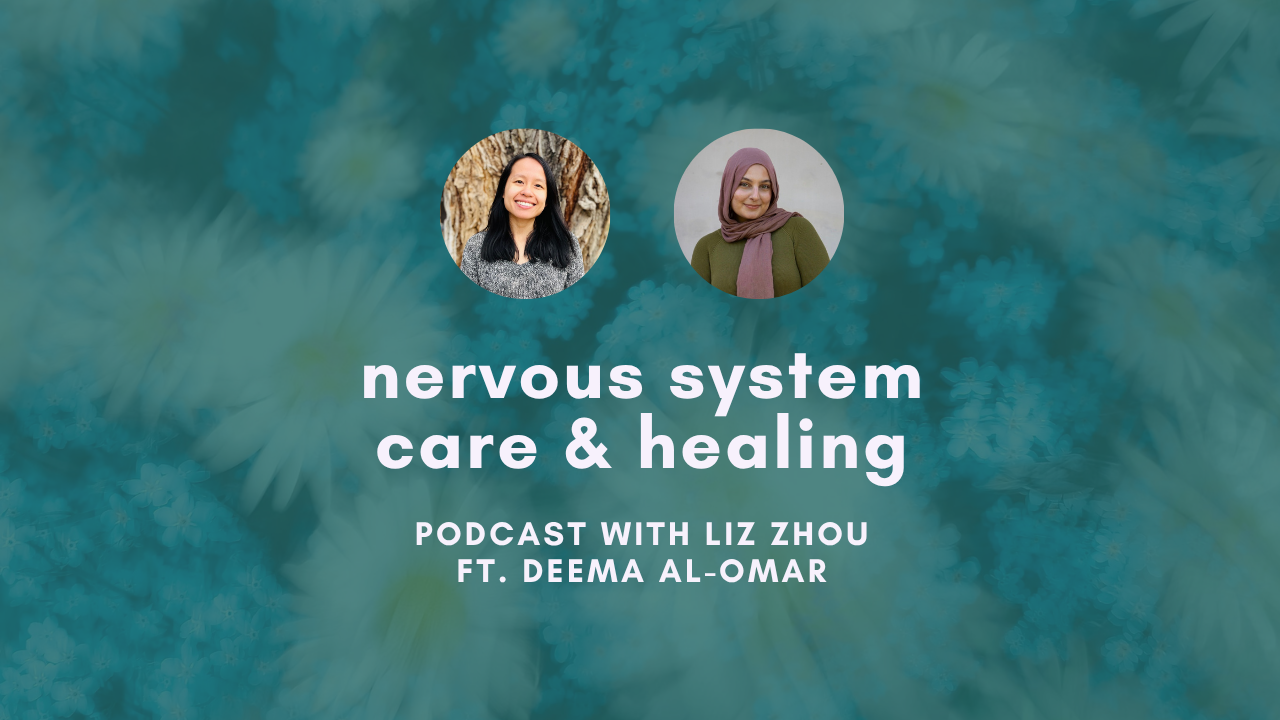
🎙️ This is Episode 17 of the Nervous System Care & Healing Podcast with Liz Zhou, a therapist specializing in neurodiversity, complex trauma, & psychedelic integration.
If you prefer to listen & watch, press play on the video above.
If you prefer to read, keep scrolling to the transcript below.
-
If you discovered your neurodivergence (like autism or ADHD) later in life, it may feel like you’re getting to know yourself for the first time. The process can be exciting & expansive - and also overwhelming & disorienting.
This episode is here to affirm you, support you, and awaken a sense of curiosity & self-compassion… wherever you are in your journey of unmasking & embracing your authentic self.
We’ll explore:
why some people discover their neurodivergence later in life (and how lack of diversity in mental health research impacts the information available for folks)
why self-identification & formal diagnosis are both valid options - there is no one “right” path
how different seasons of life might unmask/unearth your neurodivergent traits, as your relationship w/ self changes across time
Then, I’ll present 3 questions for you to reflect on:
08:16 Now that you know (or suspect) that you’re neurodivergent, what makes sense - about yourself & your life - that didn’t make sense before?
12:13 What is 1 thing that you appreciate about the way your brain works?
15:15 How might this change the way you take care of yourself?
The intention of this episode is to empower you & guide you into a deeper relationship with yourself.
-
Racial, Ethnic, and Sociodemographic Disparities in Diagnosis of Children with Autism - https://pmc.ncbi.nlm.nih.gov/articles/PMC8500365/
Intro
This blog post is for you if you discovered your neurodivergence later in life - in your 20s, 30s, 40s, 50, 60s, & beyond.
Whether you were recently diagnosed with ADHD; whether you recently realized that you’re autistic; whether you received a formal diagnosis through the mental health system, or whether this is something you pieced together based on information that you found online or in books or in the research… I want to acknowledge that all experiences of neurodivergence are valid and there is no one way that this path looks like.
You are welcome here.
Why do some people discover their neurodivergence later in life?
There are many reasons why people discover neurodivergence later in life, as opposed to knowing this about themselves from early on in their childhood.
Sometimes people discover one aspect of their neurodivergence early on - like maybe receiving an ADHD diagnosis in childhood, but then later as an adult realizing that they’re also autistic.
(1) Across time, more information about neurodiversity has become available.
If we go back just 10, 20, or 30 years, the research on autism, ADHD, & neurodiversity - and how it might present in people of diverse backgrounds - wasn’t super available. This info still isn’t super available. There’s a long ways to go before the research represents the true diversity of the population.
If we focus on autism, as an example: mainstream depictions of autism tend to center on the experiences of white males (and often of high-socioeconomic status) – which leads to the common assumption that autism “looks” a certain way.
In reality, autism is not a monolithic experience. Autism shows up across all communities, genders, races, cultures, and identities.
A 2021 study* states: “Although the prevalence of ASD has been found not to differ across racial and ethnic groups, studies have found that White children and those of higher socioeconomic status are more likely to be both identified and diagnosed with ASD earlier compared with Black, Latinx, and Asian children, as well as children from low-income families.”
In terms of the autistic experience, there is this gap between people who are getting diagnosed vs. how many people are actually autistic.
We see this discrepancy with other types of neurodivergence as well, like ADHD.
(2) As you go through seasons of life, your relationship to yourself changes.
Maybe you go through a transition - you go back to school, or you change jobs, or you move homes, & now you’re living with a partner instead of alone; or you’re living alone for the first time after having roommates your whole life, and you find out new things about yourself & your nervous system.
Maybe you become a parent, or you’re navigating perimenopause, or you’re going through a grieving period.
Any kind of life change can shake things up & make some of your neurodivergent traits more visible or more apparent. These traits might become unmasked or unearthed.
For example, in a period of grief, some people have way less energy to mask - so more of their authentic self might come out in that grieving process.
In periods of high stress, like going through school or working at a high-pressure job, some people find it harder to rely on the coping skills that had been working before. As their coping skills become less effective, some signs of autistic burnout or ADHD burnout can start to surface. They realize they’re neurodivergent, and that’s why everything has felt extra hard for them compared to their neurotypical peers.
Sometimes people discover they’re neurodivergent because first their kid gets diagnosed with autism or ADHD - and that leads the parent to realize that they’re also autistic or ADHD or both.
“I just discovered that I’m autistic / ADHD / AuDHD… now what?”
Once you know this about yourself, things start to change - there’s this before & after point. It can be exciting, expansive, and relieving to finally have some language to understand yourself.
But it can also be disorienting & overwhelming, because now there’s another box to unpack about yourself.
It’s especially hard if the environment you’re in isn’t totally safe or affirming; if you’re navigating deeply ableist systems at school or at work (which most of us are, to some degree); or if the people around you don’t seem to understand or accept you.
These next 3 questions are meant to stoke curiosity & compassion for yourself, wherever you are in your journey of unmasking and exploring your authentic self.
(1) What makes sense now - about yourself & your life - that didn’t make sense before?
Now that you have this language - I’m autistic, I’m ADHD, I’m neurodivergent, my brain works differently - things start to make sense & dots start to connect in a different way.
Maybe before, it seemed like everyone in life was following a manual, and you’re the only one who didn’t get this manual, and you’re wondering what you did wrong.
Post-diagnosis, you realize that you’ve been running on a different operating system than everyone else - and the manual that everyone else was using, might not actually work for you.
Maybe now, it makes more sense why certain executive functioning tasks - like time management, or staying focused on one task - seem so much harder for you, than for neurotypical folks.
Maybe it makes more sense why social situations always felt so challenging for you, even though you were trying to do everything “right.”
I know it doesn’t necessarily feel GOOD to know these things - sometimes it can actually feel worse, or emotionally activating, to look at our lives in hindsight. One part of processing your experiences might mean acknowledging the grief around not feeling seen, heard, or safe.
I’ve noticed that as people get acclimated to the vocabulary of the neurodivergent community - like masking, unmasking, rejection sensitivity, demand avoidance / drive for autonomy, meltdowns, shutdowns, autistic burnout - having a word for your experience can feel helpful & validating. It can remind you that you’re not alone.
Once you have a specific word or label, sometimes you can find more specific resources - because if you’ve been trying to manage your “anxiety”, but you find out later that what you’re experiencing is actually sensory overstimulation, then you can direct your search to more specific resources that address the root of the issue.
>> To explore more specific resources, check out these blog posts:
🌈 For Late-Diagnosed Autistic Adults: How to Unmask after a Lifetime of Masking
It’s important to name, too: discovery of neurodivergence can intersect with other identities - like gender identity, sexual orientation, culture, race, ethnicity, socioeconomic status, & disability.
You may experience multiple aspects of “things making more sense” - not just your understanding of your neurotype, but also your relationship to all parts of yourself.
(2) What is 1 thing you appreciate about the way your brain works?
The purpose of this question is to help us reframe from self-criticism to curiosity.
Some of the traits that you may try to hide, that you judge yourself for or have been judged for, might also be your gifts. The things that make you different make you a unique human being, with so much to offer to this world.
In the most pathologizing version of the mental health system, neurodivergent people are discussed in terms of their “symptoms” - rather than their “traits.” ADHDers are criticized for their “hyperactivity” & inability to focus”; autistic people are criticized for their “social deficits” or “abnormal interests”.
We’re so used to this question of “what’s wrong with me?” & “how do I fix myself?” We so rarely get to celebrate & acknowledge what we like about ourselves; and the gifts that come with our unique brains & nervous systems.
That’s why this question is so important: what is 1 thing you appreciate about your brain? Start with 1 - and see how many qualities you can come up with.
Consider things like: ability to track patterns, attention to detail, ability to hyperfocus on what is most interesting to you, sensitivity that allows you to feel deeply & sense subtle things that other people don’t pick up on, systems-level thinking that allows you to see the big picture… and so much more.
If we removed all stigma & all expectations of how we “should” be… there are so many things that we would realize are actually gifts that we carry.
(3) How might this change the way you take care of yourself?
As you start to understand yourself through the lens of neurodiversity, and things start to make more sense - you might notice that you judge & blame yourself less, because you start to see the role that systems play. Once you see it, you can’t unsee it.
Systems of oppression, like ableism and capitalism, make it harder to take care of ourselves - because these systems convey the message that “if you’re struggling, it’s your fault & you just need to try harder and pull yourself up by the bootstraps.” They place the blame on the individual - which can sometimes make people feel guilty for taking care of themselves, requesting an accommodation, or asking for what they need.
Once you know (or suspect) that you’re neurodivergent, let that information empower you to take care of yourself in the way that you need.
This could look like: taking the day off work when you’re not feeling well, instead of forcing yourself to power through - and not over-apologizing to your boss for taking that day off.
It could also look like: not subjecting yourself to situations that consistently drain you. If you know that socializing with a certain group of people, or pushing yourself to go to Sunday brunch, doesn’t actually work for you - this is your permission slip to say, I tried that, that didn’t work, I don’t need to keep doing that, I’m going to find what works for me.
So - to my fellow late-identified neurodivergent adults - I’ll leave you with these questions to reflect on & journal on:
🌈 What makes sense now - about yourself, about your life - that didn’t make sense before?
🌈 What is 1 thing you appreciate about the way your brain works?
🌈 How might this information change the way you take care of yourself?
If you’re a late-identified neurodivergent (autistic, ADHD, AuDHD) adult who needs help taking care of your nervous system, I’d love to support you.
Online Therapy in Colorado | Coaching Worldwide
Helping highly sensitive, neurodivergent adults heal their nervous systems & connect with their authentic selves.
About the Author

Liz Zhou (she/her) is a neurodivergent therapist, coach, and speaker. She helps highly sensitive, neurodivergent adults & couples heal their nervous systems and connect with their authentic selves, using brain-body modalities (Brainspotting, EMDR, IFS, psychedelic integration) that are quicker & more effective than traditional talk therapy. Liz offers Nervous System Healing Intensives online worldwide.