You’re Not Broken: An Affirming, Ancestral View of Neurodiversity
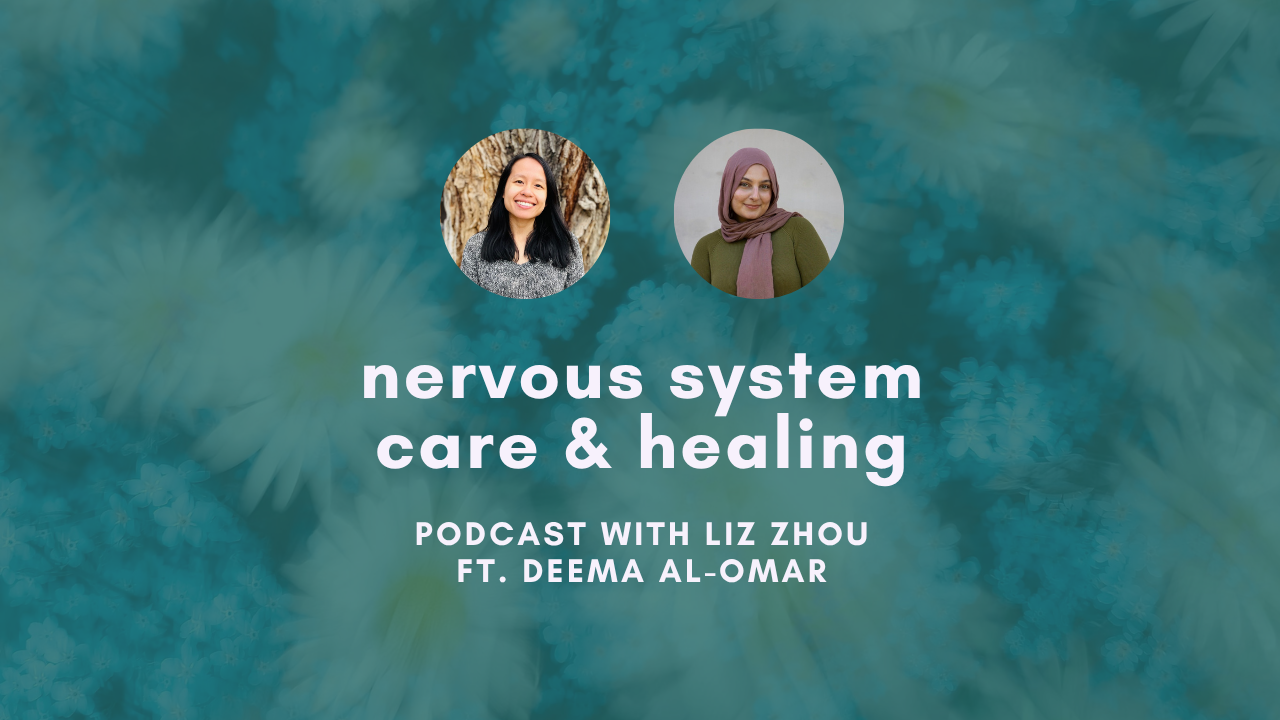
🎙️ This is a transcript of Episode 8 of the Nervous System Care & Healing Podcast with Liz Zhou, a neurodivergent therapist of color. Subscribe on Apple, Spotify, or YouTube to receive notice when future episodes come out.
-
00:23 What if we viewed neurodiversity through a curious & non-pathologizing lens?
02:07 How is autism defined in Western mental health?
04:12 How is ADHD defined in Western mental health?
05:25 Neurodiversity-affirming & Indigenous perspectives on autism & ADHD
07:38 Medical vs. social models of disability
11:11 Indigenous perspectives on disability
14:10 The importance of a community-based, non-pathologizing approach
16:02 What do I mean by an ancestral lens on neurodiversity?
16:18 Autistic traits through an ancestral lens
19:33 ADHD traits through an ancestral lens
21:51 Navigating the diagnostic system
23:24 Mindfulness practice: vision of ancestral past & future
-
NOTE: This icon, 🔗, indicates that link will open in new tab.
🔗 A Disability History of the United States by Kim Nielsen
🔗 Learning about Indigenous views of autism opened the door to accepting myself
🔗 Maori words minted for autism and mental health issues
🔗 ADHD-Aroreretini In Children
🔗 Conceptualizing disability: Three models of disability
🔗 Beyond ADHD: Understanding the rise of VAST and the future of attention
What if we viewed neurodiversity through a curious & non-pathologizing lens?
If you are a neurodivergent person, maybe you're autistic or ADHD or neurocomplex, or you don't ascribe to any labels, but you feel that your brain does work differently than most other people's, you might've had the experience of sharing with someone else that you're neurodivergent and receiving a really negative reaction.
Maybe they seemed like they kind of pitied you or they started treating you differently and not in a good way. So this podcast episode is really about what are some different ways that we can all collectively understand what it means to be neurodivergent.
I'm going to focus this conversation on autism and ADHD. They are not the only types of neurodivergence by any means, but I'm just going to focus on these two neurotypes to keep the conversation contained.
I'm going to start by describing how autism and ADHD have been pathologized within the Western mental health field. It'll be a bit of a review for most of us listening, I think. And then I'm going to dive into what could an alternative point of view sound like.
How is autism defined in Western mental health?
So we have the DSM, the Diagnostic and Statistical Manual of Mental Disorders. This is a book that is widely used and referenced within the Western mental health field. And I'm going to go through some of the criteria for autism as described by the DSM. They actually call it ASD, autism spectrum disorder.
But because many autistic folks prefer not to call it a disorder, myself included, as an autistic person, I'm going to refer to it as autism.
These are just a few of the criteria, not all of them, but some standout examples are: difficulties in social-emotional reciprocity, including trouble with social approach, trouble with back-and-forth conversation, and trouble with expressing or understanding emotions.
Difficulties in nonverbal communication used for social interaction, including abnormal eye contact and body language. So these DSM criteria are referring to the social differences that can come with autism, although the DSM would refer to it as social deficits.
It also lists criteria like repetitive motor movements, echolalia, repeating words or phrases, sometimes from TV shows or from other people, and repetitive use of objects or abnormal phrases.
There's also the criteria of rigid adherence to routines, ritualized patterns of verbal or nonverbal behaviors, and extreme resistance to change, such as insistence on taking the same route to school, or eating the same food because of color or texture.
There's also highly restricted interests with abnormal intensity or focus. So these criteria are referring to some of the behavioral differences that come with autism.
They also list increased or decreased reactivity to sensory input or unusual interest in sensory aspects of the environment, such as not reacting to pain or a strong dislike to specific sounds. And this criteria is referring to some of these sensory differences that may come with autism, like hyper or hyposensitivity.
How is ADHD defined in Western mental health?
All right, so now I'm going to go through some of the criteria for ADHD, which is also considered a mental disorder in the DSM, and it stands for Attention Deficit Hyperactivity Disorder. So even within the name, there is a lot of pathology baked in deficit disorder.
Some of the criteria, not all, but some, include often has difficulty sustaining attention and tasks, often does not seem to listen when spoken to directly, often easily distracted by extraneous stimuli, often leaves seat in situations when remaining seated is expected, often fidgets with or taps hands slash feet or squirms in seat, often feels restless, and often talks excessively.
These are some of what is considered symptoms or criteria for ADHD within that pathology-based lens.
And the point of this episode is to highlight how, yes, that is one lens through which to understand our experiences, but it is definitely not the only lens. To be clear, the DSM, the Diagnostic Statistical Manual, uses a lens that locates the problem within the individual. It's saying, this individual is behaving in a certain way that is deemed unacceptable or deemed to be unwell or abnormal. Let's fix that.
Neurodiversity-affirming & Indigenous perspectives on autism & ADHD
Other lenses do not locate the problem in the individual. I'm going to start here by sharing a perspective on autism and ADHD that comes from the Maori culture, the Maori language, which is the native language of New Zealand's original Polynesian inhabitants.
In Maori, autism is translated to Takiwatanga, which means: in his or her own time and space. ADHD translates to: Aroreretini, which means attention goes to many things.
We see here that it is absolutely an option to describe neurodivergent experiences through language that is neutral, through language that is curious, and that is not assuming that there is something wrong with the individual. Because maybe they are in their own time and space. Maybe their attention goes to many things.
Another note here is that within the neurodiversity affirming movement, that there have also been reframes of autism and ADHD. Sometimes assessors, like people who conduct autism evaluations, will refer to it not as ASD (disorder), but rather as ASC, autism spectrum condition. So that is more neutral.
Some folks will refer to ADHD as just ADHD, so getting rid of the final D (disorder). Some will call it VAST, which stands for Variable Attention Stimulus Trait. And some refer to it as KCS, which is Kinetic Cognitive Style. So again, we see options and variations here that are moving away from the deficit language
Now, within the Western medical system, we know that autism and ADHD are considered neurotypes, a type of brain-body system. They're also considered diagnoses, where you might receive a formal diagnosis from a qualified mental health professional. And autism and ADHD are also considered disabilities because it is disabling to be autistic or ADHD in a world that was not built for us in an ableist world.
Medical vs. social models of disability
This is where I'm going to do a mini deep dive and share a couple different views on disability because disability as a word is complex.
So one view of disability is the medical model.
The medical model states or assumes that disability results from an impairment in the body or mind of the individual. And this medical model is inherently pathologizing because the goal is to cure or to eliminate the pathology.
Under a medical model, the goal is to make a neurodivergent person more neurotypical, to make an autistic person less autistic, to get rid of neurodivergent symptoms, to make an ADHD person behave or seem or become like a neurotypical person.
The social model of disability is the other view that we're going to explore here. So the social model states that disability actually results from the way that society is organized, when society is organized in a way that is inaccessible, that creates social and physical barriers for people, that is what creates the experience of disability.
So in other words, disability results from the mismatch between the person and the environment.
Under a social model of disability, the goal is not to fix or cure anyone. The goal is to create a more inclusive society.
Under a social model, we ask different questions, like: what would need to change about our social or physical environment in order for neurodivergent people to thrive? How can we build classrooms and workspaces and public spaces that actually work for ADHD, autistic, neurodivergent brains and bodies for all brains and bodies?
There is a big difference between the medical and the social model of disability, and the social model of disability is generally considered to be more affirming.
I want to add a caveat here that if we are to embrace the social model of disability, we are not saying that neurodivergent and disabled people do not experience any challenges whatsoever.
We are not sugarcoating or ignoring the fact that there are very real challenges that come with actually every neurotype, every type of body, every type of brain.
What we are saying is that it is not necessary to pathologize or stigmatize the people who experience these challenges.
We are also saying that the challenges experienced by these communities would actually lessen significantly if we made structural and systemic changes to the environments that we live in and the world that we live in today.
Indigenous perspectives on disability
Now that I've put that caveat out there, I want to dive into how the social model of disability is quite similar to the worldviews of many Indigenous cultures. I’m going to cite a couple of examples from the book, A Disability History of the United States, which discusses the history of Native American culture. This book was written by Kim Nielsen and I'm going to read aloud a passage from one of the early chapters and just let you soak in this information.
Indigenous scholars Dorothy Lonewolf Miller (Blackfoot) and Jenny R. Joe (Navajo) suggest that some Indigenous nations have defined what might be called disability in relational rather than bodily terms.
In Indigenous cultures, disability occurred when someone lacked or had weak community relationships. Though individuals might experience impairment, disability would come only if or when a person was removed from or was unable to participate in community reciprocity.
For example, a young man with a cognitive impairment might be an excellent water carrier. That was his gift. If the community required water and if he provided it, he lived as a valued community member with no stigma. He participated in reciprocity and lived in balance. His limitations shaped his contributions, but that was true of everyone else in the community as well.
Meanwhile, perhaps his sister frequently spoke to beings that others did not see, and her frequent and unpredictable vocalizations made successful hunting and fishing difficult. She may have been considered to have great insight into that which others did not understand, and others would come to her for guidance. These individuals would have lived with family members, contributed to the community, and benefited from the community.
The worldviews of Indigenous peoples allowed for fluid definitions of bodily and mental norms and fundamentally assumed that all had gifts to share with the community. And for communities to exist in healthy balance, each individual needed to do so. Each individual needed to share their gifts.
All right, so that is the book passage. I think that's a really beautiful description of what a community-based view of our abilities and gifts could look like. And all of this is context and a foundation for what a non-pathologizing community-based lens on disability and neurodiversity could look like in our world today
What do I mean by an ancestral lens on neurodiversity?
We do not need to reinvent the wheel here because the blueprint is already here. It's been here. We really just need to look to the past and to the present day wisdom of the cultures and the communities that precede the capitalistic and colonial systems that are so dominant today.
When I talk about a non-pathologizing community-based approach, I'm going to be using the language of an ancestral lens. And when I say ancestral lens, what I mean is really imagine what life was like for your ancestors, the ancestors of your people, the places where you come from, and the way that your peoples lived generations ago.
Because most of our ancestors lived in community. They lived in collectivist cultures, in closer relationship with nature than many of us live today. And they did that because they had to. That's how they survived together in relationship, in connection with land. Whether they lived by the sea or inland, in mountains, in jungles, in deserts, whether they were nomadic or stayed rooted in the same place, whether they foraged mushrooms and berries or hunted or fished, right? Our ancestors lived in quite a different way than most of us live today.
And this is not to romanticize the past, by the way, because we know that many of our ancestors actually lived in brutal conditions under systems of oppression as we do today. They survived genocide or famine or war or occupation or all of the above. They continue to through us and they did it through community. They had a community and in community everyone has a role. Everyone has a gift to share.
Autistic traits through an ancestral lens
So this is where we're going to return to the autism and ADHD symptoms or criteria that we went through several minutes ago and we're going to re-explore them through an ancestral and community-based lens.
I'm going to name the criteria and then I'm going to explain how this trait may have held ancestral value, communal value, how it may have been incredibly adaptive and helpful and a gift in a community context. So let's start with one of the autism traits. This one is highly restricted interests with abnormal intensity or focus. That's the DSM language.
Through that ancestral lens, maybe this individual is simply very passionate. Maybe they are a holder, a keeper of knowledge and information in their community. They're someone that others will go to, kind of like a community Wikipedia page on a specific topic.
Another autistic trait is rigid adherence to routines, ritualized patterns of verbal or nonverbal behaviors, and extreme resistance to change.
In an ancestral context, I hear this as, this person is devoted to rituals. They like routines. They like keeping things in a predictable pattern. So in a community, this is the person who helps ensure that things go as planned, that ceremonies run smoothly, that things are staying consistent in terms of daily routines.
So even if the weather becomes erratic or if outside threats are unpredictable, right, like predators or other forces outside of the village, right, this is the person who ensures that the same basic rituals are still happening to hold society and community together, that we're still gathering for dinner every night, that someone is still carrying the water every morning, that we're harvesting the plants at a specific time of year. That's where I see ancestral, communal value in rigid adherence to routines.
The third autistic trait we're going to unpack here is increased or decreased reactivity to sensory input or unusual interest in sensory aspects of the environment, such as not reacting to pain or a strong dislike to specific sounds.
Now, in an ancestral communal context, maybe this is a person who through their high levels of sensitivity, they are attuned to subtle energies, to subtle shifts in the environment. Maybe this is the person who notices that the birds are chirping differently today than they were yesterday. And what could that mean about what is changing in our overall environment?
And in terms of the not reacting to pain, the hypo-sensitive autistic person, well, maybe if this person has a higher pain tolerance than other people, they're more equipped to do physical tasks that might cause pain. Like they're the ones who go out hunting or they're the ones who will go travel long distances in rough terrain to gather supplies or to gather plants.
We see how in a community where everyone has a role that the traits that would typically be pathologized in our Western modern context, every trait has a potential place.
ADHD traits through an ancestral lens
Now let's shift to ADHD, how the modern criteria for that might translate to traits that hold ancestral value. So one ADHD trait is: often fidgets with or taps hands or feet or squirms in seat. What I hear in this is that, okay, this is a body that needs consistent movement and movement is a form of nervous system regulation.
So maybe the ADHDers in an ancient ancestral context, these were the people who would remind us to move and to shake it off and to dance. Maybe these are the people who were leading the community through movement rituals.
The next ADHD trait is being often easily distracted by extraneous stimuli. What I'd say to that is, what are they distracted by? Because it's not necessarily a bad thing to be attentive to external stimuli. Maybe their attention is really fluid and responsive, right? It moves to many different places and it lands on whatever is most stimulating in that moment.
And this could be super helpful if you need someone to be on the lookout for predators or threats approaching the village, right? You want that person to have a dynamic attention span, not to be just fixed on, I'm going to look at this point on the horizon. We want their attention to be scanning the horizon and to also shift course in response to, there's a shadow over there or, I just heard a sound on my left side.
The next ADHD trait is: often talks excessively. So, ancestrally, I'm hearing that this is a verbal processing style. They like to talk. They're chatty. Were these the storytellers of the community? The people that you could count on to sit with you and talk with you after a hard day?
Navigating the diagnostic system
All right, so now that I've gone through the ancestral view of neurodiversity, I'm going to add another caveat here that I'm not saying that we need to get rid of diagnoses altogether.
I want us to have options because the truth is that formal diagnosis within our current medical system is sometimes actually necessary in order for people to access the accommodations and supports they need. And in order for requests for support to be taken seriously, sometimes a formal diagnosis needs to go along with that.
It is super unfortunate that the system is set up that way. I would, I think we would all prefer to be in a system where if we say, I need support, that doesn't work for me, I need an accommodation, that we are believed and just supported as is; that we don't have to jump through all these hoops. But because of the way things are set up, diagnosis can sometimes be a key that unlocks what you need.
So that's why I'm not saying, let's just burn it all down and throw that system away. I'm saying let's let other perspectives, especially more affirming perspectives, sit side by side next to the systems that we are currently navigating.
Mindfulness practice: vision of ancestral past & future
I’m gonna end today's episode by sharing a vision of what an ancestral past might've looked like and what a future for us could look like as well.
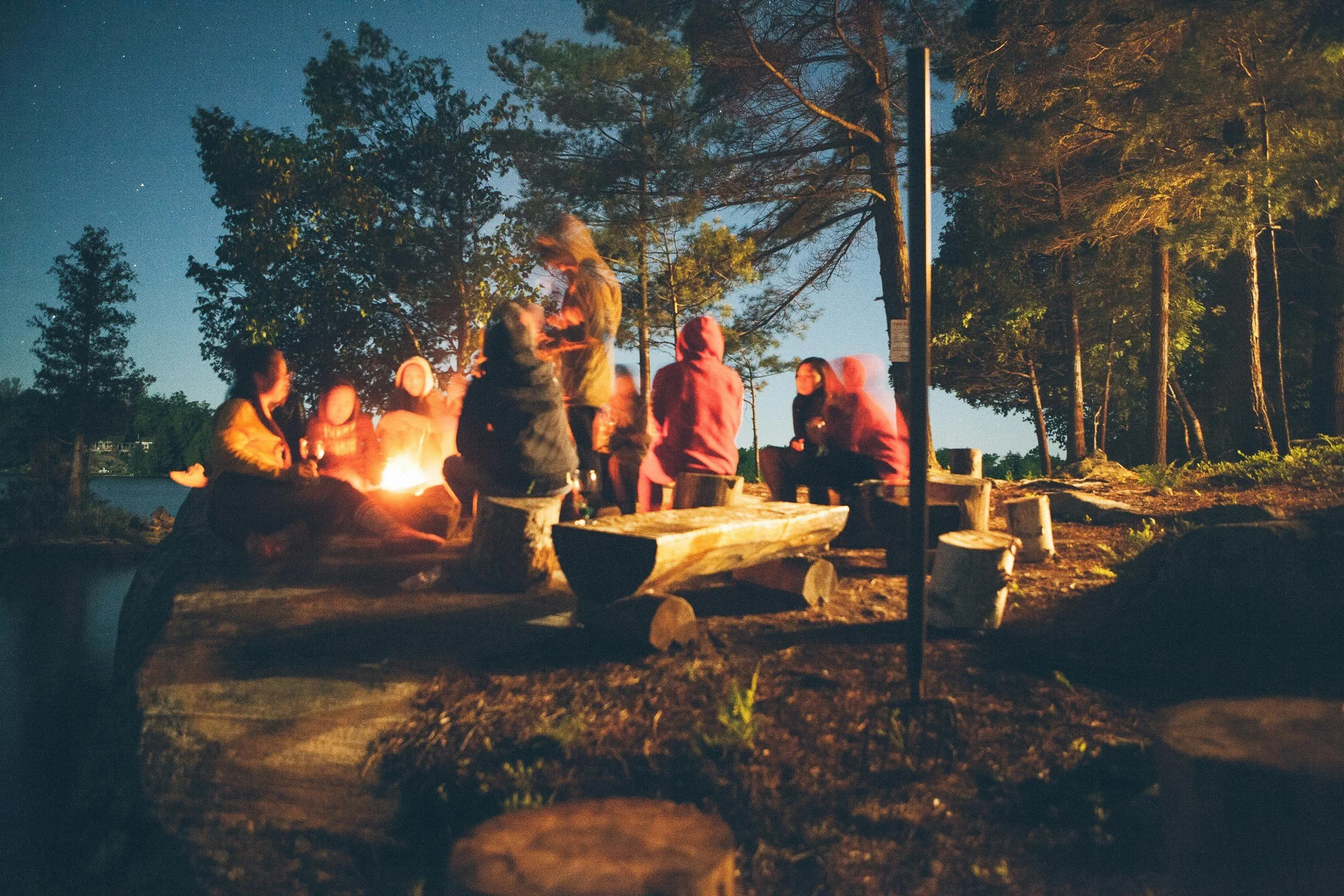
In this vision of an ancestral past and future, I want you to imagine that you are gathered around a campfire, tucked away deep in nature. You can see the fire burning brightly and steadily. It's sending warmth into the night and you can see the stars and the moon shining overhead.
Seated in a circle around you are the people of your community. People of all ages, all walks of life, all the different abilities and gifts and skills here together. And you're sharing a meal with each other, food is being passed around, and you know that so many people came together to make this meal possible, just like they do every single day.
Someone in your community gathered the berries that are now in your hands. Their gift is their attention to detail, taking the time to hyper-focus and to find the best berries in the whole forest. Someone else cooked the rice. Their gift is their patience, washing every grain of rice, waiting and watching while it cooked. It's a task that others might see as mundane or repetitive, but they find pleasure in it.
Someone else in your community caught and prepared the fish. Their gift is their responsiveness to a constantly changing environment. Their attention moves in many directions. They're constantly scanning the environment and they can respond quickly when they feel the fish tug on the line or when they see a ripple in the water.
Someone else is telling a story around the campfire. Their gift is their voice, their verbal skills, the way they transmit knowledge and wisdom and make sure that stories don't get lost across the generations.
Someone else is fidgeting their hands and bouncing in their seat next to you. They pick up an instrument and begin playing it so everyone can enjoy some music. And their gift is their ability to move energy through their body to create art, music, and dance.
Someone else is tending to the dogs, making sure that they too are cared for around this campfire. And though this person doesn't always participate in conversations, they are known in the community for their attunement and their connection to animals, and that is one of their gifts.
Someone else reminds everyone that it's getting late. They remind everyone, here's what needs to get done tomorrow. Their gift is their attention to rituals and rhythms and the big picture and they help keep the community on track.
Now it is your turn to imagine and remember what is your gift? What is your role in your community?
If you’re a neurodivergent person (autistic, ADHD, or highly sensitive) & need help taking care of your nervous system, I’d love to support you.
Online Therapy in Colorado | Coaching Worldwide
Helping highly sensitive, neurodivergent adults heal their nervous systems & connect with their authentic selves.
About the Author
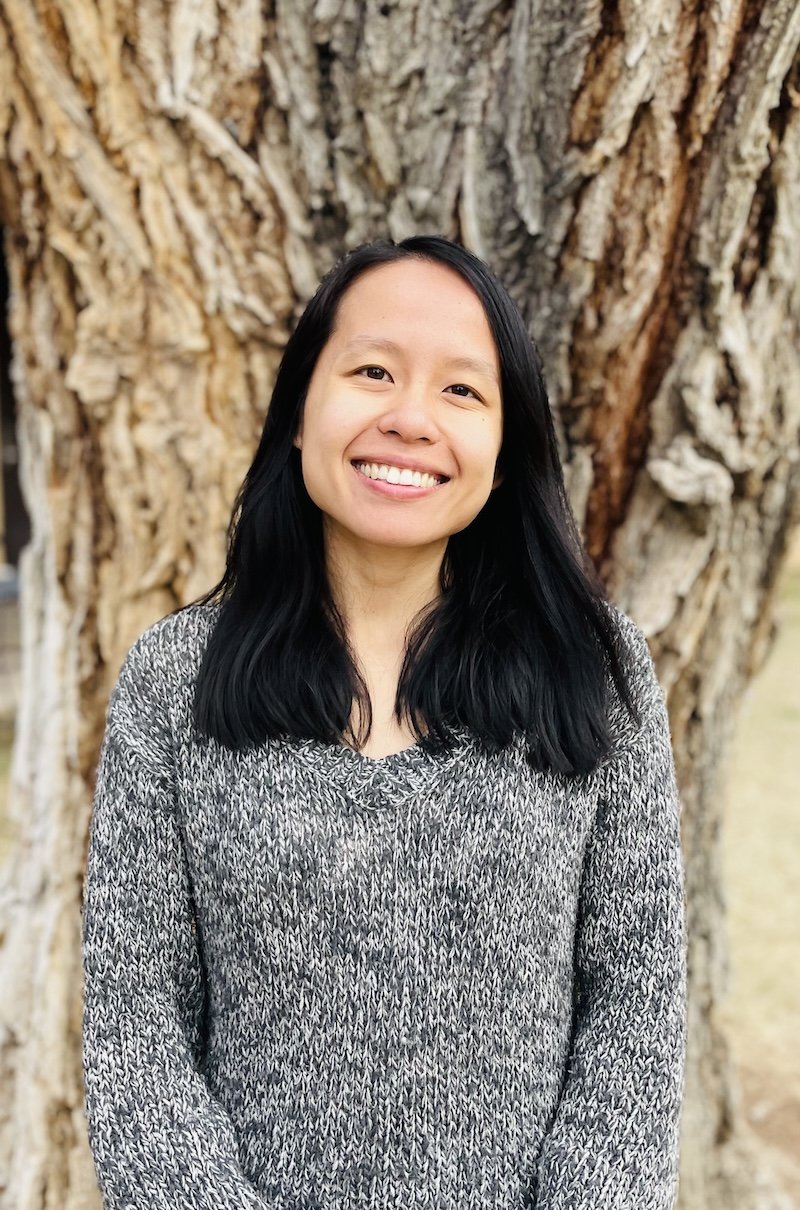
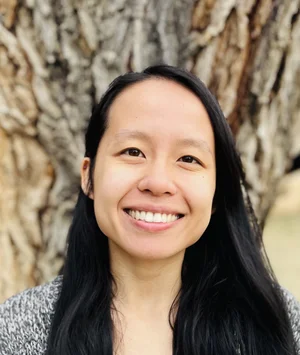
Liz Zhou (she/her) is a neurodivergent therapist, coach, and speaker. She helps highly sensitive, neurodivergent adults & couples heal their nervous systems and connect with their authentic selves, using brain-body modalities (Brainspotting, EMDR, IFS, psychedelic integration) that are quicker & more effective than traditional talk therapy. Liz offers Nervous System Healing Intensives online worldwide.