To Mask or Unmask: Your Nervous System, Your Needs
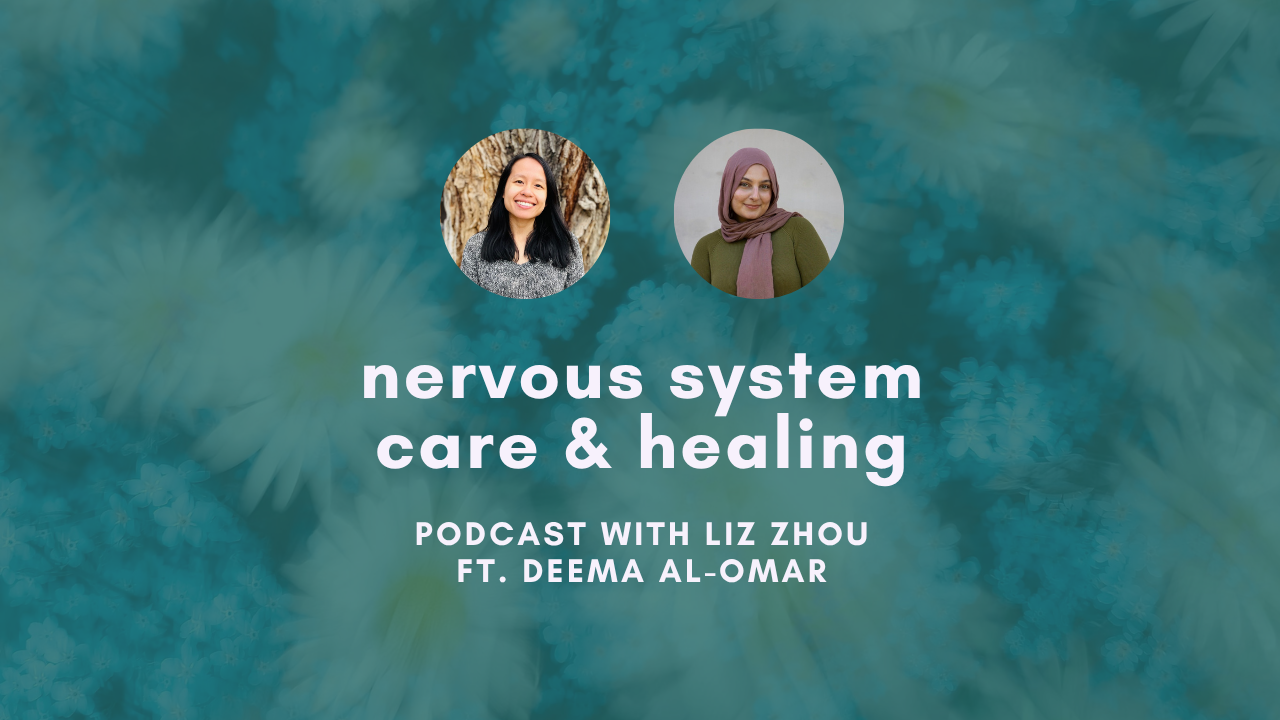
🎙️ This is a transcript of Episode 5 of the Nervous System Care & Healing Podcast with Liz Zhou, a neurodivergent therapist of color. Subscribe on Apple, Spotify, or YouTube to receive notice when future episodes come out.
-
00:23 What is masking & why do we do it?
02:37 What is UNmasking & why do we do it?
08:13 What's the goal: to mask or unmask? (The answer is complicated)
11:09 Types of Unmasking
11:58 Sensory Unmasking
14:32 Social Unmasking
17:50 Emotional Unmasking
18:57 Unmasking your Values
20:49 How does unmasking impact the nervous system & brain?
What is masking & why do we do it?
For today's topic, I want to focus on masking and unmasking.
So we're going to talk about what it means to mask or unmask, why we do it, why the goal is not to always be unmasked or to always be masked, and also what are the implications for our nervous system health. So let's start with the questions, what is masking and why do we do it?
Masking, when I use that term, I'm referring to the process of hiding your authentic self-expression, hiding who you really are in order to fit in.
When we're masking, we might be suppressing our natural ways of speaking and communicating. We might be hiding the natural ways that our bodies want to move or how we express emotions. And we might be suppressing or adjusting the way that we connect and relate and communicate to others. And again, we do all of this because we're trying to fit in.
And especially if you are a highly sensitive person, if you're neurodivergent like autistic, ADHD, you might be especially used to masking your sensitivity or your neurodivergent traits in order to fit into neurotypical or neuronormative environments. So you might be really used to toning down the parts of your personality that you have been told are too much or too weird or just too different, in order to pass as neurotypical.
But to be clear, I believe that anyone can mask and that we all have masks, whether you are neurodivergent or neurotypical or you don't ascribe to any labels.
So while this conversation is using terminology that is really familiar to the neurodivergent community, I want this to be a conversation that is open to all because this information applies to any human being on Earth because we all have masks that we wear.
What is UNmasking & why do we do it?
Now what is unmasking and why do we do that?
Unmasking is what happens when you express yourself in a way that feels authentic to you. When you're expressing your true self.
And the reason why we mask, why we hide ourselves, is because we don't feel safe or comfortable to be ourselves for a bunch of different reasons. And the reason why we might unmask is because we feel that it is safe to be ourselves. Or we might unmask when we are willing to take a risk and see if this is actually safe for us to be ourselves.
So I want to share a few examples of how masking can show up just to really illustrate how common it is, and how we all do it at some point or another. So masking can look like really downplaying or dismissing your own needs, saying, no, I don't need that, or telling yourself, no, I'd be crazy to ask for that, even though you actually really need it.
So as an example, maybe you are an introvert, maybe you're autistic like me and you need a lot of downtime and alone time to recharge. So if you're at a social event there comes a point where you might want to leave but you still feel pressured to stay.
And so staying beyond your capacity to actually be there and be present is one way of masking, right? Just powering through, forcing yourself through the experience, even though your nervous system is screaming at you, like, let's go home. That is one way that we might mask.
Masking can also look like... saying things just to follow a social script. Saying things because you know that it'll please others or keep the vibe comfortable. Even though you would actually rather just be really blunt or honest or like say something kind of unfiltered.
Masking can look like bracing all of the time. So living in this state of physical tension, almost like you're like holding your breath and not exhaling. And the reason why you might feel this way is because your brain is so busy being aware and alert of how other people are perceiving you that you are not so aware of your own nervous system or how you feel. Right? All the attention is going outward, scanning the environment, to see if you're really safe and then really losing that connection with yourself.
Masking can also look like biting your tongue, right? Keeping quiet and not saying what's really on your mind, not answering honestly because you might be afraid of how other people will react to you being honest or you know that what you have to say is an unpopular opinion and it might not land well.
And masking also includes when we suppress the natural movements in our bodies, like when we force ourselves to sit still, to make eye contact, to not blink or like blink just enough, right? All of that is kind of tracking how does my face look? Am I smiling enough? Am I making enough eye contact rather than just letting our bodies and faces just be as they are.
Now that I've shared this short list, it is not a comprehensive list of all the ways of masking, but it covers some of the bases. I do want to name that it is not wrong to mask. because it makes a lot of sense why, why we do this.
Masking is a learned response. It doesn't just happen out of nowhere.
No one comes out of the womb masking and hiding their true selves.
Masking is actually an adaptive strategy and a skill that we learn out of necessity.
Just like code switching is a skill just like cultural assimilation is a strategy people use you know when they're living in between different cultures, when they speak multiple languages.
As a person who wears masks you might live in between different worlds like worlds where it's safe to show up as my authentic self here but not there right and then you you learn based on the feedback from each social environment where it is actually safe to be you and where a mask actually is more protective.
On a neurological level, our brains are wired to seek belonging and connection and acceptance. Whether you're neurodivergent or not, what is true for all of us is that masking is a strategy to stay safe and to seek belonging and acceptance in a world that can feel unwelcoming or unsafe at times.
Masking protects us from negative attention, from judgment, and from rejection. And in some cases, it protects us from violence, structural, systemic, and interpersonal violence. This is especially true if you hold other marginalized identities like being a person of color, being queer, or trans.
And of course, as helpful as masking can be, as necessary as it is, it does also take a huge toll on the nervous system. This isn't just something we can do all the time with like absolutely zero impact on our health, on our bodies, right? Masking is exhausting.
It can feel like you're like holding holding something all the time but you really want to put it down. It feels like you take this huge inhale but you can never fully exhale. So it is very very important that we find spaces to unmask as well.
What is the goal: to mask or unmask?
(The answer is complicated)
I'm going to share some examples of what unmasking can look like just so we can have some concrete ideas, but I do want to be super clear here that goal is not to unmask all of the time.
Unmasking might not be realistic or safe all the time.
So one very important example of this is that when neurodivergent Black and Brown folks have unmasked in public, by stimming, right, stimming is a way of moving our bodies in order to self-regulate. Sometimes those ways of unmasking can be read by other people in a way that attracts more negative attention. In the most extreme cases, when BIPOC folks have unmasked in public, police responses have been extremely violent and even deadly.
That's why the decision to unmask is always going to be in relation to what other identities you hold, how you are perceived in public, how systems respond to you being you in public.
I would say that the goal for everyone is to be able to discern when it is safe to unmask and when it is safer to mask. When you feel ready to unmask, you can do so. And when or if you don't feel ready or comfortable or safe, masking is always an option too.
For some people, maybe home is your safe space to unmask, but work is a place where you show up more buttoned Whereas for another person, an entirely different formula might apply, where maybe you feel like you can be unmasked in your relationship with your partner, but not with certain family members.
Or maybe you feel like you can fully unmask around your pets, because your cat or dog is not judging you, but you don't yet feel comfortable to unmask around other people because historically people have harmed you and human relationships felt safe. That is a possibility as well. So I want to acknowledge just that whole spectrum of experiences and realities that we're navigating and acknowledging all of those individual nuances.
Again, the goal here is to have choice and autonomy you navigate your life based on your personal circumstances.
There is no right way to mask or unmask. There's really just your way, your life, your nervous system, and your choices.
Types of Unmasking
So now that I've said all that, I'm gonna give some more concrete examples of types of unmasking. And I've divided this into four categories. This is not meant to be a comprehensive list and not every example will apply to every single person. So I would just notice if anything resonates with you, set aside the rest and see if you come out of this podcast with one or two ideas that you are curious to try.
And really listen to this through the lens that unmasking is an experiment in a new way of living. It is an experiment of what it would feel like to be more you rather than attached to expectations of how you should be.
(1) Unmasking Sensory Needs
The first type of unmasking is unmasking sensory needs. So this could look like simply taking your sensory needs more seriously rather than dismissing them.
So really accommodating yourself, learning to ask for certain accommodations in order to prevent your nervous system from becoming overstimulated or understimulated.
For you, your sensory unmasking could mean avoiding exposure to the sensory triggers that disturb your nervous system, avoiding them as much as is possible or feasible in your life, avoiding certain lights, certain sounds, smells, textures, or tastes. And instead of expecting yourself to just power through the sensory overwhelm, right, because maybe have been powering throughout your whole life and it hasn't been working, right? Just owning like, this is my limitation. This is the boundary I need to set and not feeling like you need to apologize for that.
On a related note, as you sensorially unmask, you might start to clearly communicate your sensory needs and boundaries to others. You might say, you know, actually, I prefer to eat at a restaurant without fluorescent lighting. Or you could say, I'm getting overwhelmed right now. Could we continue this conversation in a quieter environment?
As you unmask, you might also embrace using your sensory accommodations in public and really prioritizing your comfort.
So whether you need to use noise-canceling headphones or put on earplugs when it gets loud, wearing sunglasses, wearing like face masks, or just wearing really comfortable clothing.
And sensory masking can also mean allowing yourself to stim. Right, notice how your body naturally wants to move and then follow those movements. What sounds does your mouth want to make if no one could hear you? What do your hands want to do if you didn't have to worry about looking socially acceptable, where do your eyes want to look if you knew that you wouldn't be judged for not making eye contact?
If there were no social rules and no one was watching, what would your body want to do?
And with sensory unmasking, maybe you start some of this in private, like privately stimming, privately accommodating your sensory needs, and then work your way up to doing so more publicly as you feel called to do so.
(2) Social Unmasking
The next type of unmasking, I call this social unmasking. So thinking about all the ways that we show up for social spaces and how we can do so in a way that's more authentic to ourselves, respectful of our own needs.
One example is embracing and accepting your natural communication style rather than… diluting your style and your voice to fit the social environment. If you're naturally really direct, if you speak very literally, maybe your unmasking means just like showing up like that, right?
And also if you're very direct and literal person, you might struggle to understand more metaphorical jokes or inside jokes or turns of phrases and metaphors. Instead of nodding along and pretending that you understand in the moment, maybe you actually raise your hand and ask for clarification. Like, I don't understand the joke. Can someone explain it to me?
Another example is really allowing yourself to say no or let me think about it in response to social requests and invitations. Instead of defaulting to the automatic yes that you're used to giving, that might be coming from more of a people pleasing place.
You can give yourself time to think about an invite before you commit to it, or you can just say, I can't make it. You can also let yourself change your mind. If something that you previously said yes to, is no longer something that you have capacity for now that you really check in with yourself, you can absolutely communicate that change of mind and update whoever it is you need to update
This actually ensures that when you do show up for something, you're showing up because you want to be there rather than because you feel pressured to be there. And I think most of us would agree that when we hang out with people, we want that person to want to be there. So it's also a service to the people that you're with and to yourself if you choose to unmask in this way.
With social unmasking, we're really just allowing ourselves to show up as we are and trusting that the people who are your people, the people that you're meant to connect with, want to be with you in your most authentic form.
And my final note on social unmasking is that we can also expand our definition of what connection and community mean to us. So if human connection isn't always accessible to you, I really want to validate that your relationship to animals, to plants, to the natural world, right? Like you can talk to the trees, you can go on a walk in the forest, and I want to validate that that is just as meaningful a connection, just as important a connection to cultivate as human-to-human relationships.
As we unmask, we really get to discern which relationships in our life feel supportive, which relationships give us energy, and which ones feel draining. we get to decide where we want to put our energy.
If you only have 10 energy packets per day, what are the relationships you want to prioritize?
(3) Emotional Unmasking
The next type of unmasking is emotional unmasking. This is where we really allow ourselves to feel and we actually expand the range of what we allow ourselves to feel.
Really leaning into that full spectrum, letting grief come up, letting anger come up, every emotion, including the taboo emotions to be expressed and to move through you.
I also want to mention that there no expectation here that you need to have a name for every emotion that you feel, that you need to know right away how you feel.
Especially for people who are more complex processors who move at a slower processing speed, maybe you're more aware of the sensations in your body first before you can put a name, an emotional label on that.
Or maybe you actually sense things through images and colors and the emotion vocabulary like sad, mad, happy doesn't hold as much weight for you. So I also want to really encourage expression of your in the language that most resonates with you.
(4) Unmasking Your Values
The fourth and final type of unmasking here is unmasking your values. So connecting with what matters to you. If you really value community, family, and friends, how can you design and align your life around that top value? Other values might include connection with nature or spirituality, health, creativity, making art, sharing your story, whatever it is that gives you a reason to live and to wake up the next morning… unmasking that.
I want to give extra permission here to live in the way that you want to live even if it strays from the conventional definitions of success.
We've all heard of the typical milestones that were expected to meet, like I'm supposed to get married now, now I'm supposed to buy a home, now I'm supposed to raise a family For some people, that is a beautiful path to follow that feels authentic to them. For some other people, that does not align with their personal goals. So if that is you, maybe you unmask by really allowing your life to go off script, to pursue what you want to do.
And this also involves challenging capitalistic standards of productivity.
Instead of judging our own worth or success by how much did I accomplish today?, maybe we start asking different questions like: how deeply did I rest today? How do I feel about my health?
How do I feel about the legacy that I'm leaving on earth? How will I be remembered in the future as an ancestor?
This all brings us back to our core values, who we want to be in this world during our short and beautiful time on Earth, rather than who we're expected to be.
How does unmasking impact the nervous system & brain?
I'll end with a few notes here about the implications of unmasking on the brain and nervous system.
So when we unmask, there are a few different possibilities of what might happen.
Number one possibility is that we are received positively, people respond well, and that feels good. that would create a neural pathway in our brain that tells us, okay, being ourself is safe, it is okay to be you, and who you are is welcome and appreciated and accepted. That is the ideal scenario.
The second possibility is that we unmask and we are received negatively. Someone says something that feels judgmental or hurtful, and that obviously feels bad for our nervous systems. That's a scenario that might reinforce the need to mask, which makes sense.
The third scenario is that we unmask and it is a neutral experience. Nothing much happens. Nothing good, nothing bad. It's almost like, did anyone even notice that I did something different?
And if that happens, if nothing happens, that could actually be a good thing because our nervous systems might learn that unmasking is not as scary as we expected it to be, sometimes people don't even bat an eye.
And overall, we might notice that relationships in our life start to change and rearrange as we show more of ourselves.
People might respond to us by moving closer.
Or we might find that other people move or drift further away.
My hope is that we all have more experiences of being received positively or neutrally as we unmask.
What that can do for our nervous systems is it can really free us, it can feel very liberating, and it can also feel very, very healing. Unmasking is something we get to do as our lives change and as our own assessment of risk and safety changes as well.
Ultimately, the more that we unmask and the more that we refuse assimilation into the dominant culture, if the dominant culture isn't working for us, the more that we heal.
That's the ultimate goal here. It all starts with just that one step, choosing just one way to unmask that you're curious to try, that feels right for you, that makes sense for your life, and just seeing what happens from there.
That's it for now and I'm wishing for you to be well, for you to be safe and to have space to be you.
If you’re interested in working with a neurodivergent therapist who understands the challenges of masking & unmasking, I’d love to support you.
Online Therapy in Colorado | Coaching Worldwide
Helping highly sensitive, neurodivergent adults heal their nervous systems & connect with their authentic selves.
About the Author

Liz Zhou (she/her) is a neurodivergent therapist, coach, and speaker. She helps highly sensitive, neurodivergent adults & couples heal their nervous systems and connect with their authentic selves, using brain-body modalities (Brainspotting, EMDR, IFS, psychedelic integration) that are quicker & more effective than traditional talk therapy. Liz offers Nervous System Healing Intensives online worldwide.