Unpacking Internalized Oppression: You’re Not Crazy, You’re Human
🎙️ This is a transcript of Episode 6 of the Nervous System Care & Healing Podcast with Liz Zhou, a neurodivergent therapist of color. Subscribe on Apple, Spotify, or YouTube to receive notice when future episodes come out.
-
00:00 Intro
01:25 What is internalized oppression?
03:38 The history of "crazy": who gets to decide who is crazy?
04:16 Historical context #1: drapetomania
05:42 Historical context #2: female hysteria
08:35 Historical context #3: homosexuality & gender identity in the DSM
12:03 The system is messed up - where do we go from here?
-
Bynum, Bill (2000). "Discarded Diagnoses : Drapetomania". The Lancet. 356 (9241). Elsevier BV: 1615.
Michael, Ruane (April 30, 2019). "A brief history of the enduring phony science that perpetuates white supremacy". The Washington Post.
Opara IN, Riddle-Jones L, Allen N. Modern Day Drapetomania: Calling Out Scientific Racism. J Gen Intern Med. 2022.
Krasny, Elke (2020). "Hysteria Activism". In Braun, Johanna (ed.). Hysteria Activism: Feminist Collectives for the Twenty-First Century.
What the Past Suggests About When a Diagnostic Label Is Oppressive. AMA J Ethics. 2023.
Fraser L. Gender dysphoria: definition and evolution through the years. In: Trombetta C, Liguori G, Bertolotto M, eds. Management of Gender Dysphoria: A Multidisciplinary Approach. Springer; 2015.
Drescher J. Out of DSM: Depathologizing Homosexuality. Behav Sci (Basel). 2015
Hi everyone. So today's episode is for everyone out there who is used to being told that you're crazy, that you're being too sensitive, and maybe you're just so tired of hearing that.
I'm going to explain why calling ourselves crazy or being called crazy might actually be connected to systems of oppression as well as internalized oppression. I'll explain what those terms mean as well as what could be a different way for us to understand ourselves and our experiences in a less pathologizing tone than we're used to hearing.
Sometimes people get dismissed as crazy or mentally ill, when they're just having a human experience and when they're having a normal human reaction to an abnormal situation or conditions of injustice.
What is internalized oppression?
I'm going to start by taking a few steps back and defining what is oppression, what is internalized oppression, and then we'll dive into how that connects to being called crazy. So oppression, it comes in a lot of different forms. There is racism, there's homophobia, transphobia, sexism, ableism, ageism, religious discrimination.
And systems of oppression are all around us. And they convince us that certain people should be treated as less worthy, less valuable, and less human, whereas other people should be treated as superior, more worthy, and more valuable. Which we all know that is false.
But systems of oppression tell us otherwise. And they place people into hierarchies.
And internalized oppression is what happens, it's the natural consequence of when we are socialized within oppressive environments and it's like we're just swimming in the water so parts of us start to absorb or like take in the beliefs of the oppressors.
When systems of oppression around us become internalized, that's when it might create a voice of oppression within ourselves.
And that voice of oppression can sound like, there is something wrong with me. I'm broken. I'm crazy. I am worthless.
That's what internalized oppression can sound like.
The history of "crazy": who gets to decide who is crazy?
In today's episode I want to really unpack the sentiment of I'm crazy which also can sound like I am being too sensitive.
So this phrase is often used in a pathologizing way to suggest that someone is unwell, that they're not of sound mind, or that they're not making sense, or they're overreacting, right? They're being crazy. Their reaction is totally crazy. We've all heard something like that in some context. And I want to talk about how crazy gets defined, who gets to decide who is crazy.
So I'll share three examples from history, from the mental health field that will hopefully expand and even complicate our understanding of what it means to be crazy. Really understanding that this is not a neutral term, that this is a term that has been weaponized and used to further marginalize already marginalized communities. And we're going to add more context about why maybe you are not actually crazy.
Maybe you're just being a human and maybe you are having a normal reaction to abnormal circumstances.
Historical context #1: drapetomania
I don't know if you've heard this term before, but drapetomania is or was a proposed mental illness. This term was made up by an American physician in 1851. And this physician, claimed that enslaved people, enslaved black folks who were trying to escape were doing so because they were suffering from a mental illness. So this guy claimed that slavery was actually an improvement for the lives of slaves, that they would be crazy or mentally ill to try to leave.
We can see immediately here how that is taking a totally normal response to oppression and pathologizing it. It is normal to want to be free. It makes sense to want to escape conditions of oppression and enslavement.
No one is crazy for wanting to be free.
And the systems of violence and inequity and colonization that make it so that not all of us are free, that is the real illness here. That is the real issue we need to be looking at. Not making up problems that don't exist and pointing the blame at the individual.
Historical context #2: female hysteria
So female hysteria used to be an official medical diagnosis for women and for individuals assigned female at birth. And the word hysteria actually originates from the Greek word for uterus, hystera.
As for what exactly constituted hysteria, the list of symptoms was actually all over the place. So these symptoms would include things like ungovernable emotional excess, anxiety, shortness of breath, fainting, nervousness, insomnia, heaviness in the abdomen, irritability, loss of appetite for food or sex, sexually impulsive behaviour, as well as a tendency to cause trouble for others. That is one of the criteria for hysteria.
We also have records showing that the ancient Greeks included in their criteria for hysteria the inability to bear children as well as the unwillingness to marry.
And to me, and maybe to you listening, it kind of sounds like anything that a woman or a femme individual did that was inconvenient or considered socially unacceptable, that became a reason to point fingers at them and to say, you're being hysterical. Or you have hysteria, you're crazy, go lie down.
Now today, hysteria is no longer recognized by the medical field as an official medical disorder. So that's good. That's a step in the right direction.
Because if we really look at that list of symptoms again, we might read that a lot of these symptoms are just humans having human experiences, humans and women having appropriate emotional reactions to gender inequity, to conditions of injustice and suppression.
We also see that hysteria was a label slapped on when a woman simply wanted autonomy and choice, like not wanting to marry. But instead of having their autonomy and choice respected, it seems that many of them were punished or pathologized instead. And in some of the most extreme cases of female hysteria, the treatment plan would include things like institutionalizing women, sending them to asylums, or forcing them to undergo invasive surgical procedures.
Historical context #3: homosexuality & gender identity in the DSM
All right, so my third and final example here is gonna be prefaced first by a description of the DSM. So the DSM stands for the Diagnostic and Statistical Manual of Mental Disorders. It is published by the American Psychiatric Association, though it does also have international reach as well.
And please note here that the DSM is a widely referenced text in the field of psychotherapy, in social work, in the medical field, and yet the contributors of the DSM, the people who wrote it, are mostly white cisgender men.
So this information is coming from a pool of people who don't actually represent the full diversity of the human experience. And so we can imagine how that would influence, right, maybe bias the information in the text itself. It's also important to know is that the DSM has had some different iterations. The first version, DSM 1, came out in the 1950s and the most recent version, the DSM 5, that most recent version came out in 2022.
Now, why am I bringing this up? Because the DSM has been used in the mental health field and in society at large to pathologize and to repeatedly pathologize queer and trans folks.
Homosexuality was actually classified as a mental disorder in the first edition of the DSM in the 1950s, and was only removed in the 1970s after a lot of advocacy and education by gay rights activists.
Additionally, previously the term, quote, gender identity disorder, unquote, has been used in the DSM and other texts to describe and diagnose people who do not identify with the sex that was assigned to them at birth.
The use of the word disorder implies that there is a condition in the individual that needs treatment.
When in fact the most effective treatment would be actual systemic change: universal access to gender-affirming care, a more inclusive and safe society, basic human rights and beyond.
The system is messed up - where do we go from here?
So I've given three examples here of how what it means to be crazy, what it means to be considered mentally unwell is actually sort of like a shifting goalpost. It's very subjective.
Who gets to define who is well and who is unwell, who is crazy and who is sane. Even that is very politicized, very biased, right? We see whose voices hold more authority in these institutions like the mental health field. And we also see how institutions like the mental health field can be used to further harm and perpetuate structural violence against marginalized communities, even these systems and institutions that claim to be benevolent or aim to be benevolent.
So what do we do with all this? The last thing I want is to present all of this information and then for it to feel so overwhelming. That is not my intention here. I do think it's important for us to know what we're dealing with to understand the bigger context.
As we zoom out and see all of the systemic factors, we can start to maybe soften the way that we can be so hard on ourselves.
So instead of: What is wrong with me? Am I crazy? Am I being too sensitive?… we can start asking questions like, how have these systems convinced me of these untruths about myself or about my people or about people like me?
Right? How are these toxic nonsensical systems actually making people like me feel crazy when the real illness is in the water we're all swimming in?
And to be able to validate our own experiences, to be able to say, it actually makes sense that I'm feeling this way, and to surround ourselves with people who can validate our experiences too. I believe that can be a path forward, right?
There's real medicine in being able to see things as they are. It doesn't fix how messed up and unjust these systems are in their current form, but it does help us realize that what we feel and what we're experiencing in response to injustice is deeply human.
If you’re interested in working with a therapist who works from a systemic & liberation-oriented lens, I’d love to support you.
Online Therapy in Colorado | Coaching Worldwide
Helping highly sensitive, neurodivergent adults heal their nervous systems & connect with their authentic selves.
About the Author
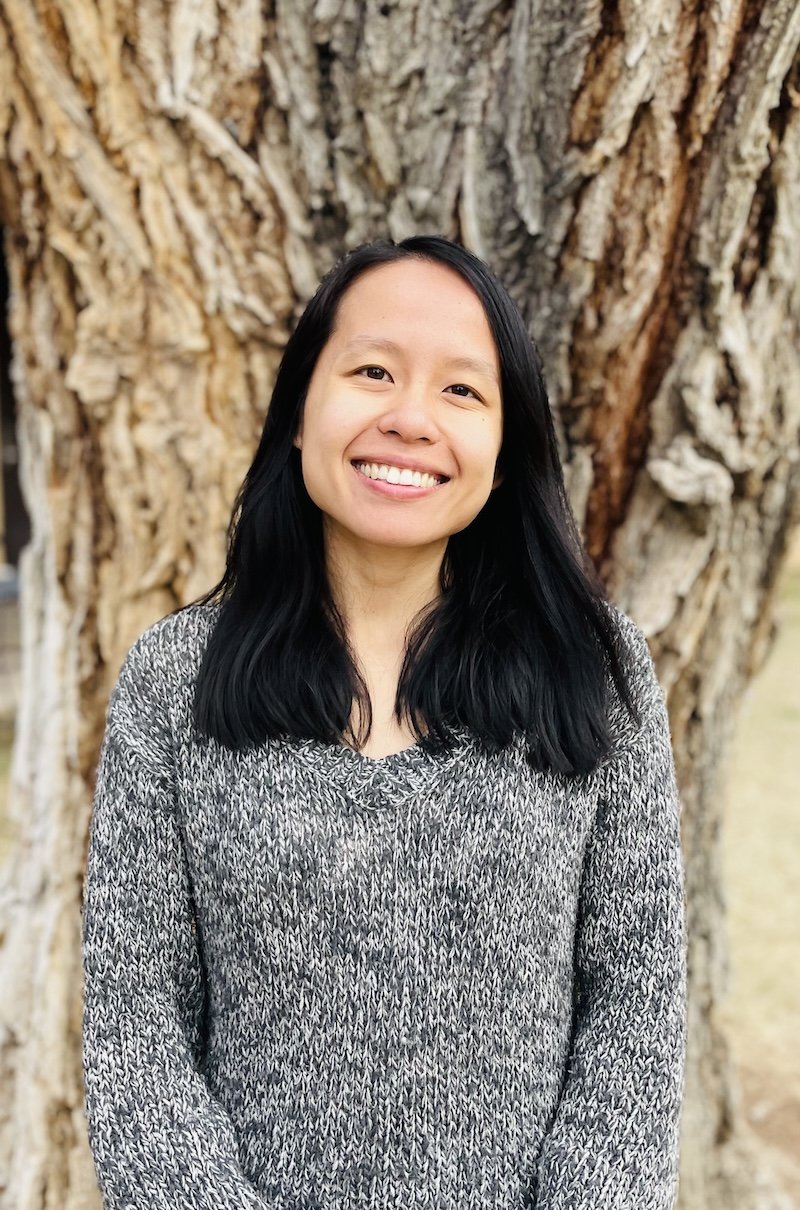
Liz Zhou (she/her) is a neurodivergent therapist, coach, and speaker. She helps highly sensitive, neurodivergent adults & couples heal their nervous systems and connect with their authentic selves, using brain-body modalities (Brainspotting, EMDR, IFS, psychedelic integration) that are quicker & more effective than traditional talk therapy. Liz offers Nervous System Healing Intensives online worldwide.