Building Community: How We Disrupt Systems of Oppression
🎙️ This is a transcript of Episode 4 of the Nervous System Care & Healing Podcast with Liz Zhou, a neurodivergent therapist of color. Subscribe on Apple, Spotify, or YouTube to receive notice when future episodes come out.
Why does community matter, especially in these times?
Today I want to talk about why community matters so much. Why community is not just a nice extra thing to have, but actually an essential resource and an abundant resource if we take time to nurture it. So I'll talk about why building community is a way to take care of our nervous systems and a way to take care of each other when the systems around us are clearly failing to do so.
I'll also share some ideas about how to build community in a way that makes sense for your life and feels sustainable for your nervous system. So let's start with why does community matter so much, especially in these times? I recently heard someone say, and this is paraphrasing: when crises land on our doorstep, we've learned to stock up on toilet paper, but not to stock up on relationships.
This is obviously a very general statement, but as we hear it, I think we have to ask why. Why do we not invest in relationships? So many of us in Western culture, and speaking from my personal experience growing up in the United States, we're so used to going at it alone, being self-sufficient and pulling ourselves up by the bootstraps. Though if you really think about it, it is physically impossible to pull yourself up by your bootstraps. So the saying tells on itself.
Here in the States especially, self-sufficiency is expected.
We do not have the types of systems, infrastructures, or social safety nets that are available in some other places, which means that we are expected to be hyper-independent.
Just to give an example, in most parts of the U.S., you need a car to get around. Public transport is either unreliable or non-existent. So if you don't own your own vehicle, basic everyday things get really complicated, like getting to and from work, buying groceries, having a social life outside of the house. Hyperindependence, owning your own vehicle, becomes an expectation.
Another example, if a medical emergency hits, here in the US, your health insurance might cover the expenses or it might not. And this is if you're even insured at all, which we know is a really complicated thing here.
So then you're figuring out how to possibly pay out of pocket for your treatment or your medication or you're on the phone for hours with your insurance company trying to convince them to cover it. And if you cannot figure this all out by yourself, there is no guarantee that the system will take care of you, that the system will catch you if you fall. We know that the vast majority of people in the States are closer to becoming unhoused than they are to becoming a billionaire.
Not that anyone ever needs the extreme wealth of a billionaire, but just to give an example of the range here. We know that many people are just a few missed paychecks away from literal homelessness, and that the risks of that compound if you hold marginalized identities like being BIPOC, queer, trans, or disabled. And of course, these problems are not at all unique to the US.
But the fact is in the wealthiest country in the world as of 2026, the inequity can feel particularly stark and it is absolutely unacceptable that this level of disparity is present anywhere.
To call it what it is, what we're seeing and living through are the impacts of generations of colonization and capitalism that have led to the exploitation of our earth, disregard for life, including human life, and a system that prioritizes profits over people and is barely pretending to be otherwise anymore. It is a system that benefits the 1 % and leaves scraps and crumbs for the rest of us. So, end of rant.
This is where community comes in.
It is so essential that we learn to take care of each other, because we've seen that there is no real guarantee that the systems will.
And it's also worth asking who is benefiting from our isolation and our hyperindependence? Who benefits when we are living separated, disconnected from each other, existing in silos, doing it all alone? It is certainly not me or you who benefit from this system. Not any of us who are not in the one percent.
How do we define community?
Moving on then, I want to take some time to define community. To me, community is what happens when we come together, when we build relationships, when we learn how to repair with each other after a rupture, and when we support each other.
Community is technically a noun, but I want us to also think of it as a verb. It's not just a passive experience that we stumble upon or that's handed to us.
It is an active process that we co-create together and that requires nurturing and tending to every season, like a garden.
And community care, collective care, is the opposite of the pull yourself up by the bootstraps mentality. It is, hey, I see that you're trying to pull yourself up by your bootstraps, which seems physically impossible, would you like me to help you? Would you like me to connect you to someone who can help? Let's figure this out together.
When you hear the word community, I'm curious what comes up for you. Whose faces do you see? Whose names come to mind? Which places are you drawn to?
I know that we all have different experiences of community. So my perspective here is definitely not the final word. It's just a few ways. I know that we all have different experiences of community. So to be clear, the perspectives I'm sharing here are not the final word. It's not the be all end all definition. I just want to share a few ways that I'm thinking about community right now.
Community doesn't just mean friends or family, although your friends and family may be deeply important parts of your community. Community can also mean anyone that you interact with in your network of acquaintances, neighbors, mentors, elders, chosen family, extended family, the people who frequent the same places as you do, the people who share the same values as you.
See how we can really expand who gets to be in our community. And you may have multiple communities from different eras of your life. They may not all live in one place and the people in your community, all the webs of your community may not all know you in the same way.
Community is also intergenerational. It's not just the people who were in your graduating class of high school, not just the people who understand the same cultural references as your generation. It may also include people who were in the generation that raised you. It may include younger folks, the kids of your friends and neighbors.
Being in community is a two-way street. It involves giving and receiving, supporting and being supported.
Always in alignment with your current capacity, what you're available for, what you can give without burning out, and what you need to receive.
And it's really important that we do participate in both directions of this street and that we create reciprocal relationships rather than one-way streets, or relational structures that mimic or recreate the burnout and resentment that we're trying to recover from.
Overgiving is absolutely a thing, but we know that we cannot pour endlessly from an empty cup, cannot put on someone else's oxygen mask while we're struggling to find our own. So in community, we are really practicing how to be there for others.
And we're practicing and learning how to receive. Depending on who you are and how your life experiences have shaped you, either end of that equation may feel really tricky. Right? How to give, how to serve others, how to support and show up, and also how to receive, how to let that in.
I want to name too that community may be inconvenient.
Like if you wake up early to drive your friend to the airport, that's probably a bit inconvenient or at least a bit out of your way. But as long as you're doing this act of care from a place of full autonomy, from the energy of, yes, I'm available for this. I want to be here for you in this way. It is my pleasure to support you. That is what makes community work. That's what makes it sustainable and different from the systems that exploit us.
And that act of care is going to come back around to you in some way, somehow. So community, when based in true reciprocity, is worth the, quote, inconvenience, unquote. And finally, when I think about community these days, I think about how we are living through times of upheaval, systemic injustice, and collective transition, and the world feels like it's moving fast and it can be easy to fall into a pit of despair where we tell ourselves this is all way too much, I cannot handle this, what is the point?
It makes sense to me that these thoughts and feelings come up for many of us from time to time or maybe we kind of live in that energy.
What I like about collective care is that it disrupts despair and it disrupts isolation.
It's like lighting one candle and then spreading that light to an entire room of candles.
We remember that we're not alone, that we have each other, and that a better world, a more just world, a more loving world, is absolutely possible because we're here and we're participating in its creation. And the systems of oppression cannot win as long as we keep fighting. It's actually a lot harder for the systems to grind us down as long as we have each other and as long as we remember that.
Now, if you're listening to this and thinking, I don't have community, I don't know what you're talking about, or I don't even know how to build community, what does that mean? I want to acknowledge that this is a rather common sentiment for many of us who grew up in individualistic Western cultures. An image that comes to mind is that every house in suburbia will have its own lawnmower instead of one lawnmower being shared across the whole block.
That to me is such a visceral image of what hyper-independence has done to us in Western culture. So remember again that we're treating community as both a noun and a verb, which means that we can start wherever we are. You do not have to be an expert. You do not have to be certified in anything to start to build community or to remember that you have one. You can just start with, don't know what I'm doing. This feels awkward.
The Love Languages of Community
I do find that the five love languages are a really helpful framework when it comes to building community. As a quick refresh, originally the five love languages are used in the context of romantic relationships. There is a book by Gary Chapman, it's called the five love languages, how to express heartfelt commitment to your mate. And the idea is that each person gives and receives love in different ways, whether that is through quality time, gifts, words of affirmation, physical touch, or acts of service.
And here, we're going to creatively apply the love languages to community building with a focus on quality time, gifts, and acts of service. Because really community is just a series of relationships that we're constantly tending to. And we can love and care for each other even if we're not romantically involved. That does not need to be a revolutionary concept.
I'm going to share a low lift version of each love language as well as a heavier lift version. The purpose of this is that if you don't have much energy or capacity or availability right now, you might try the low lift version of a love language just to start.
To be clear, you don't have to do every single love language. You don't have to work your way up to the heavier lift version. That is not the expectation here. I'm simply sharing a range of options so that you can figure out the entry point that makes the most sense for you.
(1) Community Love Language: Quality Time
The first love language is quality time. So the low lift version of this is to spend time in third spaces. A third space is a social setting that is not the home and it is not work. So think of libraries, bookstores, parks, coffee shops, gyms, community centers, co-working spaces, a public pool, malls, yoga studios, places of worship. Some third spaces might involve paying a small fee to be there, like buying a coffee to sit at a coffee shop for a few hours, and others are free to access.
Ideally, we can start with the free third spaces. And the reason this is a low-lift act of care is because it is an opportunity to connect and gather with other people, but you don't have to sign up for anything beforehand in most cases. You don't have to commit to anything extensive, and you don't have to spend hours of your time making this happen. You can just show up if you want. You can stay as long or as little time as you want.
And if you like it, you can show up again next time and just see what relationships, what seeds get planted from this third space. I think that one of the harms of capitalism that we all notice is that so many of us are constantly working or recovering from working or isolated in our homes, surrounded by our eight apps and 47 tabs. And we don't get to actually see each other. Or when we do see each other, it's like we're recovering from being exhausted and from suffering. Third spaces are again a way to gather with people and connect, feel other people's nervous systems in a low key, low pressure setting. You don't even have to make small talk if you don't want to.
Now the heavy lift version of quality time might look like scheduling a one-on-one hangout with a friend or with a group of friends. Maybe you join a class based on your special interests like gardening, knitting. Maybe you dance, hike, or sing together or make art together in a structured group format that meets regularly. And this can feel more energy intensive because it might require some commitment on your part, might require to move things around in your schedule, but then the energy that you get back, the love and care that you receive, hopefully from this experience, can really make the effort worth it.
And possibly the heaviest lift here is hosting your own community gathering. Right, so there's a whole range of what that can look like too, based on your capacity and also your personality. Are you more a type of person who will host a book club on Zoom once a month for one hour or a weekly board game night at your home? Or you take the initiative to start a knitting club at the community center or host a potluck at the park. There are a lot of possibilities here for quality time.
(2) Community Love Language: Gifts
The second love language we'll talk about is gifts. Who doesn't love gifts?
A low-lift community version of this is giving away items that you're not using anymore and allowing them to recirculate within the community. So instead of throwing your old lamp in the trash and maybe this lamp works great but it isn't your style anymore, you can post that lamp on your local buy nothing Facebook group to see if anyone wants it or just leave it outside with a sign and see who picks it up.
As an example of gifting in the community, recently I noticed that the new scratching post that I'd bought my cats was not being used at all. None of my three cats were interested in it. So I went ahead and asked the art studio that I go to if their two community cats who live in the studio might need a new scratching post.
And the art studio said, yes, absolutely. So I brought the scratching post and now the two community cats in the art studio get to use it. And it's a win-win.
Now a heavier lift version of gift giving might look like donating time, money, or energy to causes that you care about. There are many types of gifts that you can offer depending on the resources you have. It doesn't have to be something wrapped in a box with a bow. Because maybe you want to gift a free workshop to your community where you teach skills based on your areas of expertise.
Maybe you donate money or time volunteering at an organization that's doing good work. Or maybe you shop local as much as possible, which is keeping money in the community, keeping that gift in the community instead of handing it to corporations that don't really care about us.
And while there may be inconvenience in, for example, not using an Amazon account with two-day free shipping and instead having to search for a specific item on the shelves of your local grocery store. This is an example where that moment of inconvenience may be really worth it in the long run because choosing to divest from corporations and choosing to put that money back into the community that you live in is really an act of love systemically in the long run.
Now keep in mind here that while I am using labels like this is low lift or this is a heavy lift activity, ultimately you are the determiner of what feels easy or hard for you right now. I don't want to, I don't want to claim any authority that, of course this will be easy for you. And of course this is harder because maybe an action that I'm calling low lift is not accessible to you right now. So I do want to acknowledge that and to use your own intuition and own judgment of your capacities as we move through this list.
(3) Community Love Language: Acts of Service / Solidarity
The third love language is acts of service, also referred to as acts of solidarity. This is where we use our unique skills and gifts in often a really creative and loving way to support our communities to show up for our people.
With this love language, I'm not going to divide it into low lift or heavy lift. Instead, I'll just share some examples and let you see which one really fits your personality and life context. with... So with acts of service, I want us to start with the question, what do you enjoy doing? What do you naturally spend your time doing without even thinking about it?
And then figure out how those gifts might translate to meeting the needs of the people in your corner of the world. To list some ideas, if you love cooking, you could contribute to a meal train for your friend who just gave birth or share extra soup and bread with your neighbor just because.
If you enjoy physical tasks and physical labor, you could shovel snow for your elderly neighbor or help transport heavy items on moving day. If your brain loves organization and spreadsheets, maybe you could help with the admin side of a community mutual aid project. Like maybe you're the one to send emails to volunteers for a food drive or you research venues for an upcoming fundraiser and come up with a list of the best three options.
If you're multilingual, you could help your neighbor to navigate a medical appointment, assuming you speak their native language and can translate between that and English. The goal here is to make sure everything is communicated clearly. You could help translate important documents that they need to fill out. If you're good at breaking down complex topics into simple language, so a real teacher energy here, maybe you could create summaries of essential community education like Know Your Rights handouts or instructions on how to register to vote, or a summary of the last town hall meeting.
If you're an artist, you could make signs for a protest, visually beautiful, eye-catching signs as a form of non-violent resistance, or simply share your art. Spread it far and wide online, in the streets, as a message of hope and courage and a reminder of beauty and joy, which is so desperately needed in these times.
And if you're social media savvy and have an audience of any size, you could use your platform to uplift the messages and causes of marginalized communities and make it clear where you stand on issues like human rights, because making your stance visible makes other people feel safe too, people you might have never even met. And any links or educational posts or videos that you reshare from credible sources that you help boost up in the algorithm, that has the potential to reach someone in your network and to open up more minds and hearts. There are so many infinite expressions of love, love languages in community. This is really just a sample of ideas to get the wheels turning.
I'll end this episode with a few reminders for all of us that no one is meant to do it all and none of us are meant to do this alone. And the areas where you are available to offer support might be very different from the areas where you need to receive support. That is okay and natural and makes sense. For example, you might be available to watch your sister's kid for an afternoon so that she can have some self care time just by herself. In this case, you're gifting your time and presence, but you might need support in shoveling the snow in your driveway because you're not physically able to do so.
4 Questions to Ask Yourself
Now if you're considering how to bring the love languages into your relationships, there are four questions that I want you to consider.
Number one, what do you need?
Number two, what is your capacity to give?
Number three, what resources are available to you right now?
Resources include time, energy, skills, money, material resources, and beyond.
And number four, ask yourself, what privileges do you hold, if any, and how can you use your privilege for good?
Our Nervous Systems, Our Ancestors
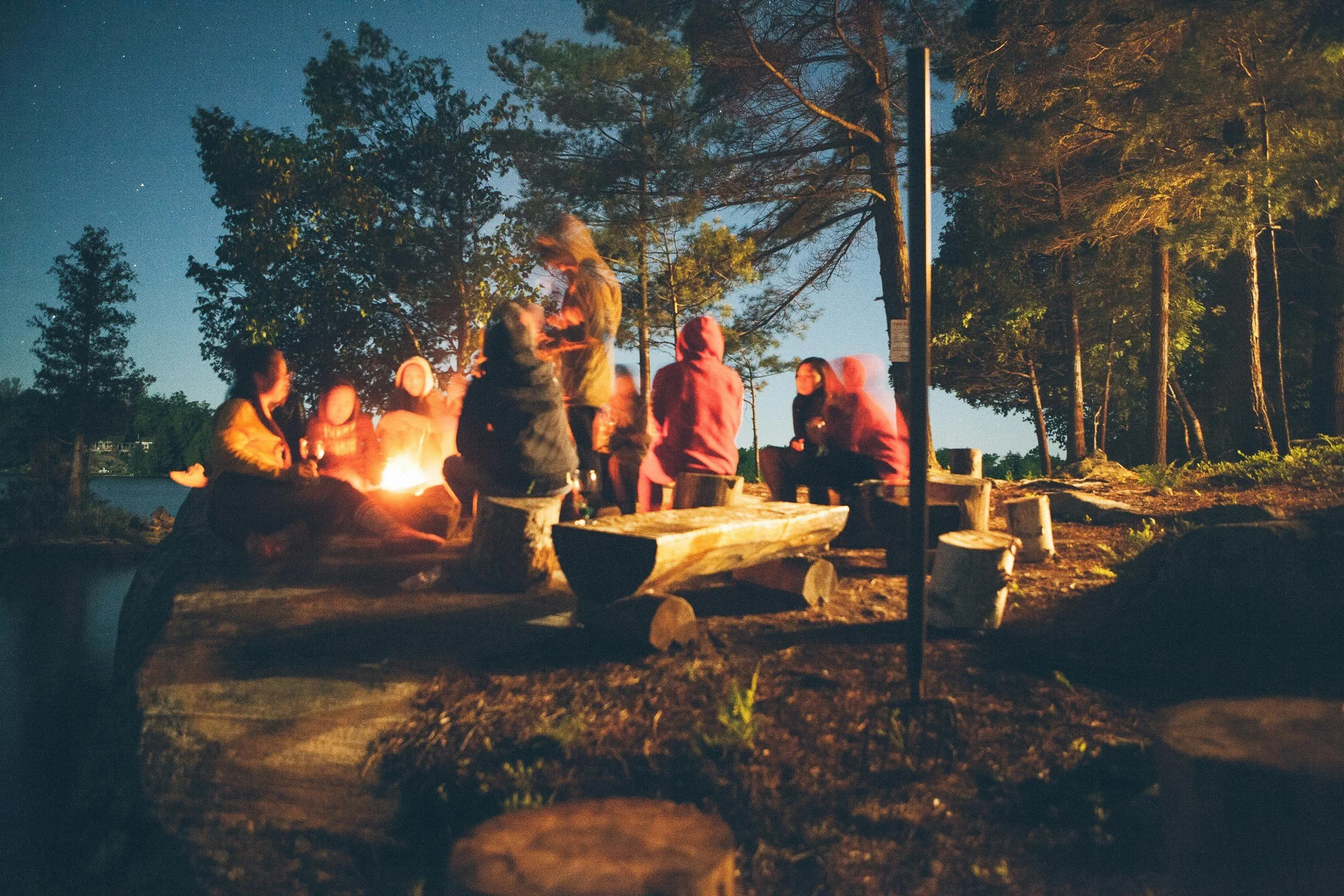
I want us to remember that our nervous systems are wired to live in communities, to feel other nervous systems breathing and moving around us. We're wired to gather around fires, tell stories, raise children, care for elders, connect with land, witness births and deaths, celebrate, grieve, mourn together. This is how our ancestors lived. They lived collectively, and often in intergenerational homes.
Living in disconnection hurts us. It hurts our souls on some level, even if we don't feel it right away. And building community may feel terribly unfamiliar and awkward, but I believe that the more we do it, the more we remember that it is actually in our bones and in our DNA.
Community is what helped our ancestors to survive, to live to the next day, and it's why you and I are here in the first place.
A quote was shared with me recently and it spoke to me deeply, so I'm ending with these wise words, not my own.
I cannot do all the good the world needs, but the world needs all the good I can do.
If you’re interested in working with a therapist who works from a social justice & systems lens, I’d love to support you.
Online Therapy in Colorado | Coaching Worldwide
Helping highly sensitive, neurodivergent adults heal their nervous systems & connect with their authentic selves.
About the Author
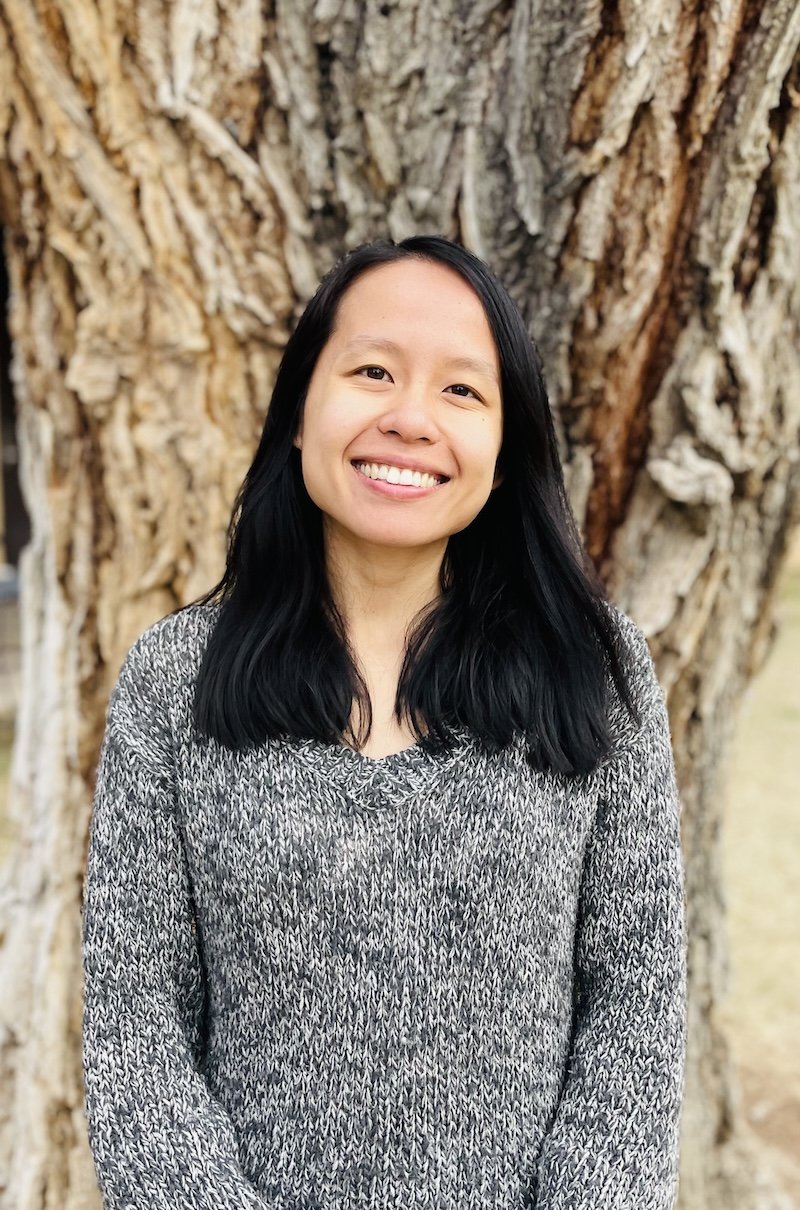
Liz Zhou (she/her) is a neurodivergent therapist, coach, and speaker. She helps highly sensitive, neurodivergent adults & couples heal their nervous systems and connect with their authentic selves, using brain-body modalities (Brainspotting, EMDR, IFS, psychedelic integration) that are quicker & more effective than traditional talk therapy. Liz offers Nervous System Healing Intensives online worldwide.