🎙️ This is a transcript of Episode 3 of the Nervous System Care & Healing Podcast with Liz Zhou, a neurodivergent therapist of color. Subscribe on Apple, Spotify, or YouTube to receive notice when future episodes come out.
Intro
Today, I’m going to talk about neurodiversity-affirming care — what it is, why it matters, & why it’s helpful for everyone, even if you don’t identify as neurodivergent.
(If you need a breakdown of what it means to be neurodivergent, check out my 2nd episode; that’ll give you the foundation you need to understand this episode).
As a therapist & coach, I am focused on providing care that is affirming & genuinely helpful for neurodivergent people.
For context, my work is all about helping adults & couples to heal their nervous systems & connect with their authentic selves.
And the basic ideas I’m going to share here apply to all forms of care. Whether that is therapy, coaching, doula work, medical services... there is space to bring in neurodiversity-affirming care.
Whether you are a healing practitioner, or you are looking to receive care & support for yourself — I’m sharing these ideas because it is important for all of us to hold this vision and framework of a more inclusive, kinder, & safer world. And that really begins with the care we provide in relationships.
These are a few basic principles of neurodiversity-affirming care, or neuro-affirming care for short, that I’ve condensed into 5 points.
#1: The first principle of neuro-affirming care is that differences are not deficits.
There is no one “right” way to be. There is no “wrong” way to be. And neurodivergence — like autism, ADHD, high sensitivity — is not a pathology. We are not here to shame, judge, or pathologize people for being different. We are here embrace differences as a valuable & important part of our human diversity.
The only reason that differences are perceived as deficits in our current society is because our current society is structured to value people with neurotypical traits, who can function well under capitalism.
I’ll share an example from the DSM — the Diagnostic & Statistical Manual of Mental Disorders, which is widely used in Western healthcare.
The DSM describes autism as “Autism Spectrum Disorder,” and it lists out the “symptoms” of autism. We can already see here how the DSM is using pathology-based language — disorder, symptoms.
I will note here that the contributors of the DSM show significant gender disparities, AKA they are mostly men. Plus, many have financial ties to the pharmaceutical industry — links to these studies will be in the show notes. And I just need to name that.
Anyway, here’s a taste of how the DSM describes autism:
“insistence on sameness, inflexible adherence to routines, or ritualized patterns of verbal/nonverbal behavior”
“deficits in developing, maintaining, and understanding relationships”
“stereotyped or repetitive motor movements”
“highly restricted, fixated interests that are abnormal in intensity or focus”
Now, if I were to translate these “symptoms” into more neutral language — language that is curious toward difference rather than hostile — here’s what it would sound like:
Autistic traits incude:
preference for routines & familiarity
preference for verbal or nonverbal communication
different approaches to social situations & relationship-building, compared to neurotypical standards
tendency to stim, which involves repetitive movements that soothe the nervous system & release energy from the body
special interests — highly focused interests or hobbies that bring joy and meaning to autistic people’s lives
Just notice how that reframe feels, how different it is from the language of the DSM. In my reframe, I am not assuming that differences are deficit. I’m acknowledging that differences are differences.
So neuro-affirming care is inviting us to imagine a world that values people beyond arbitrary standards of productivity, normalcy, social acceptability…. It invites us to remember that every human being is worthy & valuable, and that there are many different ways to be in this world. There is no one right way.
#2: The second principle of neuro-affirming care is that we acknowledge strengths AND challenges.
This is the both/and; it’s the nuance of multiple things being true at once. Because while there’s nothing WRONG with different, I also don’t want to diminish the very real challenges & systemic barriers that neurodivergent people face.
Neurodivergence is often talked about in 1 of 2 ways: either it’s a superpower or it’s a tragedy. Either your autism makes you a savant who’s gonna save the world, or it’s a total shame & it’s gonna ruin your whole life… or so the story goes.
So I want to be clear here that every neurotype (neurodivergent & neurotypical) comes with strengths AND challenges, and each individual is going to have their own process of unpacking that, navigating that, figuring out how to tap into their strengths & how to work with the challenges.
It’s important not to sugarcoat everything, and it’s equally important to not pathologize people.
For example, as a highly sensitive & autistic person, I love that my sensitivity allows me to connect deeply with animals, plants, & other humans. But one challenge is how overloaded my nervous system can get, so I’ve had to learn how to manage sensory input in order to prevent burnout.
#3: The third principle of neurodiversity-affirming care is that we aim to support the whole person, not to “fix” them.
As neurodivergent folks, we need support, validation, and space to be our authentic selves. We do not need conversion therapy that forces us to become more neurotypical — because forcing someone to be something they’re not, forcing them to mask, has really negative impacts on mental and physical health. In my perspective, it is a type of soul harm.
Neuro-affirming care is about asking the individual, what do YOU need? What would make YOU feel safe, supported, & cared for?… and trusting and following their lead. We allow autonomy for each individual to decide what feels right to them, and that space for autonomy & choice can be genuinely healing in and of itself.
Now, if a neurodivergent person wanted to learn specific skills, like how to socialize in neurotypical settings, or how to prepare for a job interview based on neurotypical standards — then that would be their choice, made with autonomy; that would be different than being FORCED to mask.
And I want to acknowledge that’s often an important & necessary choice that neurodivergent folks make — because being able to present as neurotypical is a life-saving skill. Especially if you hold multiple marginalized identities, like being neurodivergent, queer, and a person of color.
So there is nuance here. My point is: each individual has the right to decide what they need & in what way they want to meet that need.
#4: We acknowledge that the world was not built for all people, and we incorporate that understanding into the care that we provide.
Neuro-affirming care is not about “fixing” anyone, because “fixing” assumes that they are broken. Instead, we’re learning to work with the wiring of each unique brain & nervous system. And we’re aiming to meet the level of support that each individual needs, whether they have high support needs or low support needs or somewhere in between.
We’re not saying that the problem is the individual’s brain, and if we just fix their brain, there will be no more challenges. In a lot of cases, challenges are caused by a mismatch between the brain & the external environment.
Here’s one example. An AuDHD person, autistic & ADHD, might struggle with transitions — transitioning from sleeping to waking up to making breakfast to driving to work to answering emails to sitting in meetings & making small talk, then driving home & trying to decompress, make dinner, and relax enough to fall asleep at a decent hour & do it all over again the next day. Just saying that out feels kind of exhausting to me, and each transition between tasks requires energy & might feel really challenging. And yes, their brain may be wired in such a way that makes it hard to transition between tasks or switch gears.
But in some cases, this challenge would be alleviated if this individual weren’t required to do so many tasks in such a specific way — jumping from emails to meetings to small talk with their boss, for example. Maybe their brain would function best if they didn’t have random meetings & small talk disrupting their flow & focus in the middle of the day; or if they had the option to work from home sometimes (& therefore not have to commute both ways, which amounts to 2 extra transitions every day). These are just a few examples of how the expectations of the environment — in this case, a 9-5 work setting — might be a mismatch for this individual’s brain & nervous system wiring.
If the individual had access to a more accommodating environments, some of the challenges would be alleviated as well.
#5: Neuro-affirming care moves at the speed of your brain & nervous system.
Everyone has their own processing style. Some brains process information quickly; others need more time to digest. Some people are visual learners, others are auditory & need to hear things explained verbally or talk it out in a live conversation. Some people need to move their bodies and stim in order to stay present. Some people like to sit still. Some people can visualize images in their mind; others can smell colors or feel the temperature of an emotion. Some people can feel sensations in their body; others can sense energies in the room. Some people are verbal processors; some are non-verbal.
My point is, neuro-affirrming care meets each individual at their processing style and at their speed. As practitioners, we don’t rush people to process faster than their nervous system can tolerate, because that would feel unsafe & it would be ineffective. That’s why I use a lot of pauses & slowing down in my sessions, because that extra beat is really helpful for some people.
I don’t expect everyone to use “I feel” language to describe how they’re feeling; sometimes, you might feel like a balloon in the sky, or you might notice a tension in your throat, and that’s a perfectly valid description of experience if it makes sense to you.
As practitioners, our job is to learn the language of each individual’s nervous system… that language is the door that opens into deep healing, deep processing, & care that actually feels good to receive.
In closing, these are the 5 pillars of neurodiversity-affirming care:
We understand that differences are not deficits.
We acknowledge strengths AND challenges.
We aim to support the whole person, not to “fix” them.
We acknowledge that the world was not built for all people, and we incorporate that understanding into the care that we provide.
We move at the speed of your brain & nervous system.
And whether you’re neurodivergent or not, neuro-affirming care is really helpful because it gives more space for all of us to be a little more ourselves, more accepting, more curious toward difference… and I think we can all appreciate and benefit from that.
Research Cited in Podcast: Diianni AT, Davis LC, Piper BJ. Gender and geographic disparities among DSM-5-TR authors in relation to financial conflicts of interest and industry payments: cross-sectional analysis. BMJ Ment Health. 2025 Nov 12;28(1):e301913. doi: 10.1136/bmjment-2025-301913. PMID: 41224482; PMCID: PMC12612736.
If you’re interested in receiving nervous system care & working with a neurodiversity-affirming practitioner, I’d love to support you.
Online Therapy in Colorado | Coaching Worldwide
Helping highly sensitive, neurodivergent adults heal their nervous systems & connect with their authentic selves.
About the Author
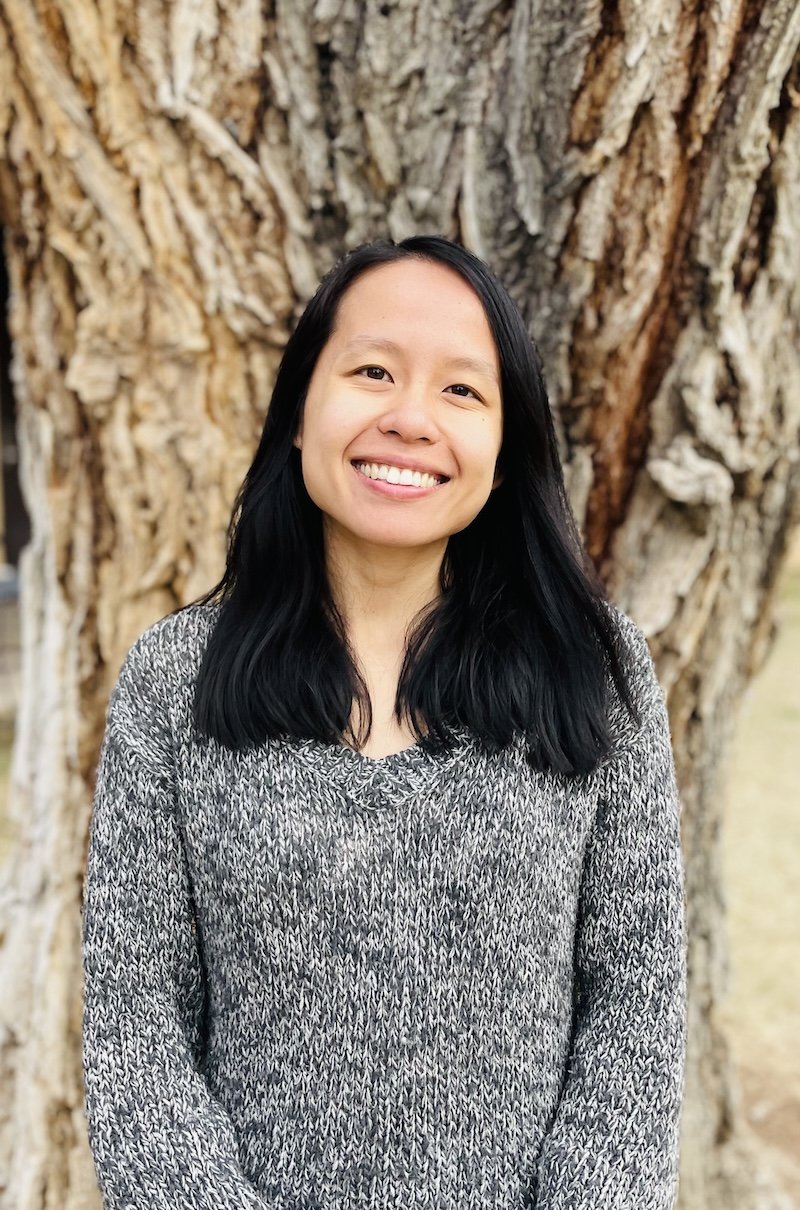
Liz Zhou (she/her) is a neurodivergent therapist, coach, and speaker. She helps highly sensitive, neurodivergent adults & couples heal their nervous systems and connect with their authentic selves, using brain-body modalities (Brainspotting, EMDR, IFS, psychedelic integration) that are quicker & more effective than traditional talk therapy. Liz offers Nervous System Healing Intensives online worldwide.