🎙️ This is a transcript of Episode 16 of the Nervous System Care & Healing Podcast Hosted by Liz Zhou, a neurodivergent therapist of color (MA, LPC), specializing in complex trauma, neurodiversity, & psychedelic integration. Subscribe on Apple, Spotify, or YouTube to receive notice when future episodes come out.
-
If the common “ADHD tips & tricks” don’t work for your ADHD brain, it might be time to slow down & tend to your nervous system in a different way.
The truth is, ADHDers need more than planners, apps, & executive functioning “hacks” in order to move sustainably through this world. Though all these tools can absolutely be helpful, they address only one layer of the experience.
It’s also important to acknowledge the root causes of nervous system dysregulation: the pressures of living under sociocultural rules that don’t work for our brains, and the impacts of navigating systems of oppression.
What if we don’t need another hack - what if we need space to unlearn the rules that others decided for us, & build a kinder relationship with ourselves?
Join me & Deema Al-Omar in an enlightening conversation that just might change the way you understand (& take care of) your ADHD nervous system.
-
04:28 The neuroscience of the ADHD brain
07:55 Navigating the late-diagnosed ADHD experience
09:16 Why the struggles of ADHDers go deeper than executive functioning; it also comes down to a dysregulated nervous system
11:16 Why another planner, app, or "ADHD hack" might not be the answer - & what might help instead
14:49 How the ADHD experience is shaped by systems of oppression, rules of society, & cultural context
19:55 Brainspotting therapy: a healing modality that goes deeper than talk therapy & can work well for ADHD brains
26:27 Brainspotting can help the nervous system process through experiences of collective trauma & move toward homeostasis
28:26 Brainspotting can unlock access to collective & generational traumas held in the nervous system, and bring them out to be healed & tended to
31:49 Slowing down is one way to take care of your nervous system
-
Deema Al-Omar (she/her) is an associate clinical social worker working with clients based in California. She is a Muslim, Palestinian, neurodivergent, midsize, middle child of immigrants and cisgender woman. She typically works with GenZ and millennial folks on issues related to identity and culture, ADHD, or trauma. She’s also a certified Brainspotting practitioner.
» Instagram: www.instagram.com/heyitsdeema
-
» Resource for folks who have tried every tip & trick in the book and still can’t seem to find the answer: Executive Functioning Guide by Deema Al-Omar
» Learn more about Brainspotting therapy
» Learn more about Nervous System Healing Intensives - focused sessions for deep healing & processing
What is the ADHD brain & nervous system, and how is it different from a non-ADHD brain or nervous system?
DEEMA: I love that question because I feel like people, including folks with ADHD, don't fully understand our brain and why it's different and what it actually needs from us.
On a neuroscience level, the ADHD brain is different from a “neurotypical” brain, because it lacks two critical neurotransmitters, dopamine and norepinephrine.
We've heard a lot about dopamine. Dopamine is our reward neurotransmitter. It's responsible for motivation, pleasure, that kind of thing.
Norepinephrine is more for alertness and focus. So with those two either lacking or not being utilized properly in the brain, we struggle with what's called executive functions.
You'll hear executive functioning a lot when we talk about ADHD, and that is your planning, time management, organization, impulsivity, transitioning between tasks, starting & completing tasks, all of those things. On a very fundamental level, our brain struggles with those things.
ADHD is commonly described as a lack of willpower or laziness or just not trying hard enough and not having discipline. But in reality, our brains work differently and if you're struggling with your ADHD, we're working against it.
We want to work with it. That's what the work with ADHD is around - working with your brain the way it works, instead of trying to force it into a box that it doesn't fit in.
LIZ: Thank you for such a clear description of what is happening neurobiologically in the brain. It is striking to me how, with the way society talks about or treats ADHDers, that it comes down to this character judgment of being resistant or lazy or unwilling or whatever.
What I'm really hearing from the more affirming points of view, like the one you describe, is that there is something different in the wiring and the neurochemistry.
DEEMA: Yeah, absolutely. A lot of times it's thought of as a character flaw. And that's just not what it is. That's just a misinformed view of what's happening. There's almost always a different way to describe something other than lazy, you know? There's always something else going on. That's what I would say around the ADHD brain.
Navigating the late-diagnosed ADHD experience
DEEMA: I got diagnosed and it opened up this whole thing of like, I need to learn everything about ADHD. During my research, I came to this realization that it's really deeper than the tips and tricks and hacks, and stuff that we see a lot online. A lot of ADHD support is geared toward, let's gamify this and let's race against the clock and let's do all of these things.
I do believe some of those things have a place in working with your brain. I'm not going to say those things aren't helpful. They've helped so many people, but I think on a deeper level, people with ADHD are struggling with a dysregulated nervous system and pendulating between: I’m either overwhelmed and scattered and rushing and doing so many things all at once, OR I'm in paralysis and stuck on the bed or the couch and I just can't even get up.
That's deeper than executive function. That's a dysregulated nervous system, and we need to find a middle ground here where you can do things sustainably instead of always in a state of extreme.
LIZ: I think about how that is so disabling, right? To be in this pendulum swing, it may feel like not having autonomy over one's experience.
I'm also reminded of how, the way our mental health system or Western culture works, we love to cognition our way through things, as if things could be a 1, 2, 3, quick fix. But it's actually more complex than that.
Why ADHD support needs to go deeper than just “tips & tricks” - it needs to address a dysregulated nervous system
DEEMA: I tell people when they come to me for ADHD support that I'm not going to teach you the tips and the tricks. The tricks are baked in; they'll come, but there has to be a fundamentally different way that we interact with the ADHD, beyond tips and tricks, for it to be long-lasting and successful.
We start with tracking the nervous system - like, what am I noticing? What are my signs that I'm going into those extreme states one way or the other? And how can I bring myself back?
Only when I'm in that middle ground, and you can call it whatever you want - your flow zone, resiliency zone, zone of well-being - but when you're in that zone, then you can actually think clearly about what tip, trick, or hack, or whatever is going to help me.
Otherwise, we're just stuck in this survival - like, let me download this app, or let me get this planner, or let me do this thing, or let me make this organizational system, and we just get stuck in this, like, these things aren't working and I don't know why. And it's because they're not the answer. We have to slow down first before we figure out how to fix the problem, you know.
LIZ: I really appreciate that bottom-up approach rather than just brute forcing it from top-down.
Because of course if a nervous system isn't resourced or in its resilience zone, then it can't absorb anything… it's not available to implement any of the tips and tricks.
Is there anything else that you want listeners to know about nervous system regulation or getting into that flow state for ADHD brains?
DEEMA: I would say it's not easy. Nobody's saying it's easy, you know? It can be really hard to go from a state of ignoring your body's cues for so many years, especially if you're late diagnosed; knowing that this thing is hard for you, but everyone else telling you that you should be able to do this thing, or this should take only a short amount of time.
We have to uncover, where did we learn the rules that we're living our life by? Those rules actually aren't written anywhere. We've just internalized them and we can make new rules.
There's a lot of unlearning around where we develop these beliefs around what we can and can't do and what is or isn't allowed or acceptable. And once we uncover those, I find that it can be a lot easier to really embody the slowness, the using of accommodations, reorganizing your refrigerator in a way that helps your brain instead of doing it in a way where your food always goes bad because you can't see it, that kind of thing.
How the ADHD experience is shaped by identities, social locations, & systems of oppression
LIZ: Speaking of rules that we've internalized that may or may not actually work for our brains, I would love to bridge this conversation with how, because we're all multifaceted human beings, how the ADHD or neurodivergent experience can really intersect with other identities or lived experiences or social locations.
DEEMA: Yeah, I think we have to talk about that, right? With nervous system regulation, we really can't talk about that unless we talk about the systems that create the dysregulation, you know?
We're talking about capitalism, we're talking about racism, we're talking about sexism, ableism, all the isms, family dynamics and life experiences, gender identity, all of these things that tie into the way that we see the world or present ourself or the rules that we get about what we can and can't do. It really creates more of a layered conversation around regulating your nervous system, and that's where a lot of the emotion comes in.
But if we're actually trying to like live a more embodied, true aligned lifestyle, we have to unpack where these beliefs are coming from. How can we move into a higher version of ourself that feels more true, not just with ADHD, but with maybe all the other things that are also impacting that cycle of dysregulation, you know?
LIZ: Yeah, absolutely. This is making me think about how, for me, growing up in a Chinese-American immigrant household, the idea of laziness or not wanting to work or pull yourself up and just do it, power through - that comes with certain connotations and nuances that might look different in a household from a different culture. To your point, it's always relevant to the conversation; nothing happens in a vacuum.
DEEMA: Absolutely. I'm Arab-American, I'm Muslim. Growing up, I've always struggled with this particular part of being Muslim, which is praying daily. I had always struggled with that for a long time, around getting up to pray, because of the paralysis of ADHD sometimes that comes up.
So I've reached a place in my life where I am praying regularly, but also, I get distracted a lot. I forget which part of the prayer I'm on and did I do this thing or that thing. There used to be a lot of shame tied to that, about how I just can't seem to stay focused while I'm praying.
Now, I am removing that layer of shame - like, okay, I have this brain, I'm a religious person, so I know God gave me this brain, he knows what's going on in my brain and in my heart. And I'm just going to do my best every day that I can.
I think there's a lot of specific experiences depending on what background we share that are just so nuanced, that it's just such a personal experience to have ADHD.
LIZ: That is such an important example of how that can show up and weave into the everyday life.
One thing I remind myself every time - working with neurodivergent folks, being neurodivergent myself - is that for every person out there, that is one flavor of the neurodivergence; and we haven't even talked about how ADHD might intersect with autism or giftedness, so there's that extra layer as well.
What is Brainspotting therapy, and how can it support ADHD & neurodivergent brains?
LIZ: One of the modalities that we're both trained in, that we both really like, is Brainspotting. I've noticed Brainspotting can work really well for neurodivergent brains. Let me back up & have you share how Brainpotting works, how you've been experiencing or working with this modality.
DEEMA: I love Brainspotting. Brainspotting is a somatic neuro-experiential model of therapy. It was developed by Dr. David Grand and it operates on this basic premise that where you look affects how you feel.
We use relevant eye positions that your practitioner will help you find, using a pointer or using your natural gaze. We use those eye positions as an access point or a window into the deeper layers of your brain, where the trauma or the activation or the imbalance is stored.
So that's a very basic understanding of what Brainspotting is and how it works. It's commonly used as a trauma therapy, but what I also love about it is that it can really be used for anything that has some type of emotional charge or activation. It can be used for depression, anxiety, performance enhancement, creativity, or expanding into a state of being that you'd like to achieve.
LIZ: I'm thinking about some of the sessions I've had in Brainspotting, both as a client and as a therapist. People are often so surprised by how precise Brainspotting can feel. It has this surgical-like precision, where one eye position can really lock them into a certain type of processing or memories coming up. Everyone processes differently, of course. And then just a slight shift in that eye position can shift that experience or open up another window for processing.
I find it so cool how it's not about using fancy equipment or this 12 step process. It's simply: notice where you're looking; how does that make you feel?
I'm curious if you've noticed anything about how Brainspotting might work with ADHD brains.
DEEMA: I've seen such a range of reactions or responses to Brainspotting.
What I love is that it's so flexible - if you found that talk therapy (we call it the neocortex or the thinking brain), if that type of therapy had its limit for you, and you need something a little bit more deeper embodied, somatic, something where you maybe have trouble communicating the words and you just know how you feel… that's where I feel like Brainspotting shines: with folks that need something where they don't necessarily have to talk.
We're taught in therapy school that you have to talk about your trauma to heal from it, and Brainspotting directly challenges that, because we're bypassing the area of your brain where talking is. We're going deep into where the trauma is, where the emotion is stored, where those little fragments are. And you can just feel it in your body, you can just notice and be open.
It also has the flexibility for folks that might need some of that verbal processing and maybe do need to talk a little bit more.
One of the greatest tools is being able to apply it in the way the client system needs and knowing that neither of us are doing anything wrong by doing that. The whole premise of Brainspotting is to be attuned and follow your client's nervous system.
LIZ: That's really beautiful. And there's this meta level of it too, where because it's a process where you can't do it wrong, you can't Brainspot wrong, you're just having your experience and noticing it, I imagine that is also really healing and helpful for people who may have felt like they've been doing their whole life wrong because they were trying to navigate a system that wasn't built for them. To actually be in a space where it's like, no, seriously, just be with your experience, there's no wrong here, is very liberating and probably a new experience for a lot of us.
DEEMA: Absolutely. I love it when clients are like, I don't know if I'm doing this right. And I'm like, there's no way to do it right or wrong. You just notice what's coming up. Even if nothing is coming up, just notice that. And like, what is that like? You know, like there is no way to engage with your own nervous system incorrectly. So you're doing it right.
LIZ: Exactly. I sometimes experience Brainspotting as a tour of your own nervous system because there's no agenda that we're trying to follow. If all they did was notice... dysregulation and notice how the sensations in their body actually respond to being noticed, then that is building that nervous system awareness and acceptance and autonomy.
What does nervous system care look like in times of collective trauma & stress? How can Brainspotting support with nervous system regulation?
LIZ: I’m thinking about the collective experiences of trauma & trauma, as well as the ongoing socio-political climate, where it's not like, now the distress is gonna go down, we fixed it. It's like, this is an ongoing thing we're all navigating. So I'm curious if you have anything to share about how Brainspotting can support us in navigating the present day reality.
DEEMA: I think it's really about Brainspotting tapping into that natural biological ability for our body to transfer between states, into balance.
Your body naturally wants to move into homeostasis. Even if you are constantly moving out of that window - because of the current sociopolitical climate, stress, trauma, or whatever you're going through - through Brainspotting, your body is gonna naturally lead you to where that imbalance is in this moment in time and help you bring that down.
So we're accessing the imbalance, and trusting in your body's natural ability to heal itself, weed out the imbalance and bring it back down. So even in this state when we are always being activated, it can still help us reach that centered, balanced state on a very physiological level.
The other thing I think is really amazing is that because we're going into the sub-cortex or the deep brain - where time doesn't exist; it's just all of the trauma or emotions - we can even access layers and layers of trauma that are generational or ancestral, and trauma that doesn't feel like it's yours, and we can bring that out and it can be healed and tended to using Brainspotting.
LIZ: I have this image of like reaching deeper and deeper into the roots. There's energy and somatic information our bodies might hold that that doesn't belong to us, but came from before us in the lineage or the the ancestral experiences. How powerful to be able to access that through the eyes, through the window of the soul.
Embracing your ADHD brain: from criticism to curiosity
DEEMA: At the core of all of this is having a mindset of curiosity about yourself. Whether it's ADHD or Brainspotting, I always tell my clients that every experience or every week goes by that you feel like you still struggled with ADHD, for example, is information.
Now we know that, okay, this worked and this didn't. Just like we are being curious with Brainspotting, being mindful and open and non-judgmental around what you're noticing… with the ADHD brain, we want to move out of criticism and into curiosity so that we can find what works for us.
IF YOU ENJOYED THIS CONVERSATION…
Subscribe to the Nervous System Care & Healing podcast on Apple Podcasts, YouTube, or Spotify, so you don’t miss future episodes.
🎧 This is a podcast about how to take care of our nervous systems while we navigate systems of oppression that were designed to keep us dysregulated.
Vibe: grounding, soothing, educational, community-centered, neurodivergent-friendly.
Hosted by Liz Zhou, a neurodivergent therapist of color, specializing in complex trauma, neurodiversity, & psychedelic medicines.
About the Author
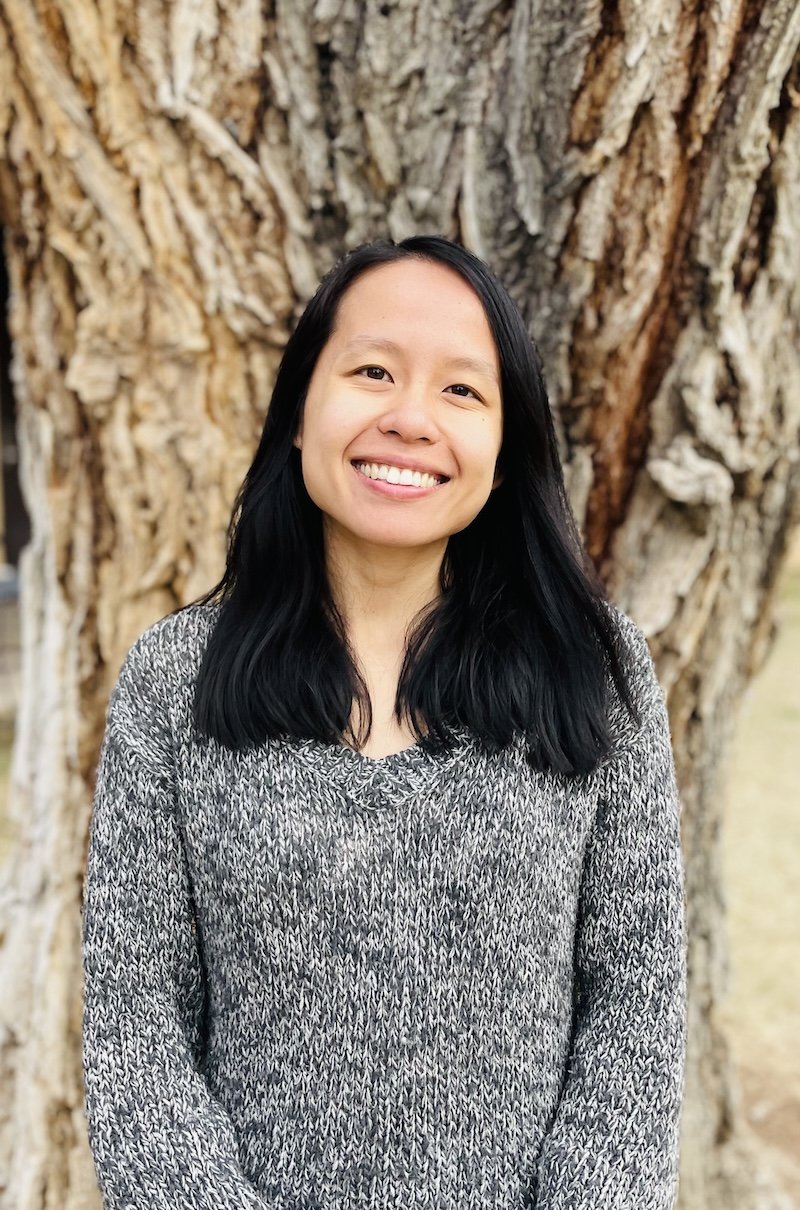
Liz Zhou (she/her) is a neurodivergent therapist, coach, and speaker. She helps highly sensitive, neurodivergent adults & couples heal their nervous systems and connect with their authentic selves, using brain-body modalities (Brainspotting, EMDR, IFS, psychedelic integration) that are quicker & more effective than traditional talk therapy. Liz offers Nervous System Healing Intensives online worldwide.