🎙️ This is a transcript of Episode 10 of the Nervous System Care & Healing Podcast with Liz Zhou, a neurodivergent therapist of color. Subscribe on Apple, Spotify, or YouTube to receive notice when future episodes come out.
-
If you hold marginalized identities (like being queer, BIPOC, or neurodivergent), you’re used to navigating spaces that weren’t built for you — including the medical system.
Unfortunately, the mental health field has a history of pathologizing folks... leading many to believe, “there’s something wrong with ME.” It’s time that we change this narrative.
Join me in a poignant conversation with therapist Halle Thomas (she/they), where we talk about:
what prompted her to divest from the medical model (which assumes that mental health = "absence of mental illness”), and why alternatives to the medical model are important
how we can make therapy safer for everyone, by navigating conversations about diagnosis with care & consent
why it’s important to talk about privilege, oppression, & identities (rather than pretend that these dynamics don’t exist)
what it means to acknowledge ancestral responsibilities & engage in intergenerational healing — including when harm was perpetuated by your own ancestors
how Halle uses sensory breaks to take care of her nervous system
-
02:04 The journey from pre-med to counseling
10:25 Navigating mental health in a multicultural household
15:11 De-centering the medical model
24:03 Conversations on privilege, power, & intersectionality in the therapy room
28:19 The role of the therapist as a bridge
30:54 Ancestral responsibility & healing across generations
37:36 How do you take care of your nervous system?
-
Halle Monique Thomas, LPC (she/they), is an anxiety therapist who also works with trauma. Through Brainspotting, parts work, & spiritually-informed practices, she supports anxious adults whose anxiety stems from trying to follow rules that were written FOR them, instead of by them. Halle’s work centers the lived experiences of BIPOC, queer, chronically ill, and neurodivergent folks.
>> Instagram: www.instagram.com/chicorycounseling
>> Website: www.chicorycounseling.com
Liz Zhou: As the audience is getting to know you, I'm wondering if you could share in a nutshell what drew you to this work as a therapist? Why do you do this work?
Halle Thomas: Well I do this work, because I kind of fell into it, it was actually never my plan to become a therapist. And I started off in college as a pre-med student because I'd had a lifelong dream of following in my dad's footsteps, becoming a doctor. I specifically wanted to become a plastic surgeon and specialize in burn reconstruction.
It was a very cool dream that I had and I was very sad when I had to let that dream go. It was because I realized at the time that I was in undergrad, my physical health and my own mental health at the time, they were not great. And it really impacted my ability to perform at the level that I needed to.
I made the decision during a chemistry final actually. I turned it in half finished crying and put it, you know, I remember placing it down in front of my professor whose office hours I had been in so many times so he knew like he knew where I was at.
But I handed in my half finished final and I made my way crying across campus to go change my major to psychology.
The rest is kind of history, going through those classes. I eventually ended up in a counseling psychology course. And that professor is who I really credit. Her name's Dr. Nancy Warsham. She's at Gonzaga University. I credit her with getting me into this because even with my previous dream, I just knew I wanted to work with people and I wanted to work with people closely and I wanted to work with their pain closely, but I also wanted to be in their joy and in their transformation, whatever that transformation looked like or meant for them. So I ended up here and you know, it's been, gosh.
It's been almost 10 years, June will be nine years since I saw my first ever therapy clients and I'm not upset with how this has turned out. So that's saying something.
Liz: Yeah, amazing. And really just how things pivoted and adjusted course from the original plan, which probably so many of us can relate to.
I know one of the things that we're really excited to talk about today is the medical model and specifically alternatives to that. So I'm curious if you could share what prompted you to divest from the medical model? How would you define the medical model? And I want to acknowledge that the medical model is considered the standard for how therapy is often conducted, but that there are alternatives to that.
Halle: 100%. And this is another time where I love to remind people of like the medical model is a model. It is not the only way to do things. But as a model, we're looking at health being defined as the absence of disease.
Iin the mental health space, health defined by absence of mental illness and symptoms. The medical model also really understands symptoms as being pathological, of like you are having this symptom because something is wrong. And while that can be true, right, we often experience things when something is amiss… one of the problems I see for so many folks is that the medical model can sometimes lead people to feeling like something is wrong with them as an individual.
And that is a problem to me, especially when we think about, while there's so much progress that's happened in terms of destigmatizing mental health, that stigma is still there. So anytime that stigma has an opening to come up, I pay attention to that because it can take so much for folks to reach out for support and want to talk about things and even practice talking about things. But if they have that additional layer of, I'm having this experience and it means something is wrong with me, now we're also needing to give attention to the shame that's been internalized. And that can be another barrier for folks.
Liz: Yeah. I just think about how that adds another layer where like there's the thing that's happening that may be causing distress. And then there's also the shame on top of that. So the way the medical model just adds kind of another thing to work through.
Halle: It does. And I know this doesn't happen for everyone. But the other reason why I push back against it and divest from it is because of my own family. I was raised by a set of parents. My dad was a physician, family medicine doctor, and my mom was a clinical psychologist. So two people who were very invested in the medical model.
Now, there's a little bit of nuance to be had here because my parents were different races. And for my dad, as a black physician, and one who was an older dad when he was going through medical school that was in the 1950s.
So if we think about the history of the United States, how Black individuals have been treated by the medical system throughout time, my dad had kind of a unique position in that way of having his own ways of challenging the medical model… but also really believing in being able to find problems that had cures and treatments. And while it was great in some ways because he was able to be a really safe, safe provider, especially for people of color in general, not just Black folks…
The way he talked to me about my own mental health had some problems because it was frustrating for him to be like... well, what do you mean you're having, what do you mean you're depressed? We don't get depressed. That's like a white person thing. We don't have time for that. And it was interesting having those conversations start at home and parents with two very different lived experiences… and trying to find my own footing of like, well, what do I think and what do I know about my experience? And then all these years later now as a provider, seeing the differences in terms of being really faithful to the medical model versus divesting from it.
Liz: What a significant experience, growing up in a multicultural household and to also receive some of that messaging in your own home about, you're having this mental health experience, you're not supposed to be depressed, sounds like the messaging.
Halle: Yeah. Now we're gonna go into another layer of nuance, which is that in addition to my household being multicultural, my parents also had a really significant age gap in their relationship. So they had an intergenerational marriage as well, and that totally informed how they both thought about mental health and what was going on for me. So I had the experience growing up of knowing what both my parents did for work. And I remember being pretty young and telling my parents, I was like, I think I need to talk to a therapist. And actually both of them didn't believe me, which is really interesting given that my mom was a clinical psychologist.
Liz: Wow!
Halle: So they both were like, you're fine. And for me, it's so funny, I've actually never shared this and I'm glad we're talking about it because I think it'll be helpful for some people, especially thinking about how neurodivergent children navigate the world. Because how I got listened to was I knew that my middle school had a school counselor, and I knew that she was a mandated reporter.
And I knew this because every year we were given a school issued planner that had a bunch of information about resources at the school and when our breaks were and just all this information. So I literally am reading what I considered a manual to being a student. I figured out how to make an appointment with the school counselor and I told her how I was feeling. And I said, I think I'm depressed. Sometimes I want to hurt myself and I don't want to do that, but that's how it's making me feel.
And she just looked at me eyes wide and was like, okay, so like, I'm going to have to call your parents. And like, I'm probably nine years old at this point. And I'm like, cool, call my mom.
Liz: Yeah, you're like, I want help. I've been trying to get help.
Halle: You know, looking back at it, it was a really big wake up call for both of my parents. But I do genuinely have a laugh about it when I look back because I'm just like... if this isn't the most like type A, I'm following the rules, because people kept asking like, how did you know to make this appointment? And why did you tell her that? And did you mean it? And I'm like, yeah, I meant it. I'm having a hard time.
Liz: That's so brave of you. And also, I'm just so impressed that at that young age, you knew how to navigate the system and what steps were needed to hit the button that would finally get some attention and care. We'll see where the story goes, but yeah, you were following steps.
Halle: Yeah. But it's part of why I really think about navigating systems, because to be a child with very resourced parents, with very well-informed parents too, and to still not be able to get the help that I genuinely needed at the time, I think that some of where my own interest in systemic problems and systemic inequities really started because from that point on, I was interacting with a bunch of different mental health care systems. And I saw the stuff that really hurt me, really was not attuned to my needs, and eventually helped me kind of create my own playbook for the type of therapist I knew I was not going to be once I did land on pivoting my career plans.
Liz: That is just so poignant and profound that, you know, as you were going through the experience navigating the medical model, trying to get attuned support… this reminds me of just how so many therapists enter the field or healing profession of, okay, I did that, that didn't work for me. I saw how it actually ended up harming people or just not being as helpful as it could have been. I wanna be a part of the change that contributes to a different way of supporting people.
So then I wonder, in your work now, what decentering the medical model has looked like in your work with clients who are queer, BIPOC, chronically ill, neurodivergent, and possibly multiple intersections.
Halle: I would say too, you know, the majority of people I work with are at multiple intersections of identity and I'm so glad that they are because it really enriches the conversations that we have about our work together, but also it enriches our conversations about what's possible.
One thing that is sometimes different for people entering my practice is that diagnosis is not mandatory in my practice. I do not diagnose unless someone is seeking reimbursement from their insurance provider or if someone is wanting to explore diagnosis to better understand their own experience.
And that's so different to have that even be presented as an option. And I get really, honestly, emotional about it because I know what that experience is like of finding out after the fact that you've been diagnosed with something that no one told you about, but that was also a misdiagnosis.
Liz: Mmm. Oh, that's such a weird feeling and not good.
Halle: It's very weird, very weird, and I'm sensitive to it because, not just because of my own experience, but because I get so many folks who land with me and they tell me about all of the different diagnoses they've been given.
And I usually know within the first few sessions that at least half of them are incorrect. And I'm laughing about it because it's like, the bias runs so, so deep. And the number of people I work with who have been misdiagnosed, and specifically because their own neurodivergence was being missed, really, it bothers me and it irritates me because having a diagnosis that actually does match your experience can be so helpful. It can be helpful for navigating systems. It can be helpful for getting access to different kinds of care.
But when you're given an incorrect diagnosis and then are further pathologized and stigmatized for it, that's not helping anyone.
Liz: Yeah, exactly. And what I really hear in your approach is this emphasis on autonomy and choice and also really challenging this hierarchy where like, okay, the mental health professional just puts the label on you, they decide for you and don't even tell you what they've decided versus let's have a conversation about it. And in what ways would you find a diagnosis helpful? Do you want one? Also honoring the lived experience of the client or the participant in the healing process.
Halle: Yeah, and on the autonomy piece too, because diagnosis is not mandatory in my practice, even if we end up exploring it later, it doesn't necessarily mean that I'm putting it in people's charts either.
The diagnosis can just stay in our conversation. And if something comes up where someone's like, hey, I need a letter or I need a referral to occupational therapy and they need to know what I'm diagnosed with, of course, those are times that I will put it in writing.
But otherwise, I'm not doing that until the client says it's okay. And it's because I'm also protective, and especially, especially politically right now, the number of changes that have happened just this last year, let alone in even the last eight, I am so protective of my clients charts and their records and how I write up my own documentation because the last thing I want is for my clinical documentation to ever be able to be used to hurt my people. So I get like really into mama bear mode because I'm like... please do not mess with my clients. Just don't do it because the world's already hard enough.
Liz: Right. And I'm just so appreciating your mindfulness and your sensitive awareness of just how much power we could wield and do wield in our roles as licensed professionals and that you're using this power mindfully to really protect your clients from the harms of the system or a diagnosis being weaponized against them in a way that they never consented to, especially in this political climate.
I'm sure that's also just very reparative and healing for some folks who have felt abused, gaslit or mistreated by the medical system to have a provider, a practitioner who's really looking out for them and in their corner.
Halle: I mean, that is my hope, right? That is always my hope that I am giving people a different experience from what they've had before if they've had negative experiences in the past or that if it's their first time in therapy that they are getting a baseline that like they should be expecting from anyone in this profession. And so that if they do have an experience where they're like, this doesn't seem normal, that they're able to flag that.
Because I think about that for myself, right, of interacting with all of these different mental health care systems as a child and as a teenager where I had no say. And even the stuff that I knew wasn't working for me and I knew it wasn't quite right, there wasn't anyone to really take that seriously because it was, well, this is how this is done. And if you don't like it, it's because you're being defiant and not compliant, right? Those two words that so often get used to describe BIPOC folks, queer folks, neurodivergent folks in healthcare settings when they simply have questions, right? That's such a pain point for so many of us asking a simple question, so that we can better understand what's going on, can get labeled as being defiant. So I don't want folks to have that experience with me. I don't want them to have that experience, period.
But I know I'm not a loner in this experience, but this is part of why I also love doing this work. Knowing I'm not the only therapist out there who's trying to get away from the really harmful stuff and building these practices that really allow people to be seen for all that they are and where they don't have to compartmentalize themselves to be given the care that they need.
Liz: Yeah. Especially when asking questions and just being curious, does this apply to me? would this work for me? is actually a really healthy thing to do, but that gets pathologized through that medical lens.
I want to bring in another topic that I know we're excited to talk about where, you know, really the lived experience, the intersectional identities of clients is like it must be brought into the conversation. We can't have a conversation without acknowledging that. And I'm also curious how the topic of privilege shows up in your work with clients. Privilege, power, oppression.
Halle: Yeah, it's all the time and that's the way I like it. And I'm also laughing about this too, because I know that there's been this wave that I have perceived of more therapists talking online of like, how do I talk about politics in therapy room? How do I talk about identity? And I sometimes chuckle about it because I'm like, I have been having these conversations since I was a child because of the home I grew up in. My dad was born in the 1930s in New Orleans. He grew up when segregation was very formalized. And so all of his stories and the way that he talked to me about the world was through those experiences that he had. And you know, how my identity was different from his and different from my mom's and it really set me up to be really comfortable honestly with conversations and so I see this come up in several ways.
One, it comes up on my end sometimes as the therapist and I, when it's therapeutically appropriate, will talk about my own privileges that I have and how that influences the relationship with my client. There was a period of time when I first started my practice where I was working almost exclusively with Black folks, biracial Black folks, and interracial couples. And one conversation that would come up very often was around colorism and talking about, you know, what is it like for someone with a darker complexion to be sitting with someone who does share in some of their cultural identities, but who is white assumed in many spaces, and what biracial African-American folks may represent to that person and harm they may have experienced from other people who look like me.
And so that's a conversation that I've had and will continue to have with folks. That could be a whole other podcast episode. So I will keep myself, I'm gonna keep myself contained, but that's one that comes up.
But for my clients too, the ones who especially are sitting at all these different intersections, I see my clients sometimes bring up their own privileges as a way to try to take away from the seriousness of their own struggles.
Especially saying like, well, you know, even though I'm multiracial and disabled and have, you know, a learning disability, I still have, right, like the ability to pass as a straight person. And so maybe, maybe it's not that bad and I should just like stop coming to therapy so that I can give someone with more problems the space.
And so that's one that I have to talk about and talk about how like this isn't a competition of who's in the most pain. This is we're talking about your pain and how privileges do not always protect us from experiencing pain.
Liz: Yeah, just so much nuance here. And I'm just thinking, honestly what a gift it is that you offer this space and it's not just talking the talk, but walking the walk of since a young age living in this space of nuance and being a bridge between worlds that can be so separate. The way it gets talked about in mainstream society, of, that's over there that's over here, nothing overlaps, things are literally black or white… but literally sometimes there's the nuance and the gray area in between.
Halle: There is, and that role of being the bridge is really important to me, because I also think too about when I have clients who are white, those conversations around privilege are really interesting because they will sometimes come to me with, you know, essentially, what do I do with my white guilt? I feel so bad that I have all these privileges that I didn't ask for. Does this mean I'm a bad person or I'm angry because I feel like people are telling me I'm a bad person. And so that's another angle to the privilege conversation too.
I always tell people, you know, with my own identities and how much, how much overlap there is. People make assumptions about me left and right, whether it's my racial identity, whether it's about my neurotype, whether it's about my disabilities, my queerness. So I hear and get the questions that people are terrified to ask other people.
Liz: I'm sure. Oh yeah.
Halle: And I think it's a gift, honestly, because some of the things, I'm like, I'm so glad you asked me and not someone else who you are going to like actually do relational damage to if you were to say this to them.
And being able to just really be with people in that moment, in that space, so that they can better understand not just themselves, but how to relate to other people too, because it is very rare that I encounter someone whose own biases really are coming out in a way where they are using it as a weapon.
A lot of people really don't know, and I think it's frustrating sometimes to recognize that some people really don't know. But being able to meet those folks is important because it is not for everyone to do. I do not want everyone taking on that labor, but I'm really comfortable with it. So I'm like... let's work through this together. Please don't take that over there because it's really gonna go bad for you.
Liz: Yes. Oh, I love this so much. These are the conversations that need to happen and they need to happen in a certain way so as not to cause that relational damage. What sacred work that you're doing because of course the difference here is that you are consenting to being a person who holds space for this type of conversation. You are prepared and skilled and clearly have capacity for it.
It seems to bring you meaning, just profound meaning, to be that space for people. So I just want to express gratitude for that.
Halle: I appreciate that so much. I really do think about this being, I would consider an ancestral responsibility on my part.
Because sometimes we see that quote out in the wild of, you are your ancestors' wildest dream. But for me, I'm like, for some of my ancestors, I am their wildest dreams. For some of my ancestors, I am their wildest nightmare. Existing as an openly queer, autistic, non-binary, biracial person… they would want me dead.
Liz: Yeah. You don't fit in any of the boxes that they want you in.
Halle: I don't fit in the boxes and so... I'm always in conversation with my ancestors and for some of them who are really loving and supportive, I'm like, hey, like this is who I'm sitting with today in a therapy session. I'd love to just like, just really feel you with me while I'm with them and also with their ancestors.
But for some of my ancestors, I do not talk to them in a very loving way. I'm very stern with them where I'm like, hey, so you're gonna hate this, but you also need to witness what's happening here because the way you did this was so messed up and so awful and you could have had a nice time just engaging with your cultural practices, but instead, you really decided that you were gonna, you know, side with capitalism and white supremacy and settler colonial mindset. So I make them sit and watch what I do and engage with them in that way.
That's also work that I do with my clients, right? Who are like, I wanna connect to my culture, I wanna connect to my ancestry, but I don't know how to do that. And I'm like, well, guess what? You can do it your way. And that includes working with the people who weren't great and who really hurt people.
Liz: Yeah, I mean, this is giving me chills, just the discernment you have, the way you relate to the ancestors and how each relationship looks different depending on the context. I wonder what's been the impact for you to reconcile with the ancestral responsibility, and if could you share more about the impact for also your clients, obviously without giving specific details, but to reconcile with, these are all the parts I'm holding, and what is a way forward, that isn't dismissing the impact.
Halle: Yeah, so I'm someone who happens to know some things about my ancestry, right? And I've been able to do some like genealogy work as well to try to go farther and farther back, which is really challenging and really messy because the history for so many Black families, especially those who spent any time in the South, that work is painful because you will discover, as I discovered, that some of my ancestors were enslaved, but also some of them were fighting on the wrong side of the Civil War. And that's all on the Black side of my family.
That's all within the same pool. But looking at, in my case, my mom's side of the family, they came to the United States way later in the game, had nothing to do with the slave trade.
So, understanding that we all have our own assumptions about our own ancestry and who was doing the harm and where did it happen. Sometimes it happens within the same family and that intergenerational trauma that happens from that has to be tended to in some way shape or form.
For people who don't know about their ancestry, right, uou know that there were people who came before you? And so I actually think it's so okay if you don't know anything about them, if you don't know their names, you know that they existed. You know they came from somewhere. And so there's a real peacefulness that I've seen for some folks I've worked with being almost given permission, not that I can give anyone permission to interact with their ancestors, but hearing someone talk about it in that way of like, it's okay if you don't know, you can put out a general call of like, hey, if there's anyone who is supportive of me and is aware of my existence. I'd love it if you just like hung out with me for a little bit or I'm leaving out some fresh water for you or I'm inviting you to sit with me while I have this meal. That's okay. That's really okay. Cause there's so many reasons why we might not know who came before us or where our families were located. And I don't think there needs to be reason for people to be left out of these practices when they are right there for them.
Liz: Yeah. I love the openness with which you see all of this and also just acknowledging that things are more complicated than they may look or than we may assume and that just feels very tender; that we either consciously learn about our ancestry or that may unconsciously live in our bodies. But what I hear from you is that there's always opportunity for connection and that connection can look whatever way it looks.
So the final question that I want to ask is: what is one way that you like to take care of your nervous system?
Halle: I love this question and I was so excited when I knew we were gonna talk about it, because I'm like, I now get to be on my soapbox for a moment to tell everyone about sensory breaks. Because I am a really big advocate for people learning about their own sensory needs, and then using that information to take sensory breaks that match those needs.
So for me, I am someone who tends to be pretty sensory avoidant. I kind of wanna flee and go into myself or into my own inner world. So I give myself sensory deprivation breaks. I take at least one a day. And for me, that often looks like laying on the floor or like laying in my bed. I will put on an eye mask. I will put on noise canceling headphones. I will just lay there. I might hang out with, whether it's ancestors or part of my spirit crew that hangs out with me, I'll be with them in that space.
It's so regenerative for me and so restorative. And I always notice, even if I go into a sensory deprivation break and my nervous system is just really high key and really buzzing, it always comes back down to a place where my breathing slows down, right? And I notice like my body temperature shifts and gets a little cooler. And sometimes it takes five minutes. Sometimes it takes 20. Knowing that that's okay and that's my body and my nervous system doing what it needs to do.
But those sensory breaks really help me to not pathologize my own dysregulation, right? Because the whole point of our nervous systems is to get dysregulated when something's off and let us know. So if anything, I'm able to just use that information loop and go like, we're a little dysregulated. I wonder if I want to move my sensory break up a little earlier in the day, or maybe today's a day where I need two of them. But, you know, it can look so many ways for folks.
For sensory seekers, going on a flower smelling walk is always a great one, or bird spotting, things like that that allow you to get really into visual seeking, auditory seeking, olfactory seeking. It can be so customized but that is my favorite way to do it.
Liz: Amazing. Yeah, I love a good sensory break. I know I didn't really get an education early on, on how do you take care of your nervous system? Or how can you tell if you're overstimulated? It was just like, power through.
To actually build that into your life and design your life around it just sounds so, so supportive.
Halle: It really is.
IF YOU ENJOYED THIS CONVERSATION…
Subscribe to the Nervous System Care & Healing podcast on Apple Podcasts, YouTube, or Spotify, so you don’t miss future episodes.
🎧 This is a podcast about how to take care of our nervous systems while we navigate systems of oppression that were designed to keep us dysregulated.
Vibe: grounding, soothing, educational, community-centered, neurodivergent-friendly.
Hosted by Liz Zhou, a neurodivergent therapist of color.
About the Author
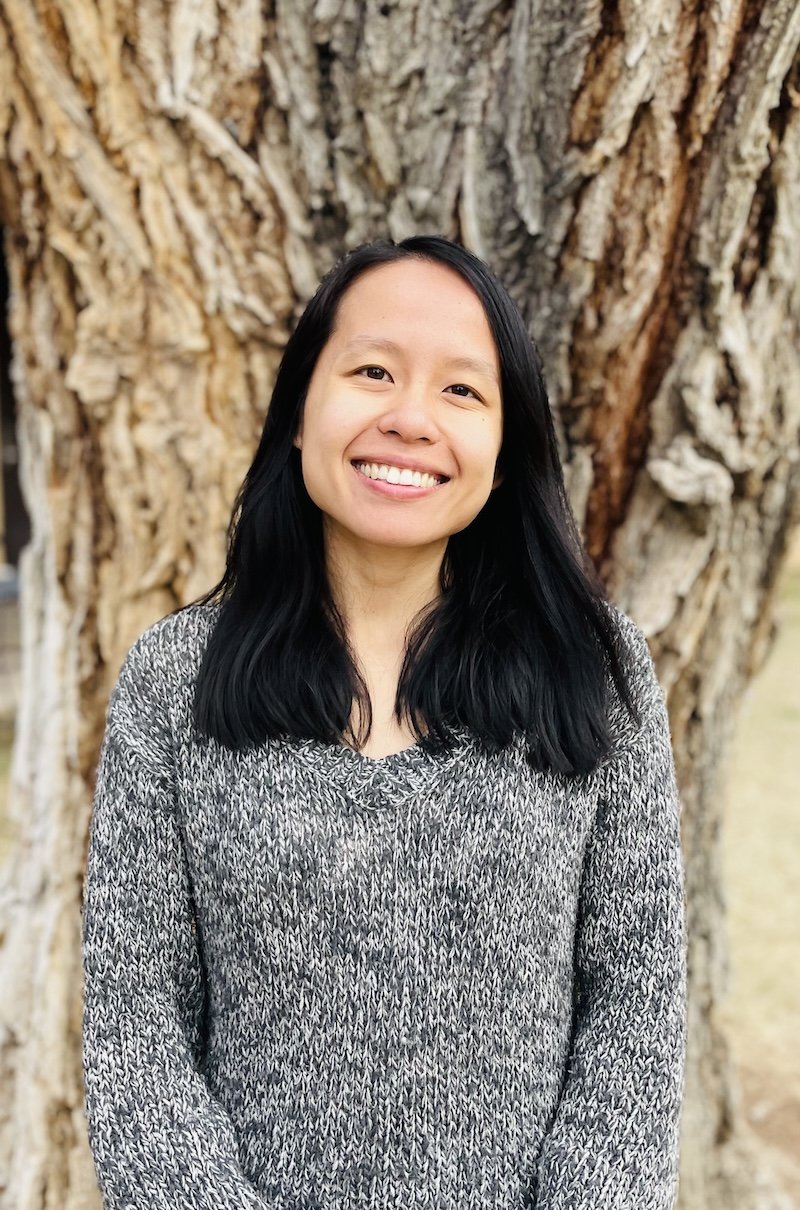
Liz Zhou (she/her) is a neurodivergent therapist, coach, and speaker. She helps highly sensitive, neurodivergent adults & couples heal their nervous systems and connect with their authentic selves, using brain-body modalities (Brainspotting, EMDR, IFS, psychedelic integration) that are quicker & more effective than traditional talk therapy. Liz offers Nervous System Healing Intensives online worldwide.